
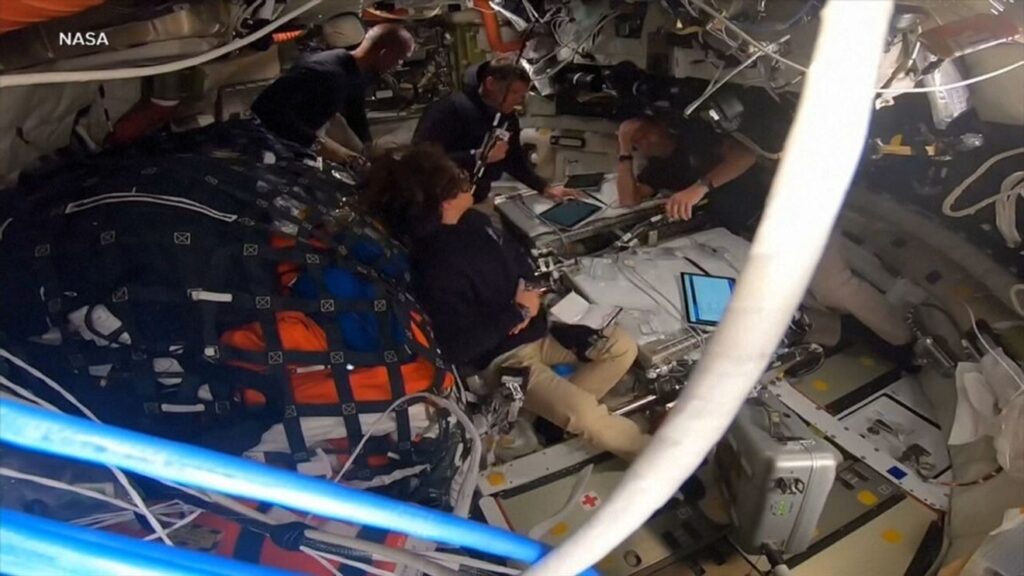
PULLMAN, Wash. — In space, traditional day and night don’t exist, making it hard for astronauts to be in tune with their natural sleep cycle.
A new test developed at Washington State University hopes to change that by providing real-time results to help astronauts gauge when their bodies think it’s time to sleep.
The test, similar to a COVID rapid test, tracks melatonin levels. Melatonin is a naturally produced hormone that rises and falls along with a person’s internal biological clock.
The project was partially funded by NASA and developed by WSU Researcher Annie Du.
It provides melatonin levels within 10 minutes from a pin prick of blood on a piece of paper.
The rapid readings mean astronauts can schedule their work around the times their bodies naturally want to sleep.
Du said the test’s applications aren’t limited to space — but apply to all kinds of shift workers.
“Healthcare workers, physicians, nurses, military personnel, first responders,” said Du. “So this technology will benefit these people with monitoring their level, so we can schedule work wisely.”
Du has also created similar tests that can help firefighters track biological responses to wildfire smoke.