
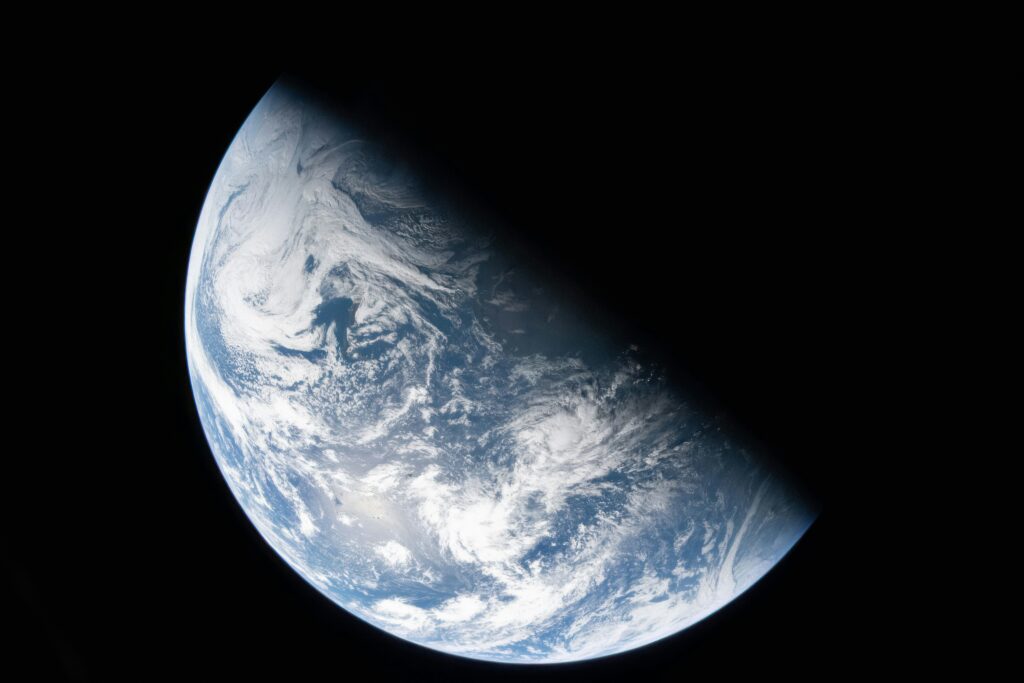
Scientists search for exoplanets and signs of life in space because understanding whether life exists beyond Earth is one of the most important goals in modern science. In space exploration, researchers focus on habitable exoplanets and planets like Earth to study where conditions for life might exist and how these worlds compare to our own planet.
This search is not only about finding a second home for humanity. It is also about understanding how life begins, what environments can support it, and whether Earth is rare or simply one example of a life-supporting world in a much larger universe.
Why Scientists Focus On Earth-Like Worlds
Scientists focus on planets like Earth because Earth is currently the only known world that supports life. This makes it the main reference point in astrobiology when studying other planets and trying to understand what conditions might allow life to exist elsewhere. By comparing other worlds to Earth, researchers can build clearer models of what a life-supporting planet may look like.
One of the strongest factors in this search is liquid water. Habitable exoplanets located in the habitable zone of their stars are especially important because this region may allow liquid water to exist on the surface. Since water is considered essential for life as we understand it, these planets become key targets in space exploration.
Scientists also pay close attention to planetary atmospheres and surface types. Atmospheres can contain gases that may suggest biological activity, so researchers analyze them for unusual chemical patterns. At the same time, rocky planets are prioritized because they are more similar to Earth, unlike gas giants which lack solid surfaces. The habitable zone, often called the “Goldilocks zone,” helps narrow the search by focusing only on planets that are not too hot or too cold for liquid water to remain stable.
How Scientists Search For Signs Of Life
Scientists use advanced methods in space exploration to study distant planets and look for possible signs of life. One of the most important approaches in astrobiology involves analyzing data from exoplanets to understand their environments and chemical makeup.
Light analysis of exoplanets: Scientists study the light that passes through the atmospheres of exoplanets to understand their composition. This method allows researchers to examine distant planets like Earth without physically visiting them.Use of space exploration technology: In modern space exploration, this technique is essential for studying planets beyond our solar system. It helps scientists gather information about atmospheric conditions and potential habitability.Detection of biosignatures: A key focus in astrobiology is identifying biosignatures, which are chemical signs that may indicate life. These include gases like oxygen, methane, and carbon dioxide, especially when found in unusual combinations.Not direct proof of life: These chemical signals do not confirm life on their own. Instead, they serve as clues that point scientists toward more promising habitable exoplanets for further research.Additional planetary factors: Scientists also study a planet’s size, temperature, star type, and orbital distance. These details help determine whether liquid water and stable conditions could exist.Narrowing down Earth-like planets: By combining all available data, researchers can focus on planets like Earth that have the most potential for supporting life.Why This Search Matters For The Future
The search for life beyond Earth is important because a single confirmed discovery would change how humanity understands its place in the universe. Finding life on habitable exoplanets would suggest that Earth is not unique, and that life can develop under more than one set of conditions.
This work also helps scientists better understand Earth itself. By comparing planets like Earth with other worlds, researchers can learn more about how atmospheres form, how planets evolve, and what makes a planet capable of supporting life.
Future space exploration missions and advanced telescopes will make this search even more precise. Scientists will be able to study distant exoplanets in greater detail and analyze their atmospheres more accurately, increasing the chances of detecting potential signs of life.
The Search For Earth-Like Worlds Is Still Just Beginning
Scientists search for exoplanets and signs of life because these worlds may reveal how common life is in the universe and whether Earth is truly unique. The ongoing study of habitable exoplanets continues to shape space exploration, while astrobiology helps guide the search for planets like Earth with the right conditions for life.
Each discovery brings researchers closer to understanding where liquid water may exist beyond our solar system and whether biosignatures can point to life elsewhere. For readers, the key idea is that this search is not only scientific but also deeply connected to one of humanity’s oldest questions about life in the universe.
Frequently Asked Questions1. Why do scientists search for exoplanets and signs of life?
Scientists search for exoplanets and signs of life to understand whether life exists beyond Earth. This is one of the main goals of space exploration and astrobiology. By studying habitable exoplanets, researchers can learn what conditions might support life. It also helps them understand how planets like Earth form and evolve.
2. What makes a planet potentially habitable?
A planet is considered potentially habitable if it is located in the habitable zone of its star, where liquid water could exist. Scientists also look at whether the planet is rocky like Earth and if it has a stable atmosphere. These factors increase the chances of supporting life. Liquid water is especially important in this evaluation.
3. What are biosignatures in space exploration?
Biosignatures are chemical signs that may indicate the presence of life on another planet. These can include gases like oxygen, methane, or carbon dioxide in unusual combinations. Scientists study these signals when analyzing exoplanets. However, biosignatures do not prove life on their own.
4. How do scientists study distant planets like Earth?
Scientists study distant planets by analyzing the light that passes through their atmospheres. This method helps them detect gases and other atmospheric conditions. It is a key part of modern space exploration because it does not require visiting the planet. These observations help identify promising habitable exoplanets for further study.