
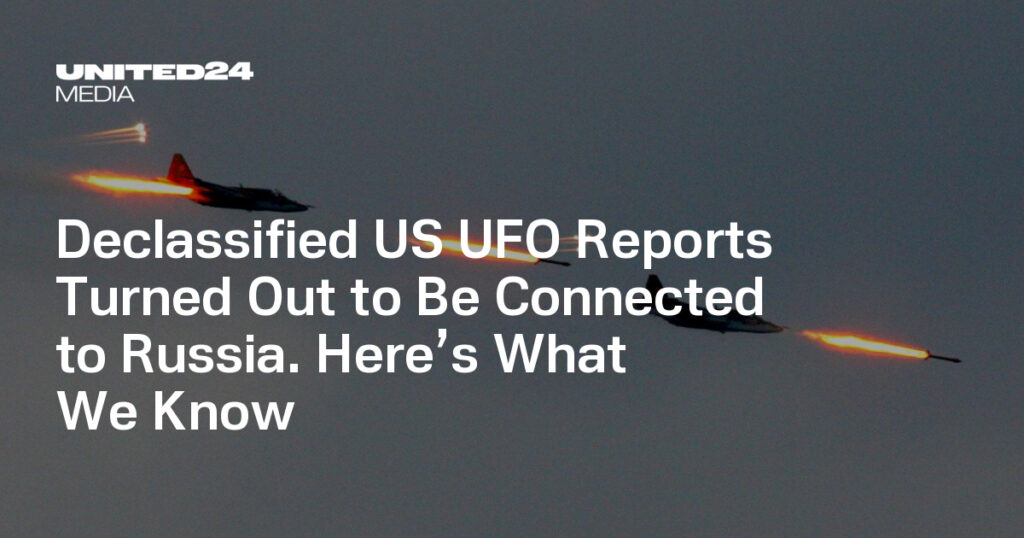
Previously classified US diplomatic documents related to unidentified aerial phenomena included references to suspected Russian airstrikes over Georgia in 2001, according to archival materials released by the US government.
We bring you stories from the ground. Your support keeps our team in the field.
The documents center on a confidential cable sent from the US Embassy in Moscow to Washington on October 30, 2001, describing reported aerial bombardments in Georgia’s Kodori Gorge region near Abkhazia.
According to the diplomatic correspondence, then-US Ambassador to Russia Alexander Vershbow raised concerns with Russian officials after Georgian authorities accused Russian aircraft of carrying out strikes on October 28–29, 2001. Russian officials denied any involvement.
The cable states that Russian Deputy Foreign Minister Vyacheslav Trubnikov Mamedov told US diplomats that Russian aircraft had not participated in the operation and cited the Russian Ministry of Defense, which “categorically denied” involvement in incidents inside Georgian airspace.
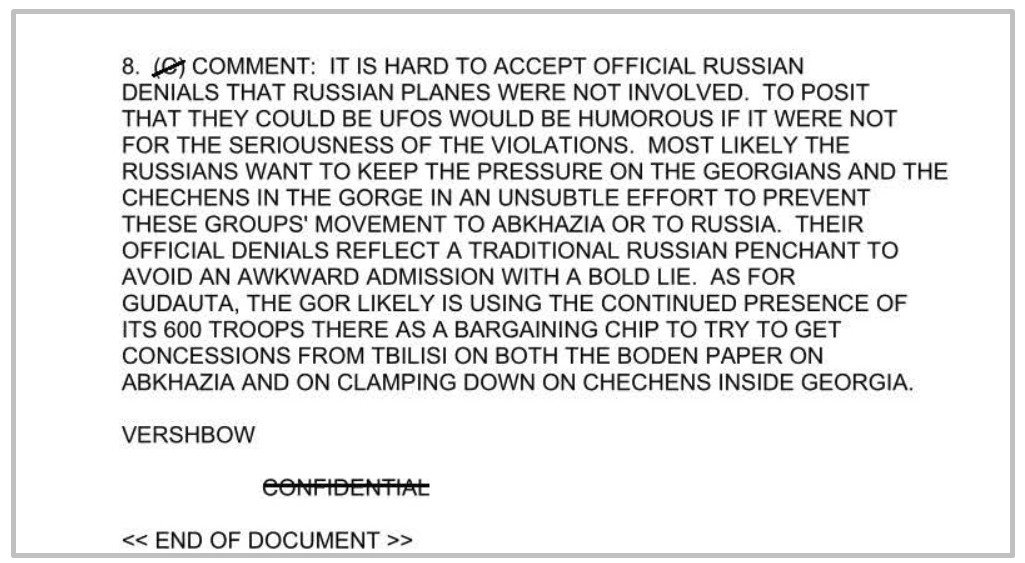
US Ambassador Alexander Vershbow’s declassified diplomatic comment on Russia’s denial of airstrikes in Georgia. (Source: war.gov)
At the same time, the US diplomatic cable expressed skepticism toward Moscow’s explanation. In comments included at the end of the document, Vershbow wrote:
“Difficult to accept official Russian denials that Russian aircraft were not involved. To suggest that the aircraft may have been UFOs would be laughable were the violations not so serious.”
The ambassador further stated that Russian actions were likely intended to maintain pressure on Georgia and Chechen groups operating near Abkhazia, while describing Moscow’s denials as reflecting a “traditional Russian propensity for bald-faced lying.”
Read more
CategoryWar in UkraineAll the Times Russia Invaded Sovereign States as the World’s Attention Was Focused on the Olympics
May 23, 2024 19:11
According to the released documents, the issue was considered sensitive because it came shortly before a planned US-Russia presidential summit. The cable warned that confirmed Russian involvement in attacks inside Georgia could damage bilateral relations between Washington and Moscow.
The documents also referenced Gudauta, a military facility in Abkhazia where Russia maintained a troop presence officially linked to peacekeeping operations. The US embassy assessment suggested Georgian authorities viewed the Russian deployment as leverage used by Moscow against Tbilisi.
The events described in the cable took place during renewed fighting in the Kodori Gorge in autumn 2001. At the time, Chechen and North Caucasus armed groups, alongside Georgian irregular formations, entered the area in an attempt to push back pro-Russian forces operating in Abkhazia.
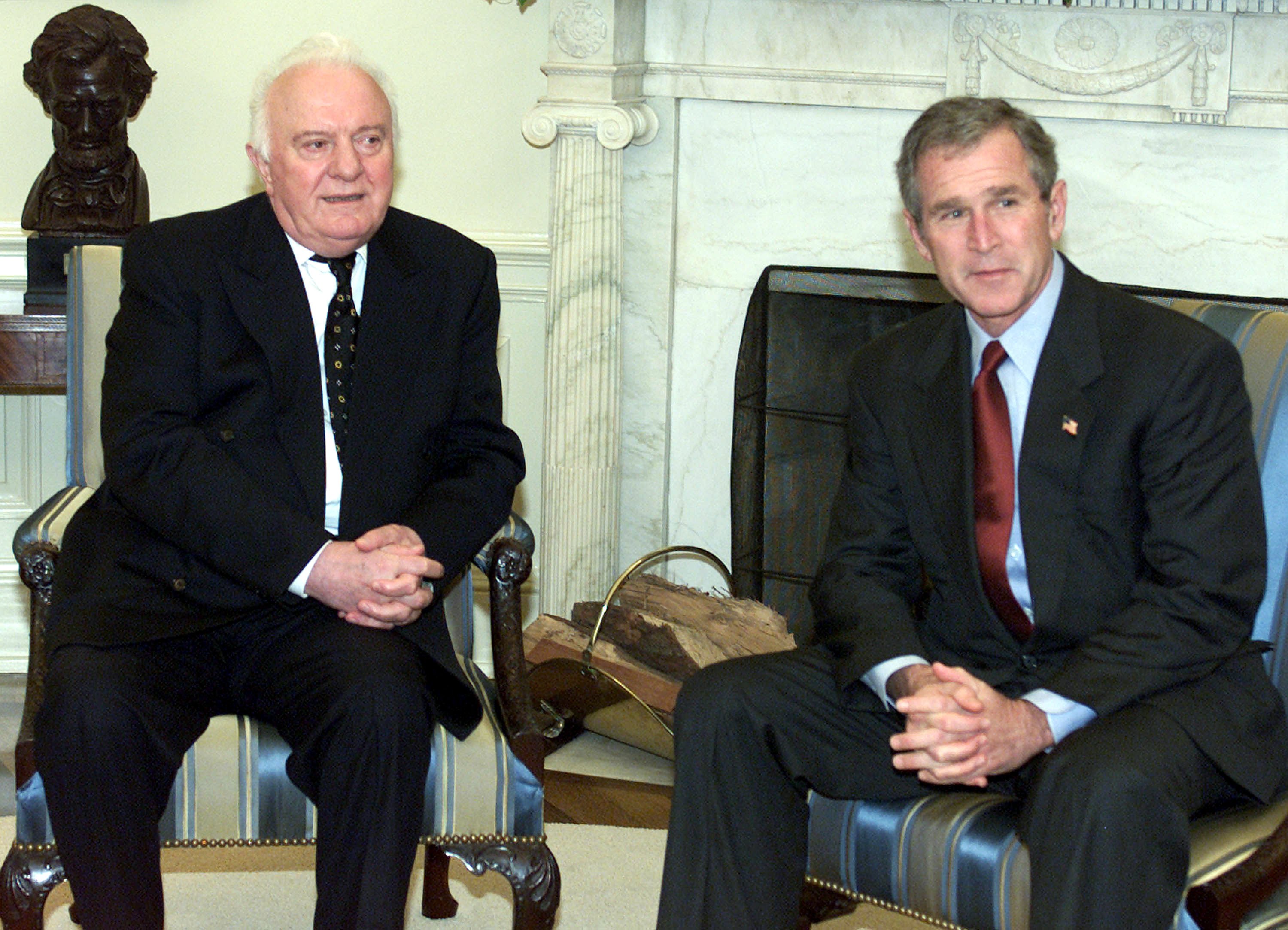
US President George W. Bush meets Georgian President Eduard Shevardnadze at the White House, October 5, 2001. (Source: Getty Images)
According to Georgian Defense Ministry statements cited in the diplomatic correspondence, four military aircraft and six helicopters crossed into Georgian airspace through Abkhazia on October 28 and dropped bombs on mountain routes inside the gorge.
Russia denied responsibility for the strikes.
The Kodori Gorge remained contested for years afterward. In 2006, Georgian forces re-entered the upper part of the region, but Russia established control over the entire area following the 2008 Russia-Georgia war.
-9a7b3a98ed5c506e0b77a6663f5727c5.png)
