
Back to Article List
Today in the history of astronomy, Hubble images a highly anticipated visitor from the outer solar system.
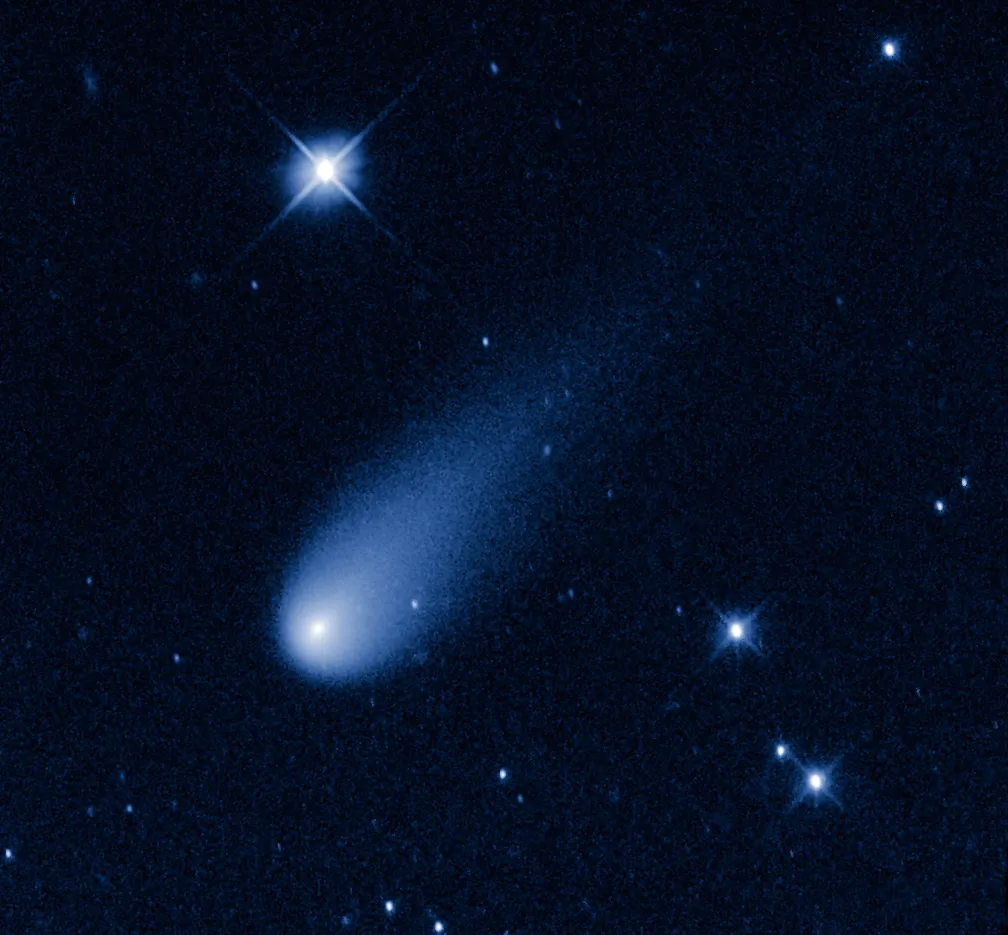
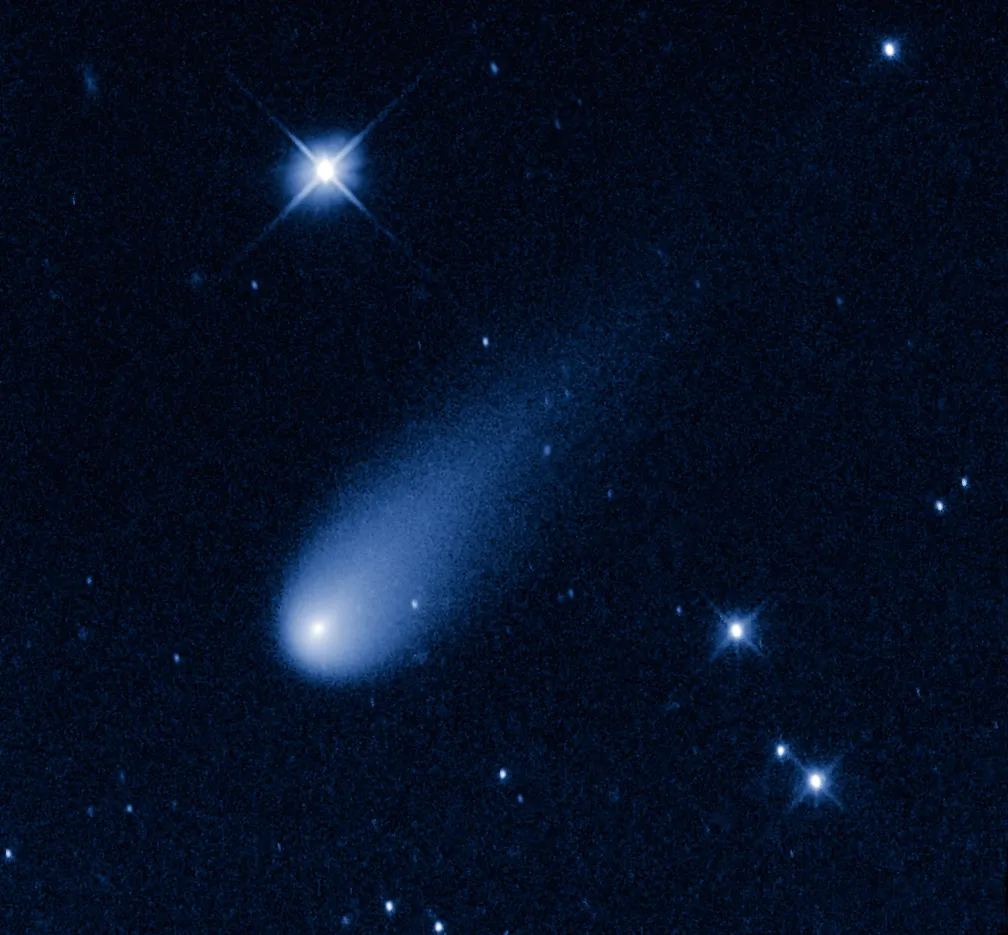
The Hubble Space Telescope imaged Comet ISON on May 8, 2013. In the resulting movie created from 43 minutes of observations compressed into five seconds, ISON travels 34,000 miles. Credit: NASA, ESA, and the Hubble Heritage Team (STScI/AURA)
In September 2012, Russian astronomers Vitali Nevski and Artyom Novichonok discovered Comet C/2012 S1; as they were using a telescope from the International Scientific Optical Network, the comet was named ISON. Comet ISON was a new visitor from the Oort Cloud, making its first trip to the inner solar system. With the typical build of rock, ice, and dust, ISON sported a nucleus a little more than a half-mile (1 kilometer) across.
Nevski and Novichonok spotted the comet more than a year before its expected closest encounter with the Sun (perihelion) in late November 2013, giving the astronomy community ample time to build an observing campaign. Numerous ground-based telescopes tracked it, as did the International Space Station and 12 NASA space-based observatories including the Hubble Space Telescope. On May 8, 2013, Hubble captured a series of images across a span of 43 minutes, while the comet was about 403 million miles from Earth. Those stills were assembled into a time-lapse movie, released in July with details about its expected rendezvous with the Sun in November.
Unfortunately, the highly anticipated bright naked-eye comet did not come to pass. In the weeks before perihelion, ISON experienced a series of fragmentations due to solar heating and gravitational pressure. Dust and gas production ceased, and the nucleus completely shattered about 3.5 hours before perihelion. Though the suggested “comet of the century” failed to deliver a spectacular visual show, the long lead time allowed for scientific successes, including unprecedented data collection around a single comet.