
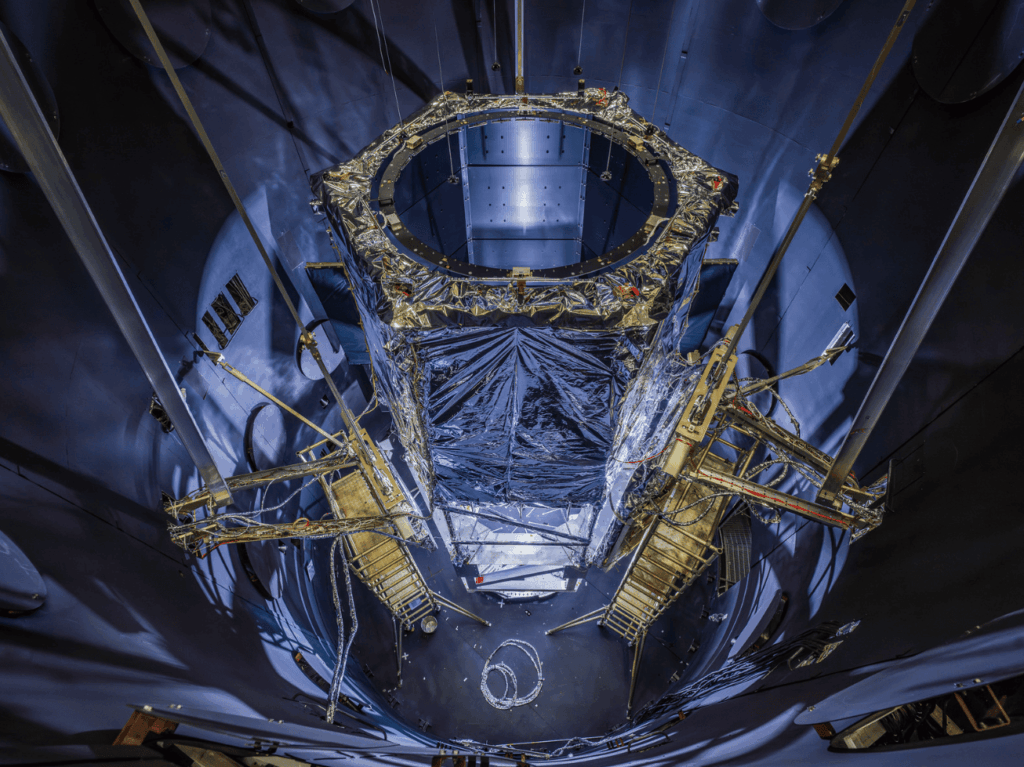
NASA’s Nancy Grace Roman Space Telescope will be able to detect invisible neutron stars—the remnants of collapsed massive stars—thanks to the bending of light caused by their powerful gravity. This is evidenced by a new study published in the journal Astronomy & Astrophysics.
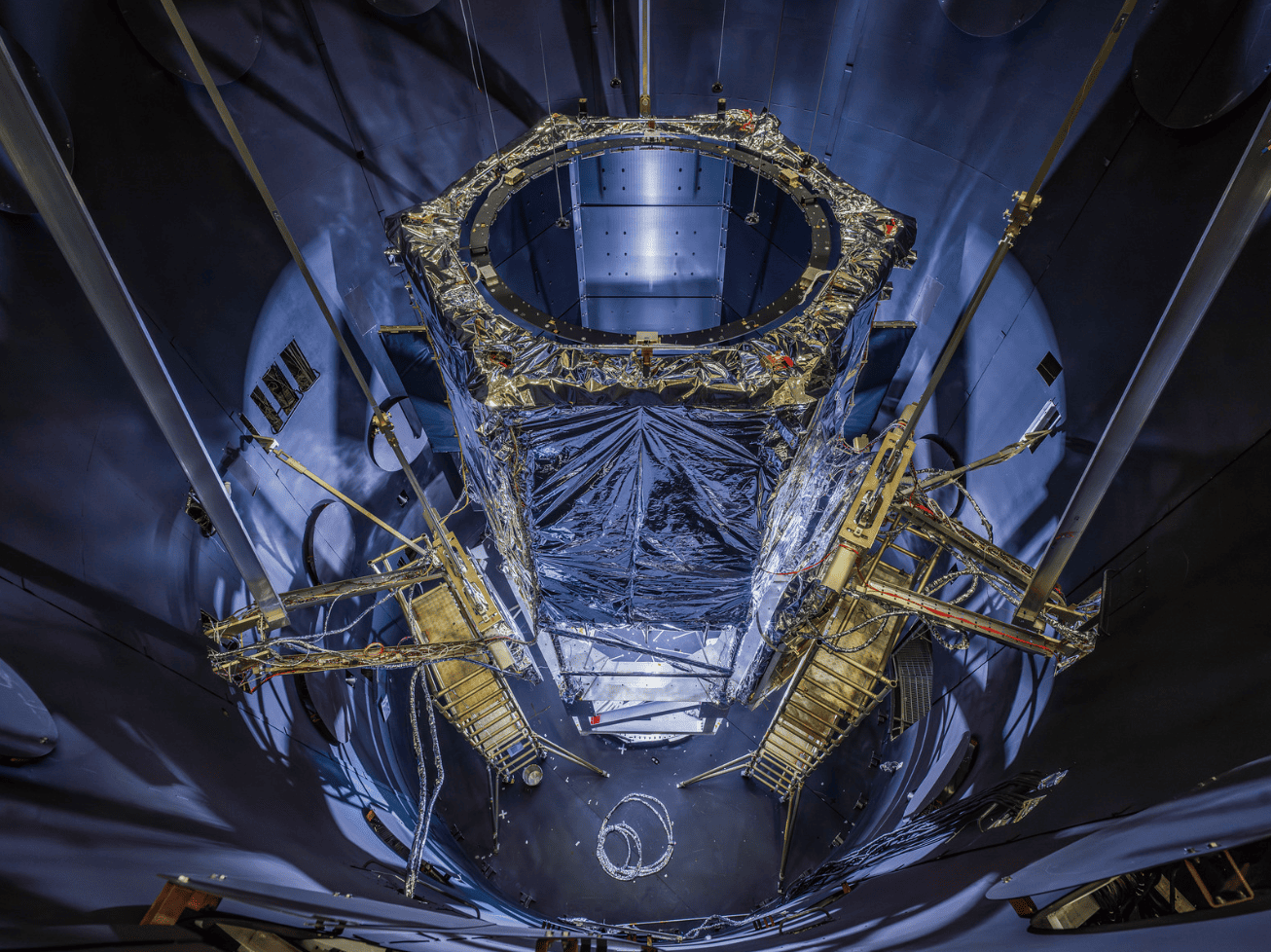 NASA’s Nancy Grace Roman Space Telescope. Source: science.nasa.gov / mission / roman-space-telescope
Almost invisible objects
Neutron stars are ultra-dense cores left behind after massive stars explode. They are about the size of a small city, but contain more matter than the Sun.
Although there must be tens or even hundreds of millions of them in the Milky Way, only a few thousand have been detected so far—primarily those that emit radio waves or X-rays. The rest remain beyond the reach of even the most powerful instruments.
Weighing the Invisible
The Nancy Grace Roman Telescope is capable not only of detecting temporary flares from a background star during gravitational lensing, but also of measuring the minute shift in its apparent position in the sky—known as an astrometric microlensing effect. This shift is what allows scientists to calculate the mass of the invisible object.
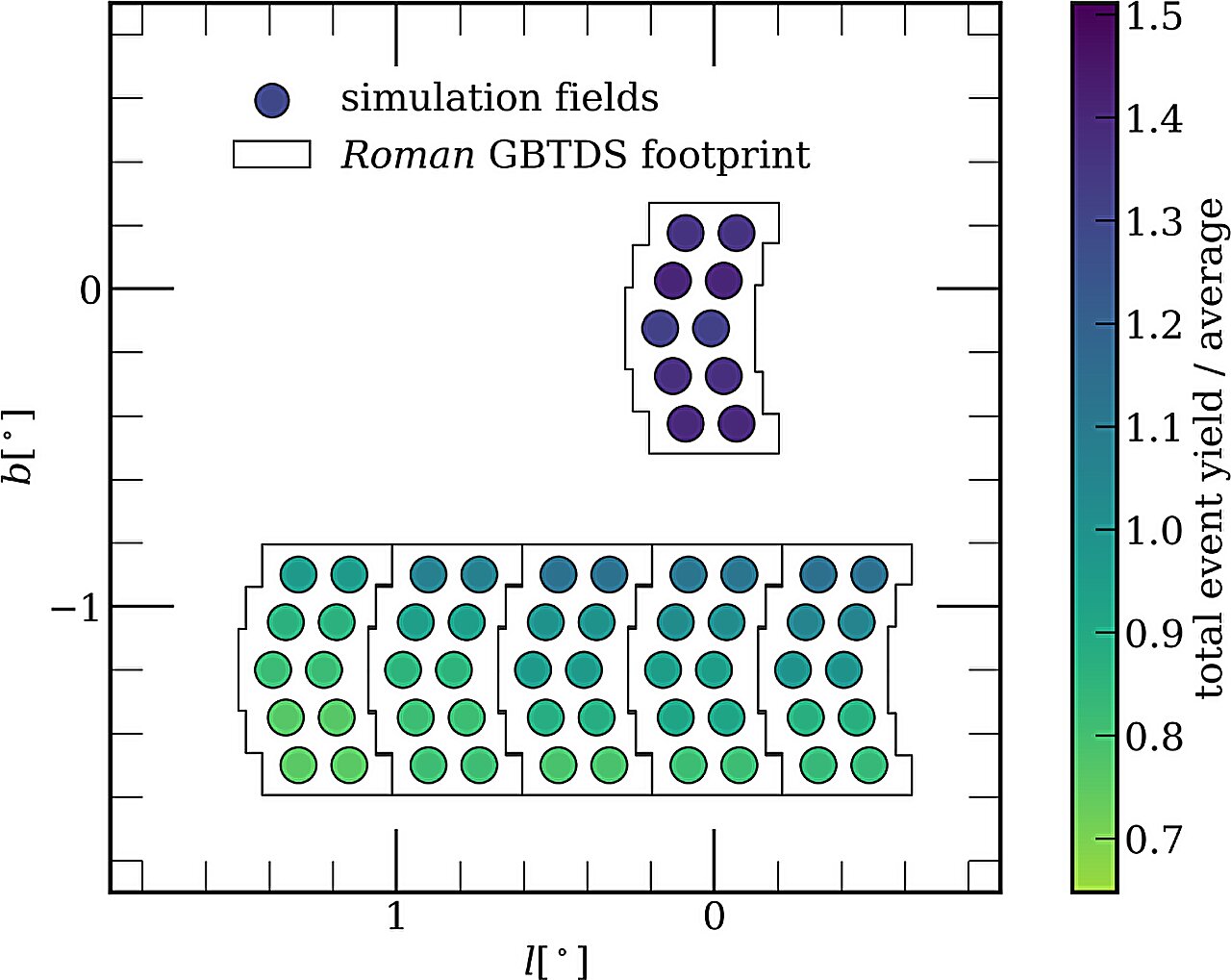 Location of the simulation fields superimposed on the field of view of the Nancy Grace Roman Telescope’s Galactic Bulge Time Domain Survey. The colors indicate the total number of simulated microlensing events in each field relative to the average. Source: aanda.org
“Photometry tells us that something passed in front of the star, but it’s the amount the star’s position shifts that tells us how massive that object is,” explains study co-author Peter McGill of Lawrence Livermore National Laboratory.
What does this mean for science?
Until now, the masses of neutron stars have only been measured in binary systems—where two compact objects orbit each other. It has not yet been possible to calculate the masses of single stars. But even a few such measurements will help determine whether there is a real difference in the masses of neutron stars and black holes—a question that still has no definitive answer.
Researchers also hope to gain a better understanding of the initial momentum these objects receive at birth during a supernova explosion, which accelerates them across the galaxy to speeds of hundreds of kilometers per second.
Bonus for the main mission
The Nancy Grace Roman Telescope was designed primarily to search for exoplanets using photometric microlensing as part of the future Galactic Bulge Time Domain Survey. However, it turned out that the telescope’s astrometric capabilities open up an entirely new field of research.
“That wasn’t part of the original plan,” McGill admits. “But Roman’s astrometric sensitivity has proven to be very effective for detecting neutron stars and black holes.”
According to forecasts, the team will be able to identify the first promising microlensing events within the first few months after the telescope becomes operational.
According to phys.org