

The emergence of the first continents on early Earth altered the chemistry of the oceans—and this, according to scientists, may have created the conditions for the origin of life. Researchers from the University of British Columbia and the University of Oxford reached this conclusion and published their findings in the journal Terra Nova.
 A conceptual visualization of the early Earth—the moment when the first continents began to form above the primordial ocean.
Balance issues
Scientists have long speculated that boron played a key role in the origin of life: it helps stabilize the fragile sugars needed to build RNA—a molecule that, according to current understanding, preceded DNA.
However, boron is effective only within a narrow range of concentrations. Too much, and it becomes toxic to biological systems; too little, and it simply cannot fulfill its role.
Tourmaline as a regulator
Before the first large landmasses emerged—more than 3.7 billion years ago—boron concentrations in the ancient oceans were likely dangerously high. According to the researchers, this change was caused by the growth of the granite continental crust. Large quantities of tourmaline—a mineral known as a semi-precious stone—formed within it, binding the boron and effectively “trapping” it within the rocks.
Over time, as the bark weathered away, the element was gradually released into surface waters and eventually stabilized at levels close to those found in the oceans today. According to current scientific understanding, it is precisely these concentrations that are suitable for use by living organisms.
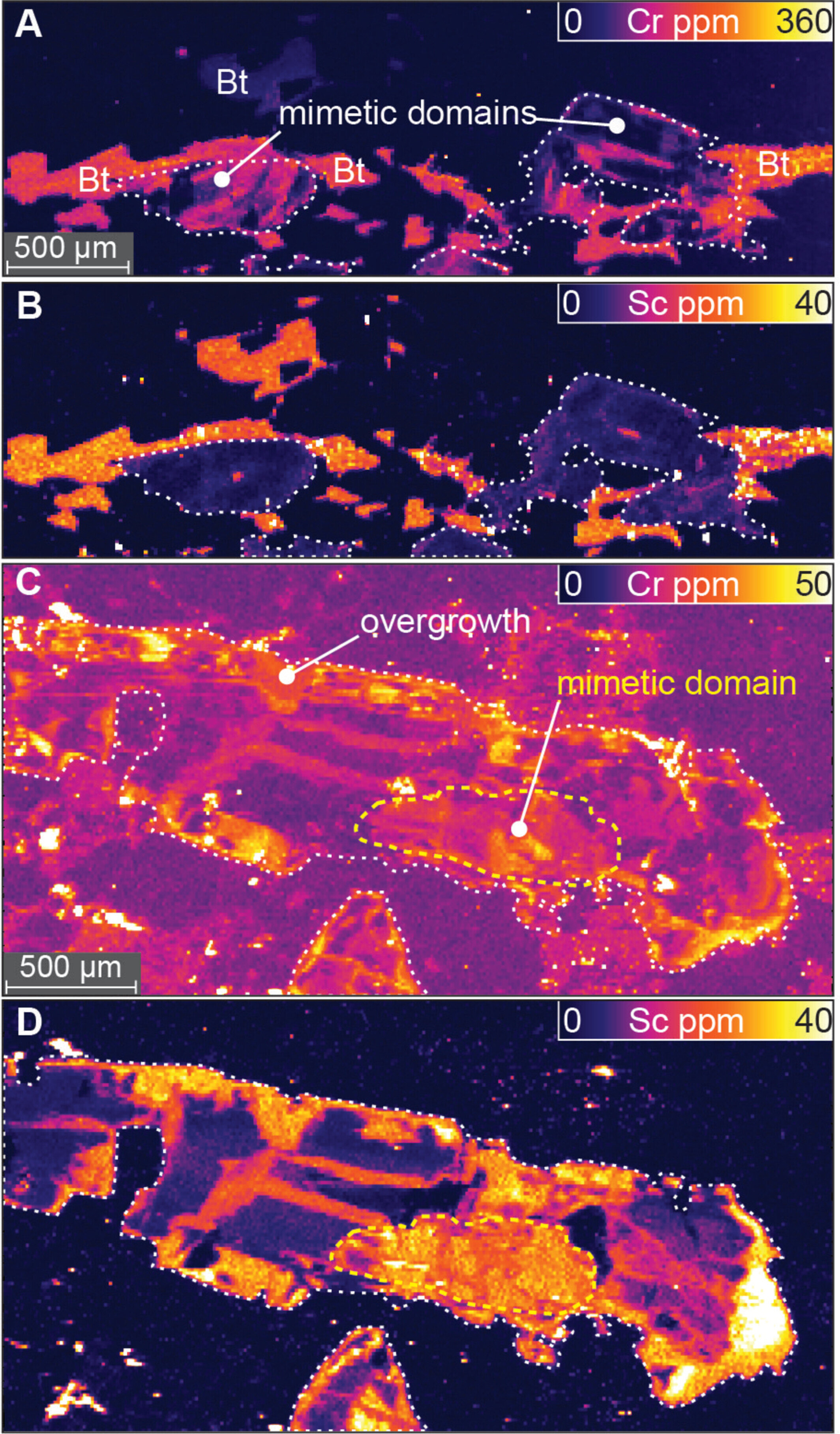 Maps of trace element distribution in samples of metamorphic and magmatic tourmaline from a study on the role of the continental crust in the origin of life. Source: Terra Nova (2026). https://doi.org/10.1111/ter.70040
“We’re talking about a geological system that regulates the chemistry of the Earth’s surface,” explains Dr. Brendan Dyck of the University of British Columbia. “The rise of the continents didn’t just change the shape of the planet—it may have set the chemical conditions that made life possible.”
Lesson for searching for life in the Universe
The discovery is also significant for astrobiology. Rocky planets without a granite crust—such as Mars—are unlikely to be able to maintain boron in a form accessible to living organisms in their water bodies.
This means that a planet’s geological evolution may be just as important to its habitability as its distance from its parent star.
According to phys.org