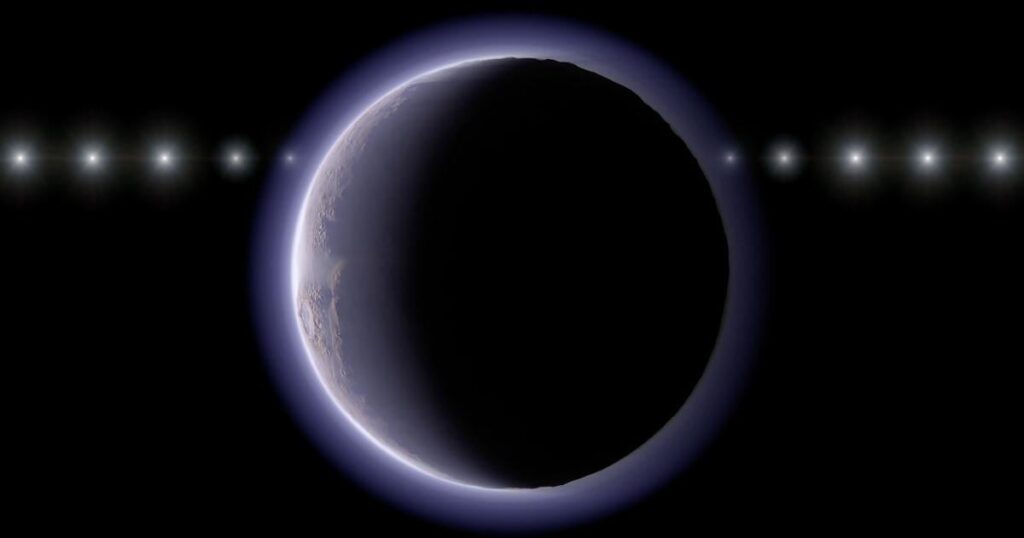
> **This so-called minor planet — formally known as (612533) 2002 XV93 — is considered a plutino, circling the sun twice in the time it takes Neptune to complete three solar orbits. At the time of the study, it was more than 3.4 billion miles (5.5 billion kilometers) away, farther than even Pluto, the only other object in the Kuiper Belt with an observed atmosphere.**
> **It’s 50 to 100 times thinner than even Pluto’s tenuous atmosphere. The likeliest atmospheric chemicals are methane, nitrogen or carbon monoxide, any of which could reproduce the observed dimming as the object passed before the star, according to Arimatsu.**
MovieGuyMike on
So,a teeny weeny Kuiper Belt object with an atmosphere. Neato.
In-All-Unseriousness on
> This cosmic iceball’s atmosphere is believed to be 5 million to 10 million times thinner than Earth’s protective atmosphere
Seems a bit of a stretch to even call this an atmosphere.
kerenosabe on
> The likeliest atmospheric chemicals are methane, nitrogen or carbon monoxide
WTF? At that distance from the sun, none of those would be a gas. Pluto’s atmosphere is an extreme case, it only exists when Pluto is at its closest distance from the sun along its orbit. Right now, Pluto’s atmosphere is condensing and there are studies indicating it will be completely gone by 2030.
A planet in an orbit beyond Pluto could only have an atmosphere of hydrogen, helium or neon. All other substances would be either liquid or solid at the temperatures that far from the sun. Unless the planet has an internal source of heat, of course, but that would also be hard to explain.

6 Comments
Isn’t, like… most of the universe “beyond Pluto?”
Not really narrowing it down…
A welcoming atmosphere….?
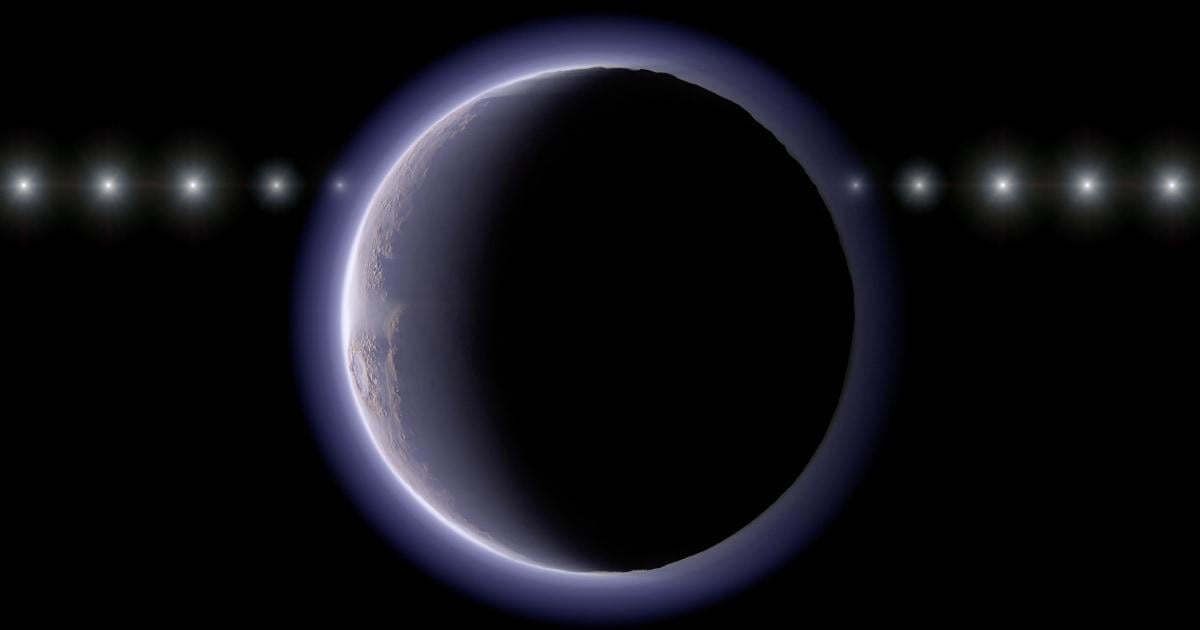
> **This so-called minor planet — formally known as (612533) 2002 XV93 — is considered a plutino, circling the sun twice in the time it takes Neptune to complete three solar orbits. At the time of the study, it was more than 3.4 billion miles (5.5 billion kilometers) away, farther than even Pluto, the only other object in the Kuiper Belt with an observed atmosphere.**
> **It’s 50 to 100 times thinner than even Pluto’s tenuous atmosphere. The likeliest atmospheric chemicals are methane, nitrogen or carbon monoxide, any of which could reproduce the observed dimming as the object passed before the star, according to Arimatsu.**
So,a teeny weeny Kuiper Belt object with an atmosphere. Neato.
> This cosmic iceball’s atmosphere is believed to be 5 million to 10 million times thinner than Earth’s protective atmosphere
Seems a bit of a stretch to even call this an atmosphere.
> The likeliest atmospheric chemicals are methane, nitrogen or carbon monoxide
WTF? At that distance from the sun, none of those would be a gas. Pluto’s atmosphere is an extreme case, it only exists when Pluto is at its closest distance from the sun along its orbit. Right now, Pluto’s atmosphere is condensing and there are studies indicating it will be completely gone by 2030.
A planet in an orbit beyond Pluto could only have an atmosphere of hydrogen, helium or neon. All other substances would be either liquid or solid at the temperatures that far from the sun. Unless the planet has an internal source of heat, of course, but that would also be hard to explain.