
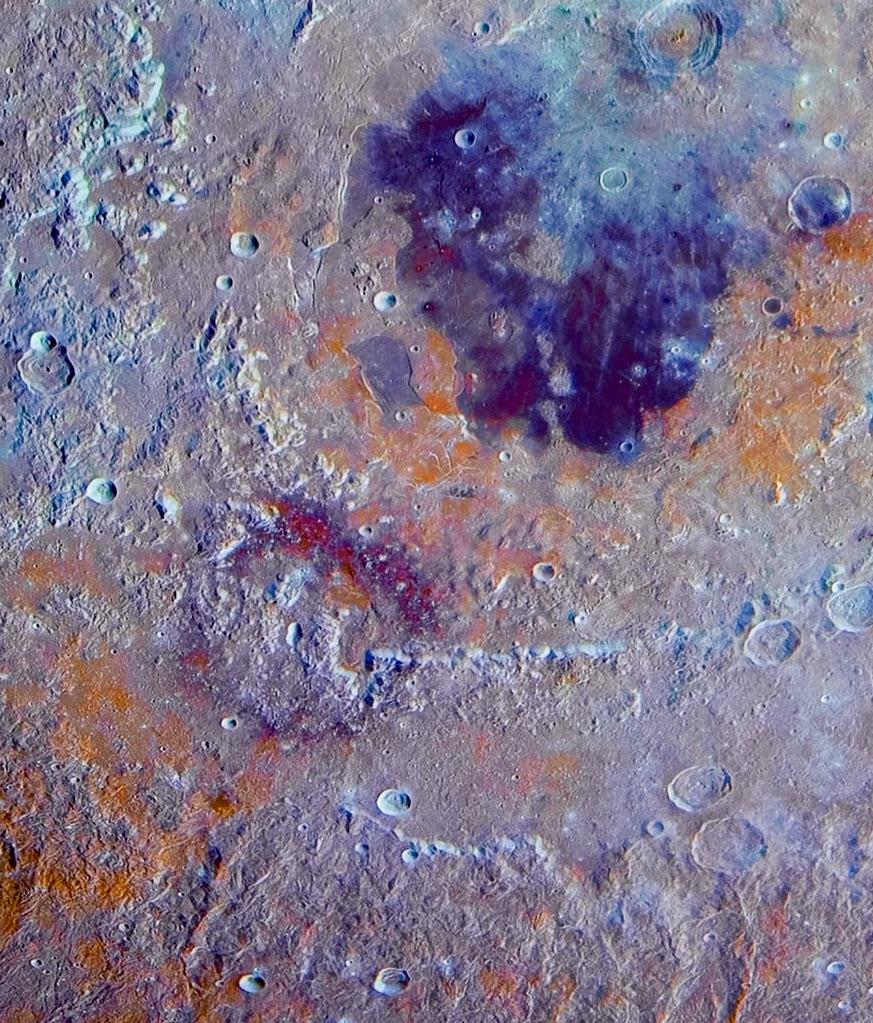
In a first-of-its-kind collaboration, I worked with Artemis II astronaut Reid Wiseman to get vividly colorful images of the back side of the moon. More details in the comments [OC]
by ajamesmccarthy
In a first-of-its-kind collaboration, I worked with Artemis II astronaut Reid Wiseman to get vividly colorful images of the back side of the moon. More details in the comments [OC]
by ajamesmccarthy
9 Comments
Before the Artemis II flight, I reached out to Reid to see if he could take burst photos of certain lunar features on the back side, and of course the whole moon. Doing this allows me to use my stacking methods to resolve subtle color variance not easily visible on the surface. He graciously agreed, and boy did he deliver.
After stacking together his raw burst photos, I precisely color balanced and did iterative saturation adjustments to identify subtle color separation in the regolith, and extracted them to be more readily visible in the terrain. This gives us much more data about the composition of these features and how they were formed.
This shows Mare Orientale, a huge impact basin we can’t see from Earth. The red you see is most likely Iron Oxide, while the blues are titanium-rich basalt.
You can see more of this collaboration on my Instagram [here](https://www.instagram.com/cosmic_background?igsh=MXBhZHIyeGdmcXRrYQ%3D%3D&utm_source=qr)
Wow such great detail. It’s awesome that you collaborated with an actual astronaut to get these images. Thanks for your work on this!
Dude, this is absolutely unreal. To imagine what the moon really looks like beyond what the naked eye can see makes me wonder about all the other things in life we are limited to see
This is incredible! Did you choose the enhancement colors or are those kind of the extremes of the naturally occurring colors? So cool!
Excited for the future of our space program
How did you get in touch with him?
I can’t get enough of your pictures
This is awesome in the actual sense of the word instead of the modern “my hamburger tasted awesome (pretty good.)”
So is the coloring more related to surface impacts and deposits from asteroids, or the original base makeup of the moon?
Phenominal! Has Reid seen this yet? Did he say anything about the results?
I enjoyed reading in the comments how you produced the extra detail from the stacked images. Very cool process!