
The Dark Energy Spectroscopic Instrument spent five years observing the sky from Arizona. Now, researchers have a trove of data to study how the universe has evolved over billions of years

| Daily Correspondent
May 1, 2026 11:21 a.m.
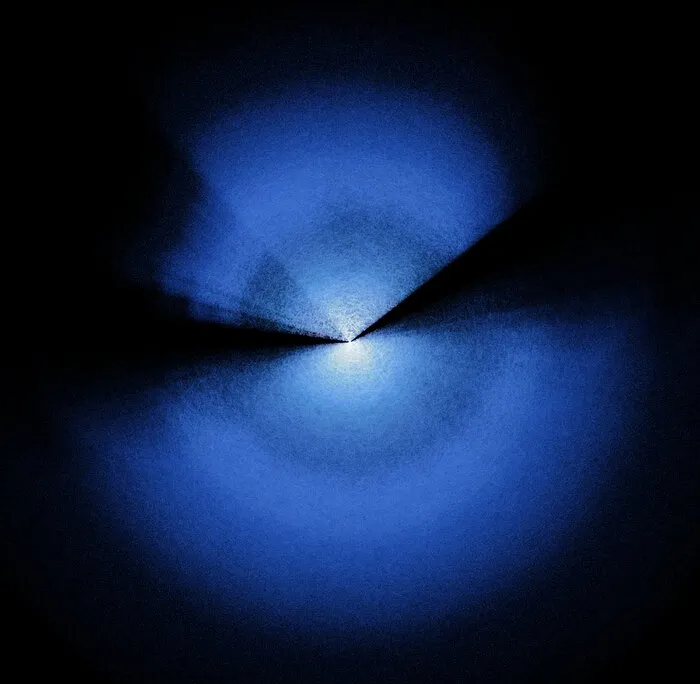
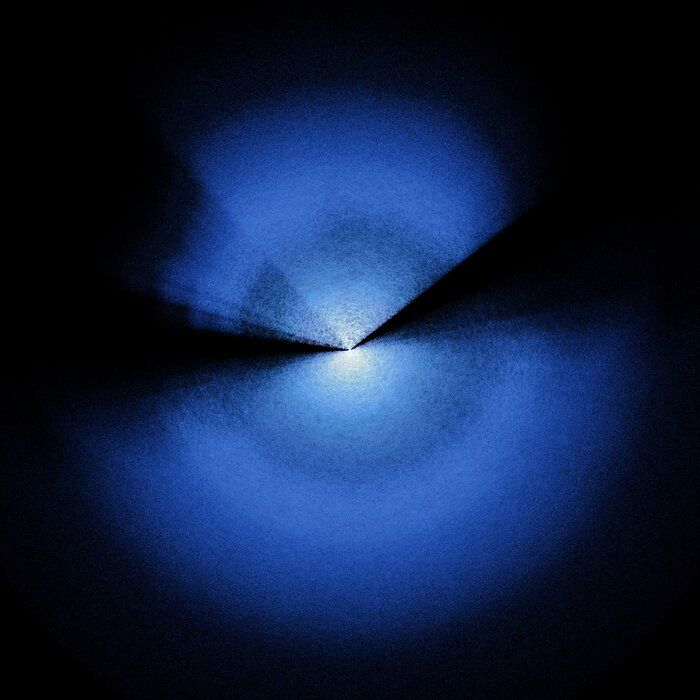
The largest 3D map of the universe. Earth is at the center, and each point marks a galaxy.
DESI Collaboration and DESI Member Institutions / DOE/KPNO / NOIRLab / NSF / AURA / R. Proctor, Image Processing: M. Zamani (NSF NOIRLab)
An astronomical effort—both in the literal and metaphorical sense—to map the night sky in three dimensions has just concluded. The undertaking not only finished a bit ahead of schedule, but also gathered significantly more data than the huge team of collaborators had originally aimed for.
The effort has produced the largest-ever high-resolution 3D map of the universe, which spans 11 billion years of cosmic history. Scientists will now start processing this gargantuan amount of data, shedding further light on one of science’s greatest mysteries: dark energy, a mysterious ingredient thought to make up around 70 percent of the universe.
Five years of DESI observations in 30 seconds
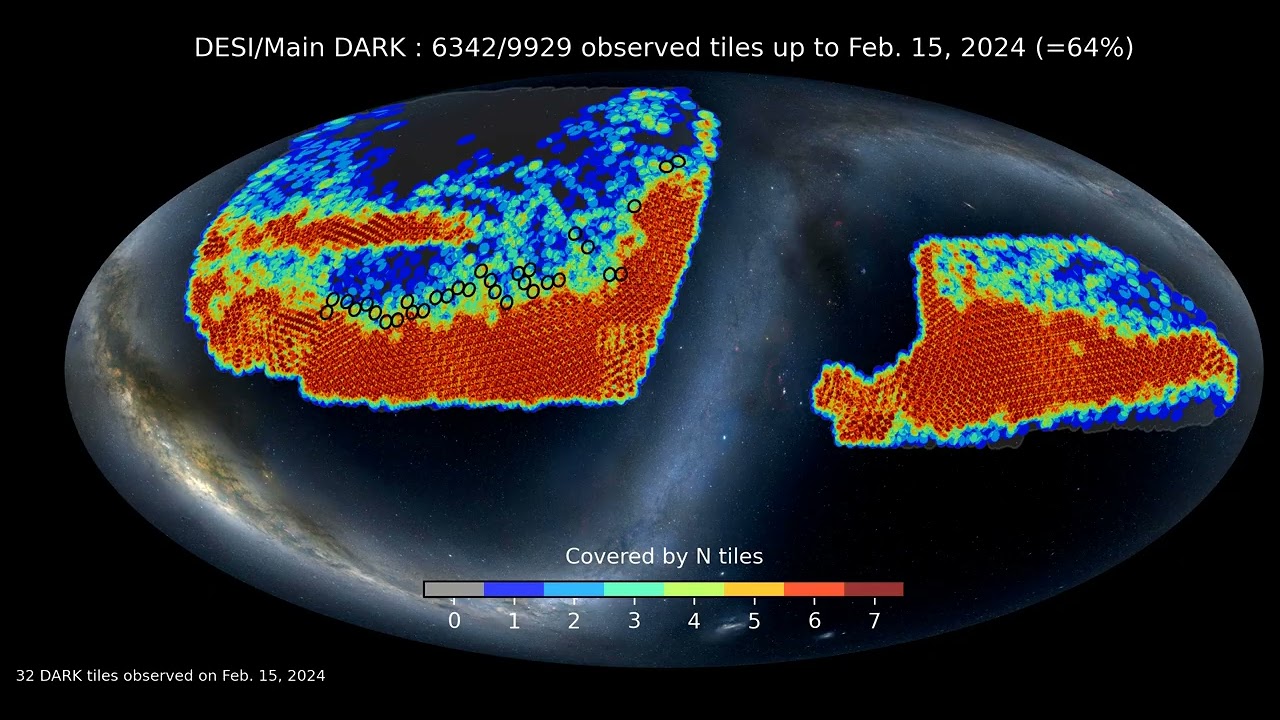
The map was made thanks to observations by the Dark Energy Spectroscopic Instrument (DESI). It’s attached to the National Science Foundation’s Nicholas U. Mayall 4-meter Telescope at the Kitt Peak National Observatory in Arizona. DESI finished its celestial survey on April 15 after capturing more than 47 million galaxies and quasars—ultrabright objects powered by matter funneling into black holes—as well as 20 million stars.
It began collecting data in May 2021 and originally aimed to record 34 million galaxies and quasars during the planned five-year survey.
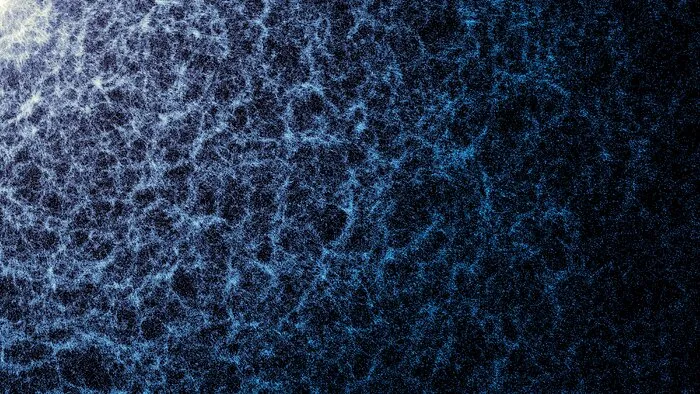
A zoomed-in portion of the map. Each dot represents a galaxy.
DESI Collaboration and DESI Member Institutions / DOE / KPNO / NOIRLab / NSF / AURA / R. Proctor, Image Processing: M. Zamani (NSF NOIRLab)
“DESI has exceeded expectations,” Klaus Honscheid, a cosmologist at Ohio State University and a member of the DESI collaboration, tells Space.com’s Robert Lea. “It is a big deal because the DESI team was able to complete a heavily ambitious survey program on schedule and on budget. It wasn’t at all clear that we would achieve this years ago when we first planned DESI and applied for support from the Department of Energy.”
Need to know: How does DESI work?
The instrument has 5,000 fiber-optic “eyes” that scan one section of the night sky roughly every 20 minutes. It can see faint light that traveled 11 billion years to reach Earth. Each night, DESI generates about 80 gigabytes of data.
DESI has already yielded game-changing scientific information. Observations collected during its first three years suggest that dark energy—previously thought to be constant—is actually weakening. If proven true, this knowledge of would dramatically change our understanding of the cosmos, since the mysterious force is thought to drive the universe’s accelerated expansion.
Overall, DESI’s data will help scientists compare how galaxies dot the sky today versus how they did long ago so they can trace how the universe has evolved, going nearly all the way back to its birth 13.8 billion years ago.
DESI telescope time-lapse
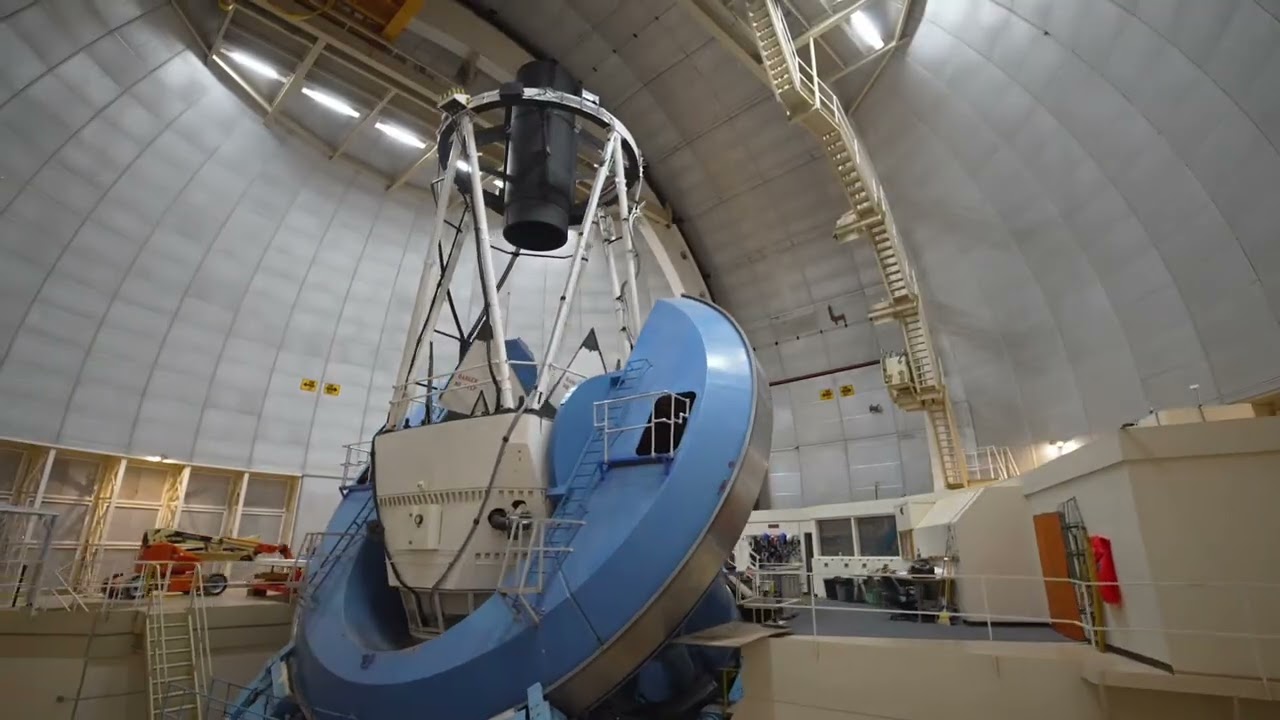
“Now that we have that final data set, the cosmologists will be working hard to unpack any subtle new features of dark energy revealed by the data,” Adam Myers, an astrophysicist at the University of Wyoming who is part of the DESI team, tells Gizmodo’s Gayoung Lee. “Complementary data sets have also grown larger, and analysis techniques are constantly being refined, so watch this space.”
DESI is also impressive for its collaborative aspect. Managed by the Department of Energy’s Lawrence Berkeley National Laboratory, the international effort involves over 900 researchers, about one-third of whom are Ph.D. students, from more than 70 institutions.
One night of DESI observations
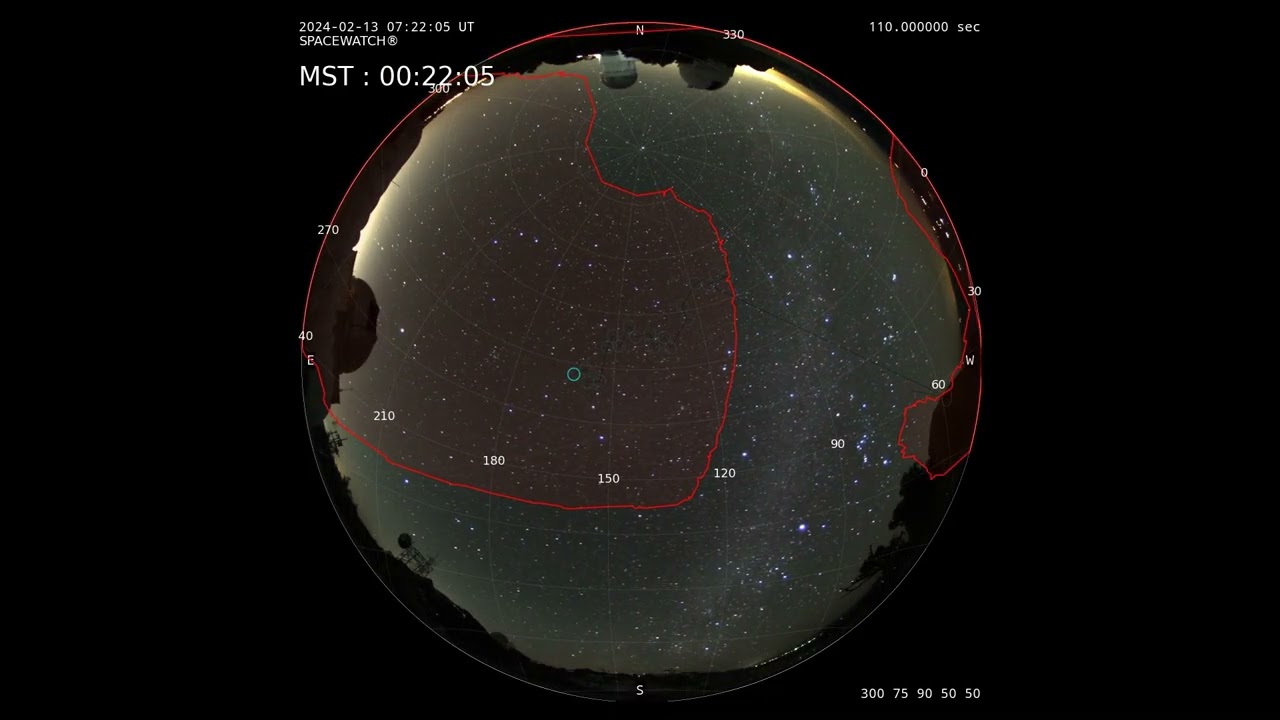
DESI’s not done watching the sky. It will continue to chart areas that are notoriously difficult to observe, such as regions near our Milky Way galaxy’s plane. Since we’re within a somewhat flat, spiral-shaped galaxy, it looks like a line if we peer toward its center. But that “line” is made of tons of bright stars, making it tough to see other, more distant astronomical objects.
The instrument will continue expanding the map into 2028, adding to the already enormous trove of data.
“When I was a Ph.D. student in Cambridge 40 years ago, we had a sample of thousands of galaxies. The community was starving for data,” Ofer Lahav, an astrophysicist at University College London, tells New Scientist’s Matthew Sparkes. “I think my students [today] may have the opposite problem; to have been flooded with data, and it’s very challenging to analyze it.”
Get the latest stories in your inbox every weekday.