
NASA’s Lithium-Fed Nuclear Thruster Flares to Life in First of Its Kind Test | The next-generation thruster could one day propel humans to Mars.
by Clear_Polish23
NASA’s Lithium-Fed Nuclear Thruster Flares to Life in First of Its Kind Test | The next-generation thruster could one day propel humans to Mars.
by Clear_Polish23
3 Comments
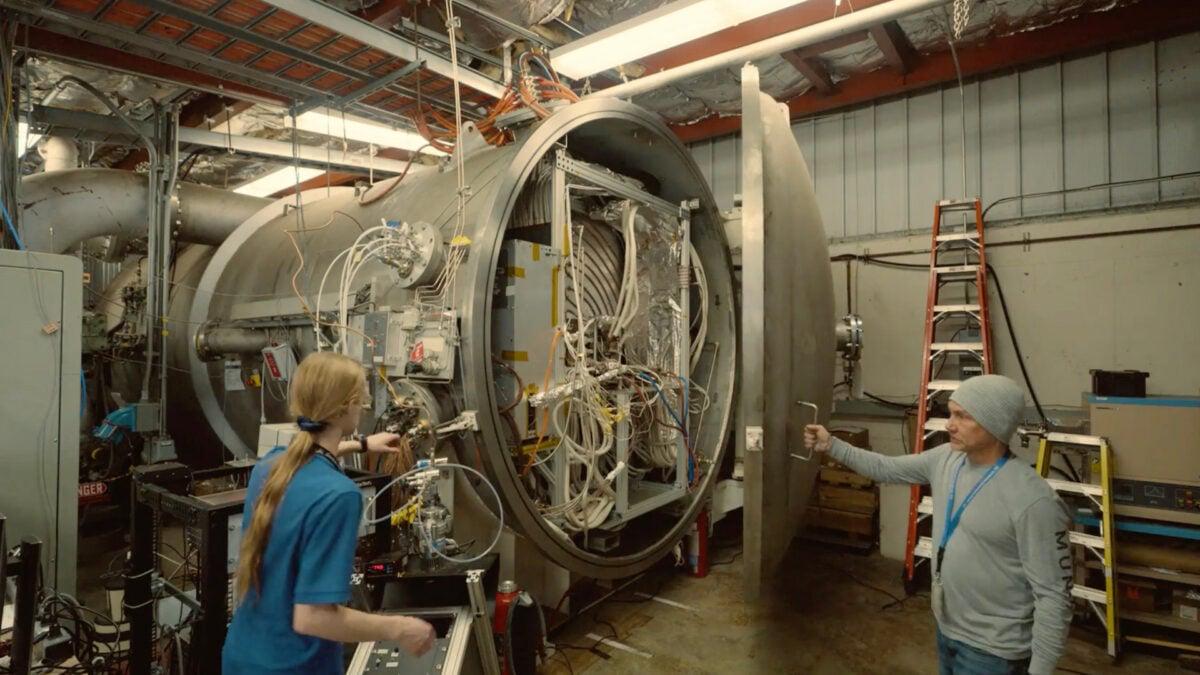
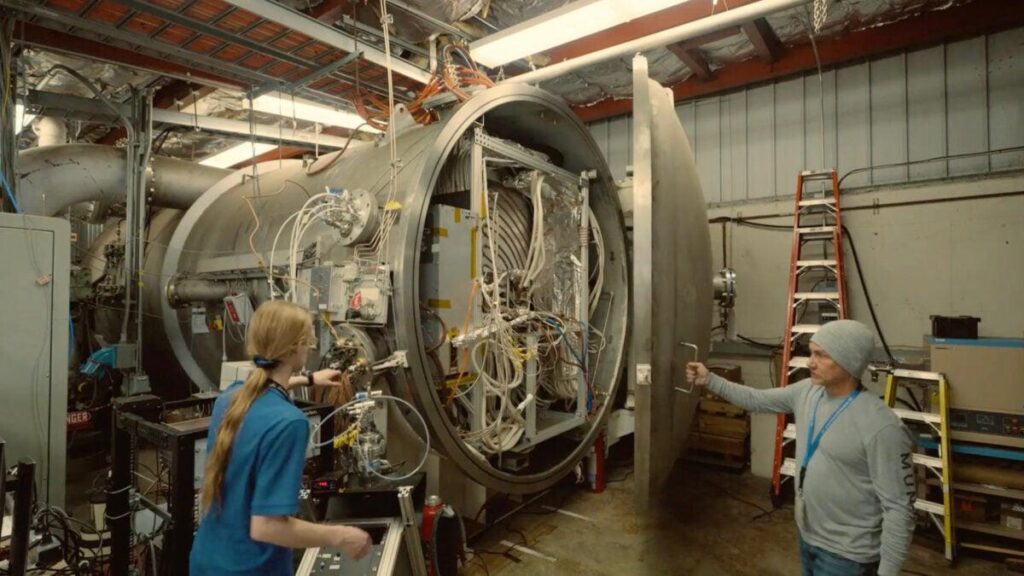
NASA engineers recently tested a next-generation electric propulsion system that could one day power a crewed mission to Mars.
NASA fired up a prototype of its electromagnetic thruster inside a vacuum chamber, reaching power levels of up to 120 kilowatts—the highest achieved in U.S. tests of an electric propulsion system. That’s over 25 times the power of the electric thrusters aboard the current Psyche mission, which launched in 2023 on a journey to explore a metal-rich asteroid.
“Designing and building these thrusters over the last couple of years has been a long lead-up to this first test,” James Polk, senior research scientist at NASA’s Jet Propulsion Laboratory (JPL), said in a [statement](https://www.jpl.nasa.gov/news/nasa-fires-up-powerful-lithium-fed-thruster-for-trips-to-mars/?utm_source=iContact&utm_medium=email&utm_campaign=1-nasajpl&utm_content=thruster20260428). “It’s a huge moment for us because we not only showed the thruster works, but we also hit the power levels we were targeting. And we know we have a good testbed to begin addressing the challenges to scaling up.”
Power level doesn’t tell me specific impulse or scalability.
It’s like with Ion Drives. They sound amazing until you realize that it takes forever to accelerate a reasonable payload.
Magnetoplasmadynamic thrusters operating at that power level typically produce somewhere in the ballpark of 5 to 10 Newtons (~1 to ~2.2 pounds) of thrust.
Remember VASIMR? At 200 kW, it has demonstrated ~5 N of thrust with ~72% efficiency and an Isp of ~4,900seconds.