
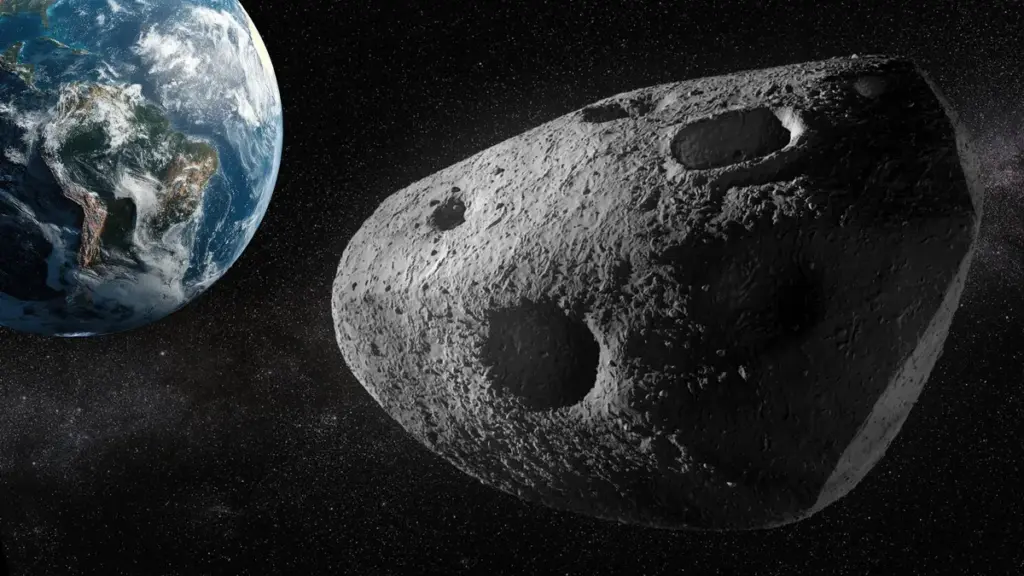
The asteroid Apophis will pass by Earth in 2029 at a distance closer than some communications satellites—and this flyby is pushing private companies to take on some of the responsibility for planetary defense. A California-based startup has announced the first commercial mission to the asteroid in deep space, which is set to accompany Apophis before and after its close approach to Earth.
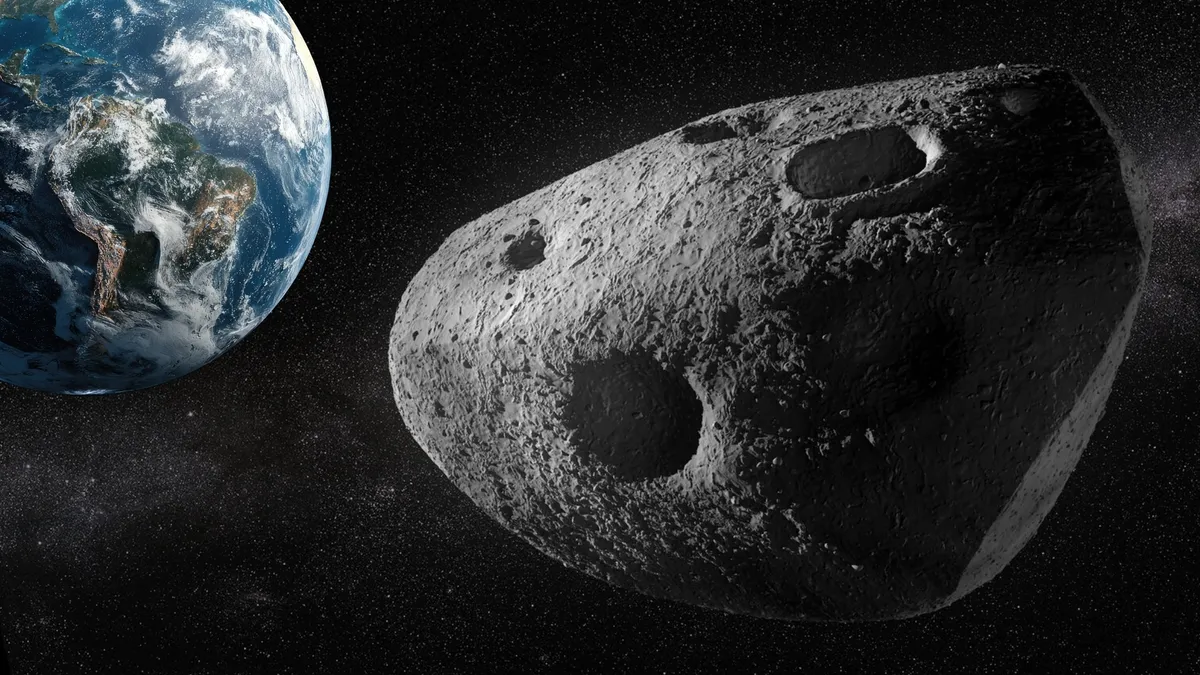 Illustration of asteroid Apophis passing by Earth in 2029 at a distance of approximately 32,000 km. Source: ESA Science Office / Earth added in Canva Pro via Space.com
What is the Apophis EX mission?
The startup ExLabs presented the Apophis EX project at the 41st Space Foundation Space Symposium, held in Colorado Springs from April 13–16, 2026.
The plan is for the spacecraft to intercept Apophis as it approaches Earth, collect scientific data on its dynamics and physical characteristics, and then track it after it passes by. Specifically, this data is intended to be used to refine collision risk models and develop strategies for avoiding hazardous objects.
Why planetary protection needs business
James Orsulak, co-founder of ExLabs and president of the Planetary Protection Foundation, speaks candidly about the limitations of government funding. “NASA’s planetary defense budget is less than one percent of the total space agency. That’s not enough to ever do anything,” he said.
Former NASA Administrator Jim Bridenstine, who also participated in the symposium, supported the idea that the government should become one of the customers of the commercial market, rather than the sole player. Competition among private suppliers lowers costs and accelerates innovation.
What are our options?
During a panel discussion, Edward Lu—a former NASA astronaut, director of the Asteroid Institute, and co-founder of the B612 Foundation—emphasized that there was no single best technology for deflecting asteroids. On the table are gravitational tugs, ion beams, kinetic impacts, nuclear explosions, and other approaches.
The choice of method depends on the specific situation, and all of these approaches require practical application, not just theoretical calculations. “High flight frequency ensures safety, reliability, and cost savings. We are approaching the point where we will be able to build a spacecraft in a year. This is entirely feasible,” said Lu.
Apophis Live
The mission’s organizers want to turn the 2029 flyby into an event of global significance—literally. ExLabs is in talks to broadcast the event in IMAX format and live.
According to him, the audience could exceed that of the Super Bowl. Apophis, by the way, will be visible to the naked eye—a rare occurrence for an object of that size.
We previously wrote about the Chinese mission to Apophis.
According to Space.com