
 Credit: ESA
The French space agency CNES has published a call for the development and installation of a kitchen for use aboard crewed spacecraft embarking on deep-space missions to Mars and beyond. The kitchen prototype will be installed at CNES in a building at its Toulouse site for long-term testing.
Published on 21 April, the Onboard Kitchen for Space Exploration initiative is part of the CNES Spaceship France programme, which focuses on the development of key technologies to enable future crewed missions to the Moon and Mars.
The proposed kitchen must have overall dimensions no greater than 2 metres in width, 2.3 metres in height, and 2.3 metres in depth. It must also allow sufficient space for crew movement and include an entrance door 1 metre wide.
The system will be required to be as resource-efficient as possible, and while water treatment is outside the scope of the call, it must be capable of filtering any fats or grease from wastewater. Once installed, it must withstand the operating environment for five consecutive years without degradation.
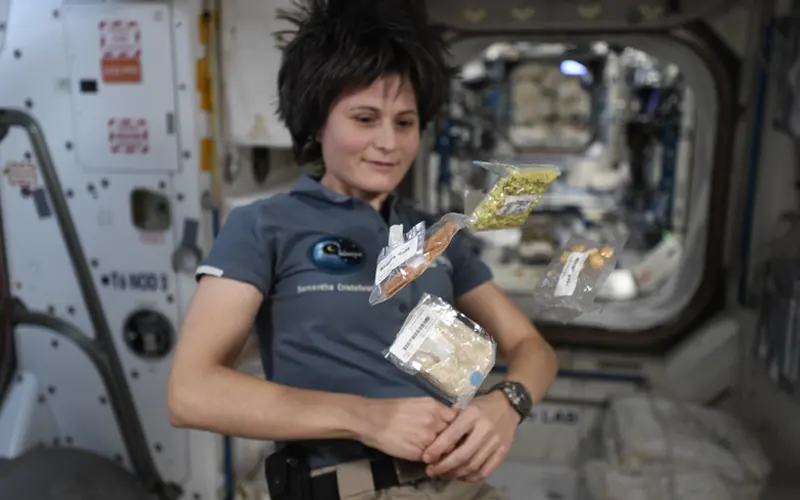
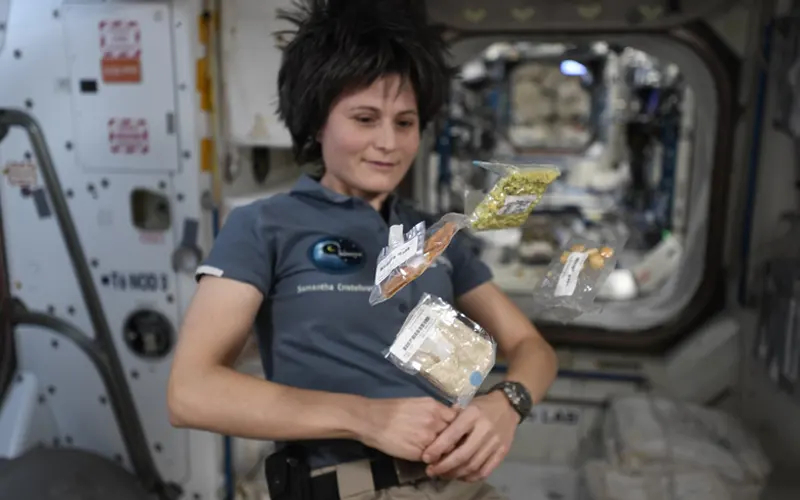
In its preamble, the call explains that current food provisions for space missions rely on prepackaged meals that are simply reheated and consumed. However, it adds that on longer missions lasting up to three years, physiological and psychological factors, along with weight and volume constraints, could make this approach increasingly impractical.
Instead, the call proposes meeting at least 50% of the crew’s nutritional needs with food grown aboard the spacecraft, including microgreens, root vegetables, and mushrooms. The kitchen would be used to turn that produce into a wider range of meals, offering greater variety than current ration-based systems.
Spaceship France and Europe’s bid for a crewed future
The Spaceship France programme is focused on the development of technology in critical areas such as habitats, energy generation and storage, and in-situ resource utilisation. Previous calls have focused on developing a lunar power station prototype and a European-made intra-vehicular activity (IVA) spacesuit, developed by a consortium that included sporting goods retailer Decathlon. An initial prototype of the IVA spacesuit is expected to be tested aboard the International Space Station later this year by French astronaut Sophie Adenot.
While forward-looking, the Spaceship France programme is focused on developing sovereign technologies for a European crewed space programme that is wholly dependent on partners. While the European Space Agency is participating in NASA’s Artemis programme, with Gateway now “paused” and questions being raised over funding for future Orion flights, for which the agency supplies the service modules, it remains unclear how significant its role in upcoming crewed surface missions will be.
It is possible that, with elements like the Spaceship France programme, the Argonaut lander, and Moonlight, the European Space Agency may be able to position itself to once again play a meaningful role in the Artemis programme. ESA is also exploring a more independent path, with a call published earlier this year examining the potential for a European-led space station.
Keep European Spaceflight Independent
Your donation will help European Spaceflight to continue digging into the stories others miss. Every euro keeps our reporting alive.