
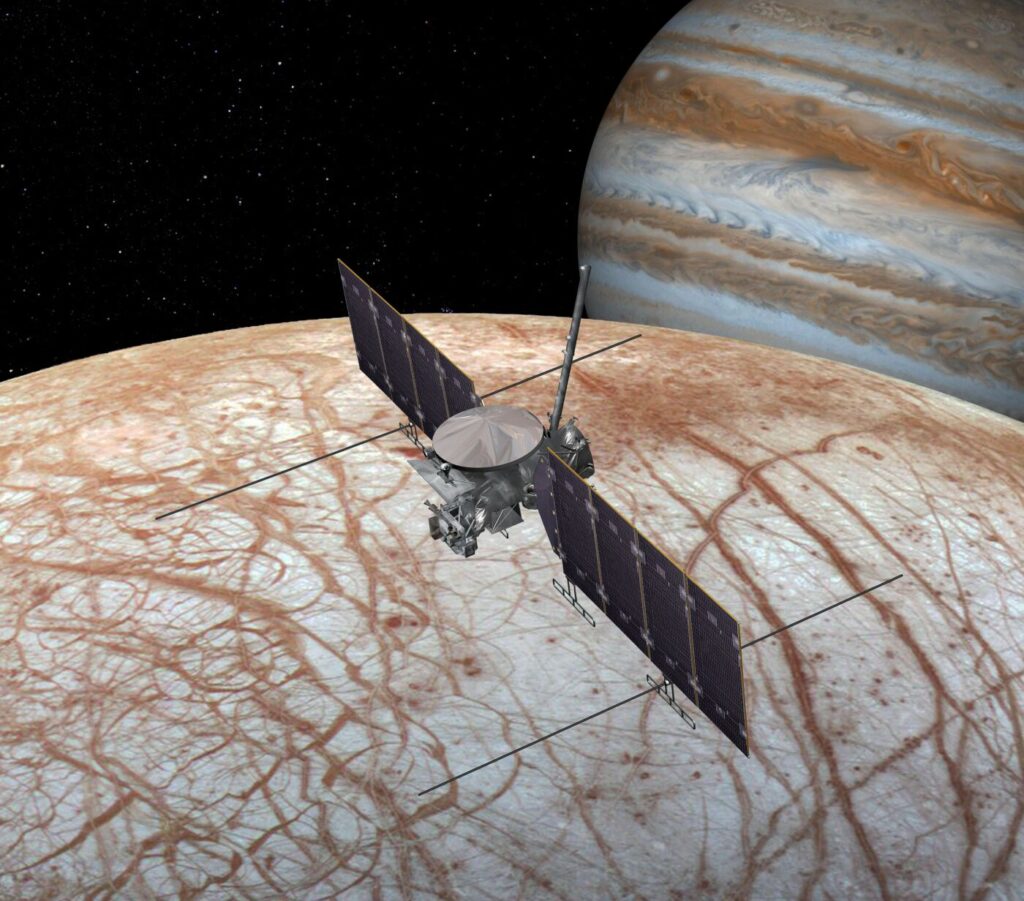
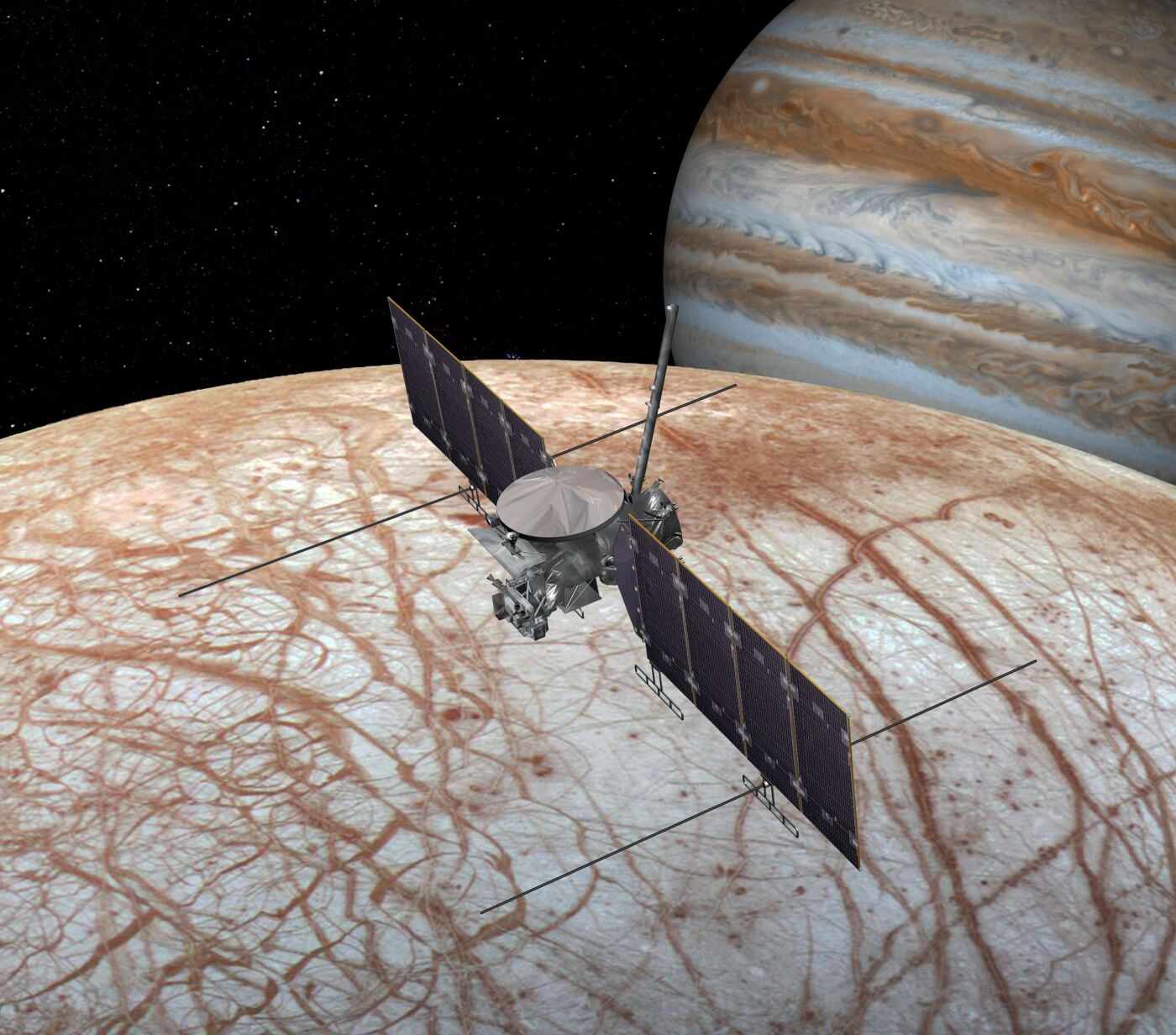
NASA’s Europa Clipper spacecraft carries an impressive load of scientific instruments to study this moon’s icy surface, which hides a vast ocean of water beneath it. Courtesy of NASA/JPL-Caltech
Jupiter remains visible throughout the spring season. You can still see it in the constellation Gemini, though it is not as close to the twin stars as they were earlier this year. Look for it in the west as soon as it gets dark. It should be visible until at least midnight if you have a good view of the western sky.
As you gaze toward it, note we have three spacecraft enroute to Jupiter right now. They are aimed at Jupiter, yet the giant planet will not be their main target. Two of these spacecraft are designed to explore Jupiter’s large moons — Ganymede, Callisto and Europa. The third will explore asteroids nearby.
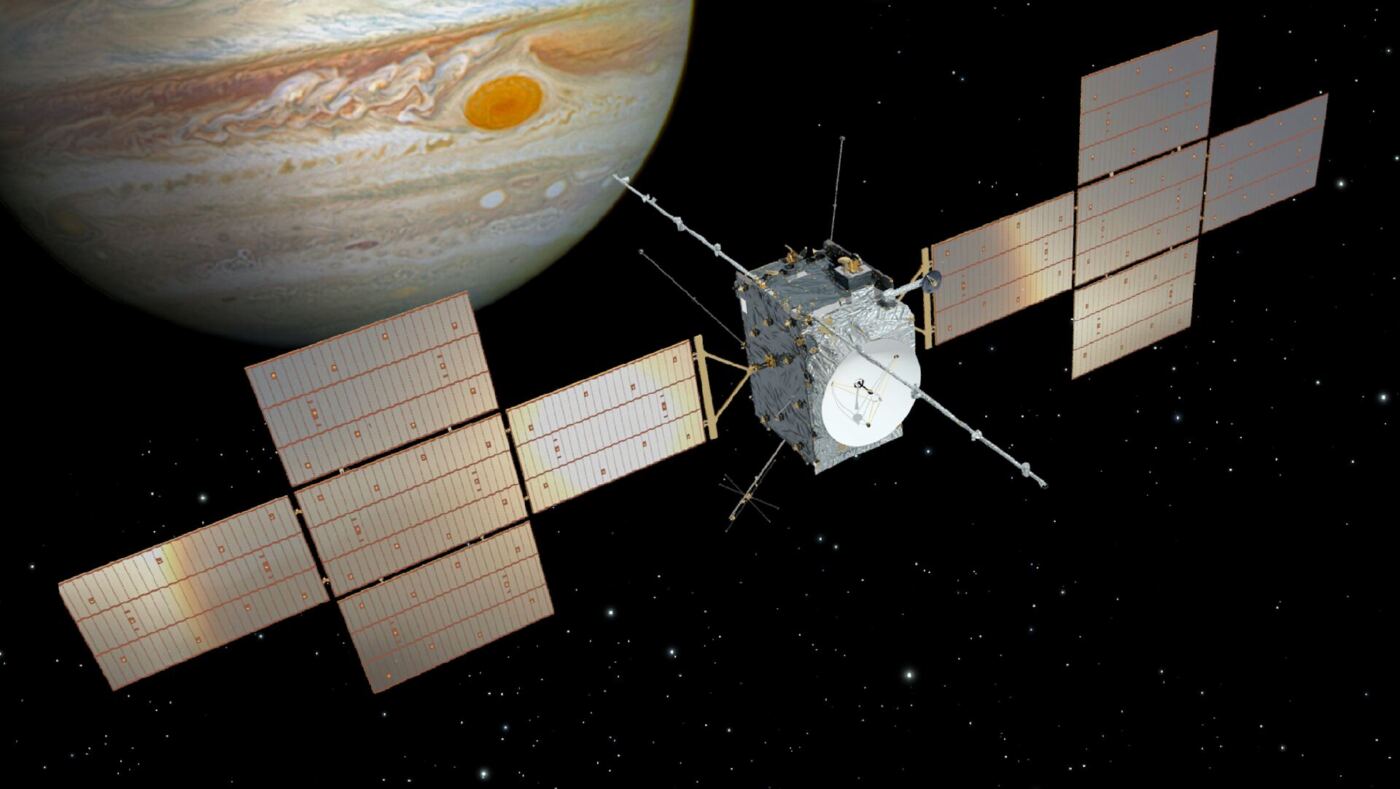
The European Space Agency’s JUICE spacecraft will explore Ganymede, Callisto and Europa. Courtesy of ESA
The European Space Agency’s JUICE (JUpiter ICy moons Explorer) launched three years ago. Although it was launched recently it will be the last to arrive due to its convoluted path. The spacecraft is using multiple flybys of Earth and Venus to boost its speed and send it to Jupiter. The spacecraft will speed past Earth twice more — once in September and again in 2029. It will finally arrive in the summer of 2031 to explore the large icy moons.
NASA’s Europa Clipper launched in October 2024. This spacecraft will reach Jupiter’s fascinating moon Europa four years from now in April 2030. It will perform 49 close flybys to analyze the moon’s icy shell, composition and geology. The cracked surface ice indicates that there’s a vast ocean beneath the surface. Given the moon’s interior is warm, this makes it a good place to search for life.
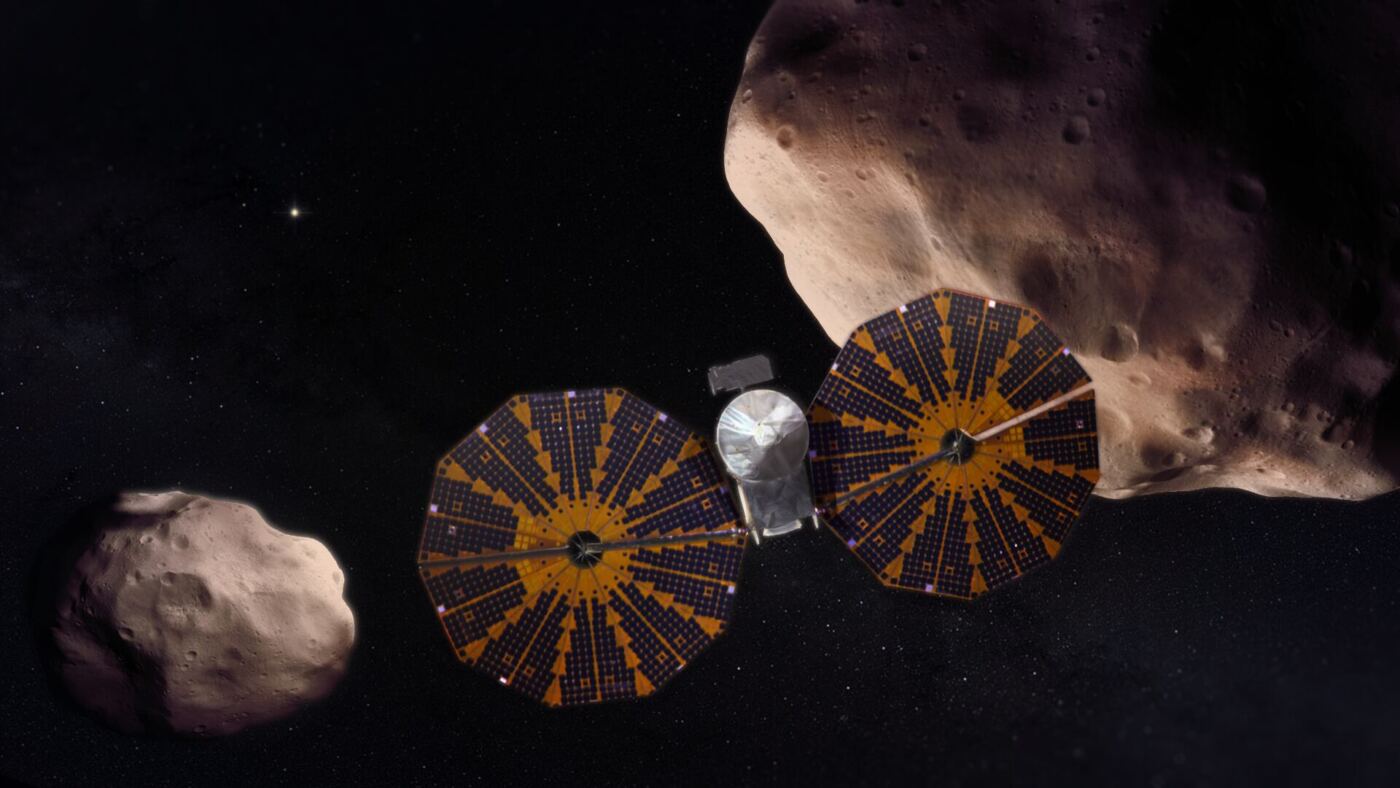
Artist concept depicts the Lucy spacecraft flying past two asteroids. Lucy will be the first mission to explore Jupiter’s Trojan asteroids. Courtesy of NASA/GSFC/A. Gutierrez
Meanwhile NASA’s Lucy probe was launched in 2021. It flew past two asteroids on its way through the asteroid belt and is now on its way toward Jupiter. The spacecraft is following a long looping path that will explore the Trojans — a group of asteroids that share Jupiter’s orbit. They are actually separated into two “camps” orbiting ahead of and behind the planet. The camps are named after the Trojans and Greeks, a reference to the Trojan War.
Lucy will visit the Greek camp first, flying past the asteroids Eurybates and Polymele next summer. After visiting two more asteroids in 2028, the spacecraft will actually come back and fly past Earth. This will slingshot the probe back out to the Trojan camp where it will investigate two more asteroids in 2033.
Kevin D. Conod is the Planetarium Astronomer at the County College of Morris and a member of the North Jersey Astronomical Group.