
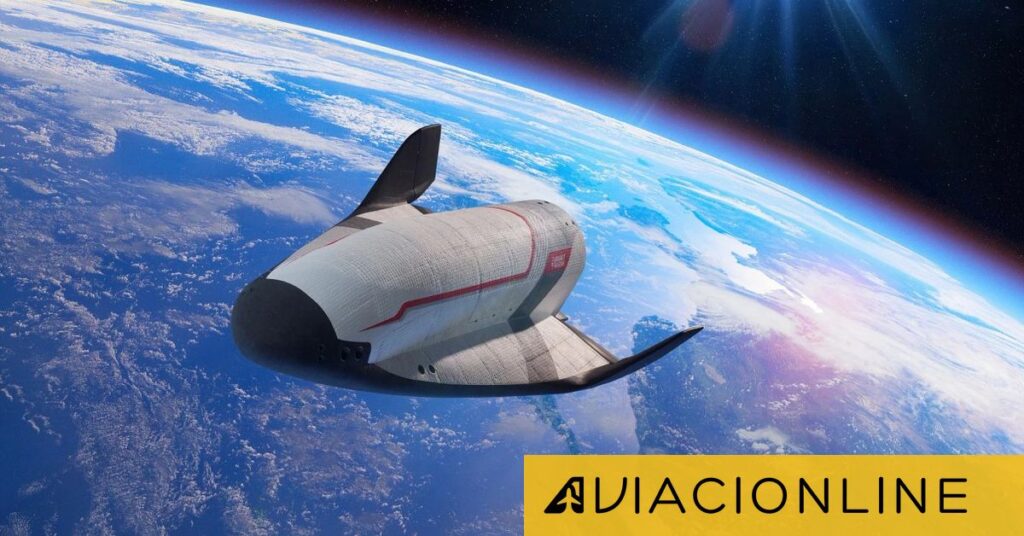
Spanish company Arkadia Space has been selected by Dassault Aviation to develop and supply the complete propulsion system for the subscale VORTEX-D demonstrator, part of the VORTEX (Véhicule Orbital Réutilisable de Transport et d’Exploration) reusable spaceplane program.
The contract—announced on April 22—covers tanks, electronics, and ARIEL 250 N monopropellant thrusters, which will form the vehicle’s Reaction Control System (RCS). This subsystem is critical during high-altitude and spaceflight phases, where precise attitude control and system reliability are essential.
A key demonstrator in the VORTEX roadmap
VORTEX-D represents the first phase of an incremental roadmap aimed at developing a family of reusable spaceplanes capable of operating in orbit and landing conventionally on a runway. The demonstrator, approximately one-third scale, is intended to validate critical technologies such as hypersonic flight control, advanced thermal protection, and guidance and flight control systems.
Render of the VORTEX space plane delivering a payload in LEO. Source: Dassault Aviation.
The program has received institutional backing from the French Ministry of the Armed Forces since the Paris Air Show, where support for the demonstrator was formalized as part of a broader dual-use strategy encompassing both civil and military applications. In this context, VORTEX is designed to support a wide range of missions, from cargo transport to orbital stations to in-orbit services and potential defense-related roles.
In parallel, Dassault Aviation has strengthened its engagement with the European Space Agency through a Letter of Intent to explore cooperation on orbital platforms and reentry technologies, aligned with Europe’s Explore2040 strategy to enhance autonomous access to and operations in Low Earth Orbit (LEO).
ARIEL 250N and the rise of “green” propulsion
At the core of the contract is the ARIEL 250 N thruster, developed by Arkadia under the ESA Future Launchers Preparatory Program. Based on high-concentration hydrogen peroxide, the system reflects a broader shift toward “green” propellants, reducing toxicity and operational complexity compared to traditional alternatives.
Within less than two years, ARIEL has evolved from an early-stage technology into a propulsion solution integrated into key European space programs, including its selection by MaiaSpace for launcher RCS applications. With the Dassault contract, the thruster is now positioned across two strategic domains: access to space and reusable orbital transportation.
Representation of the ARIEL 250N engine. Source: Arkadia Space.
This progress builds on Arkadia’s successful in-orbit validation in 2025, during a D-Orbit mission launched by SpaceX, marking the beginning of its commercial phase.
Strategic outlook
Arkadia Space’s integration into the VORTEX program reflects a broader trend within the European aerospace ecosystem: the expansion of the industrial base through the incorporation of NewSpace players into high-complexity programs.
At the same time, the development of a reusable spaceplane introduces a potentially disruptive capability by combining the operational flexibility of aviation with orbital access, reducing response times and expanding the range of both civil and military missions.
In this context, the VORTEX-D demonstrator is not only intended to validate critical technologies, but also to lay the groundwork for an industrial and operational architecture that could enable Europe to consolidate sovereign capabilities in orbital transportation and space operations.