
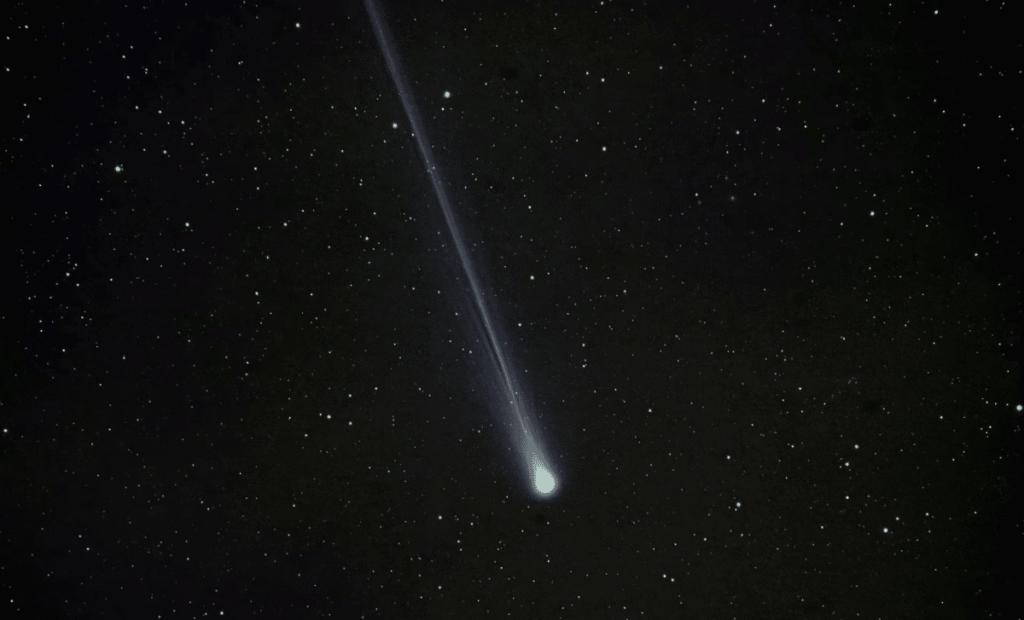
A newly brightening Comet C/2025 R3 (PanSTARRS) is making a striking pass through the inner solar system, reaching its closest point to Earth on April 26, according to NASA observations. Having just survived an intense solar encounter, the comet is now visible in space-based imagery, offering an unusual opportunity to follow its motion between the Sun and Earth in near real time.
A Comet That Survived The Sun
The journey of Comet PanSTARRS has already been dramatic. On April 19, the icy object passed through perihelion, its closest approach to the Sun, enduring extreme heat and radiation that often break apart weaker comets. Instead of disintegrating, it held together and emerged brighter, continuing its trajectory outward through the solar system.
Now traveling roughly 45 million miles from Earth at its closest point, the comet is not a threat, but it is drawing attention for its visibility and resilience. according to NASA, its brightness has climbed to around magnitude +4.5, placing it within reach of naked-eye observation under dark southern skies, while binoculars reveal more structure in its glowing coma.
Captured By Solar Observatories
What sets this event apart is how it can be observed. The comet has entered the field of view of the LASCO coronagraph aboard the SOHO spacecraft, a joint mission between NASA and ESA positioned at the L1 Lagrange Point, about 930,000 miles from Earth.
This instrument blocks the Sun’s intense light, allowing faint objects nearby to become visible, including comets passing close to the solar glare. In this case, PanSTARRS appears as a moving streak of light crossing a vast field that spans 32 times the Sun’s diameter. Additional imagery from NOAA’s GOES-19 satellite complements the view, capturing the comet’s arc as it moves through space.
These perspectives offer a rare alignment where a comet can be tracked continuously against the backdrop of solar activity, something ground-based telescopes cannot replicate.
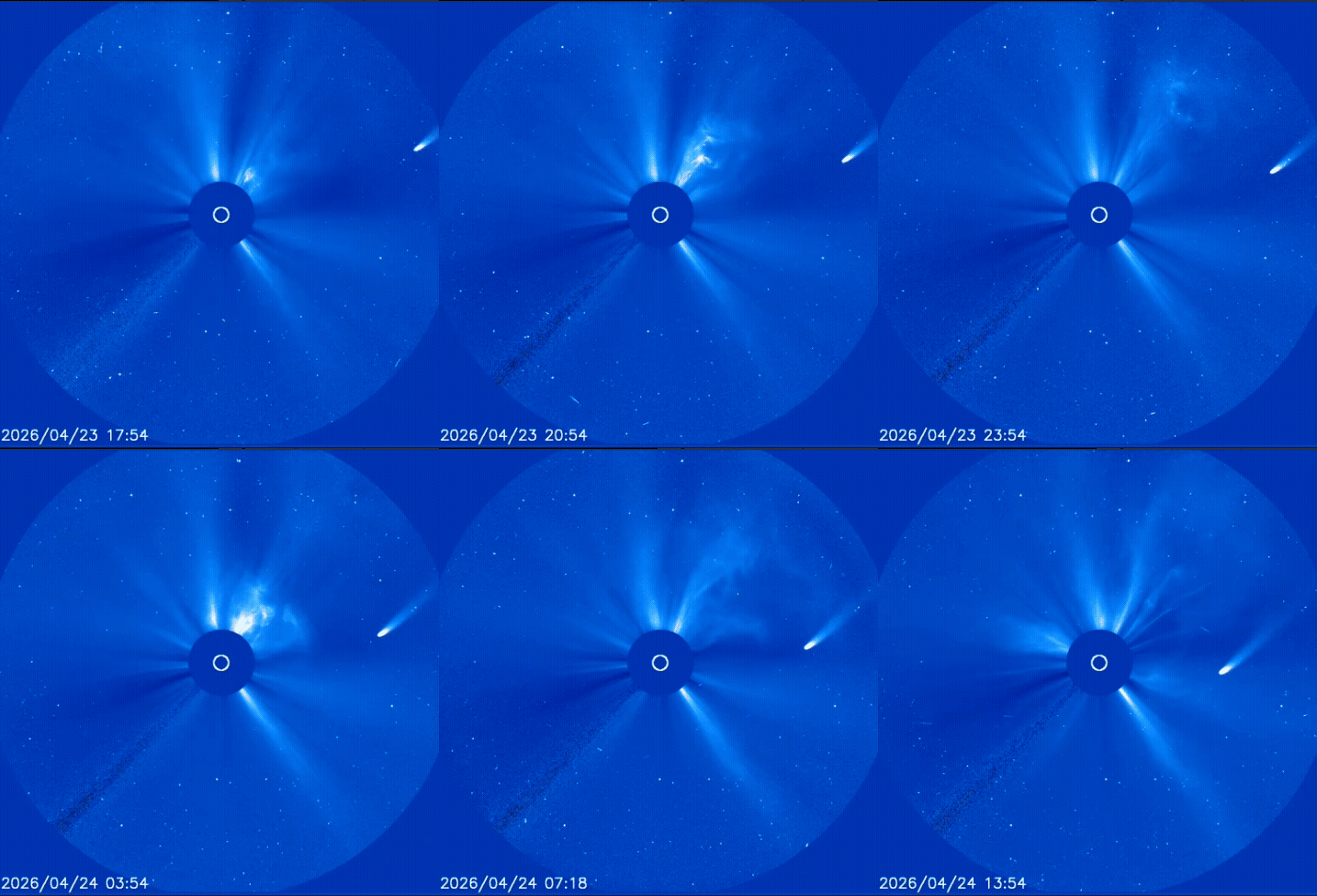 A timelapse of images captured by the SOHO spacecraft. (Image credit: NASA/ESA/NOAA)
A Dynamic Solar Backdrop
The timing of the comet’s passage adds another layer of intensity. Over recent days, the Sun has unleashed multiple powerful X-class solar flares, the strongest category of solar eruptions. These events triggered radio blackouts on Earth and launched massive clouds of charged particles known as coronal mass ejections into space.
Against this volatile background, PanSTARRS appears almost like a silent traveler crossing a storm. The contrast between the comet’s steady motion and the Sun’s explosive activity creates a dynamic scene in spacecraft imagery, blending two very different cosmic phenomena into a single frame.
How To Follow The Comet Right Now
Observers can track Comet PanSTARRS through publicly available data streams. The SOHO LASCO instrument provides regularly updated images, while the NOAA Space Weather Prediction Center shares additional satellite views.
In these images, the comet is expected to move from the upper-right region of the frame toward the lower portion over the coming days. Its path is smooth and continuous, making it relatively easy to identify compared to the flickering bursts of solar activity nearby.
For those in the southern hemisphere, the comet may also be visible in the night sky as a faint, diffuse glow. Its appearance is subtle to the naked eye but becomes more distinct with basic optical aid.
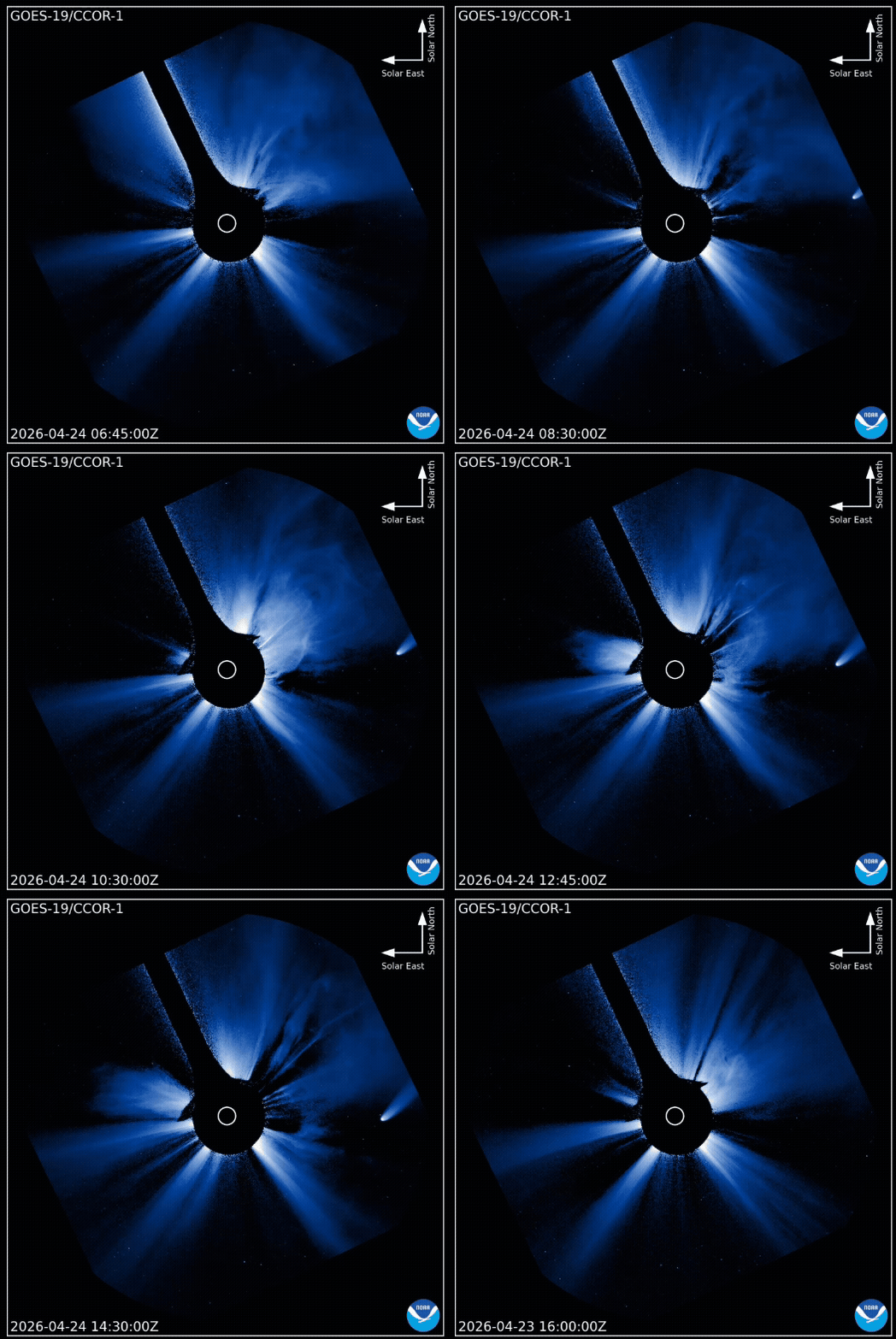 Comet PanSTARRS arcs towards the sun in imagery from the GOES-19 satellite. (Image credit: NASA/ESA/NOAA)
A Brief Visit From A Long-Distance Traveler
Comets like C/2025 R3 (PanSTARRS) originate from the distant edges of the solar system, carrying material preserved since its earliest formation. Each pass near the Sun transforms them, shedding gas and dust that form their glowing tails.
This particular visitor will soon fade as it continues its journey away from both the Sun and Earth. Its brief window of visibility, combined with the rare geometry of its path through solar observatory fields, makes this event a compelling moment for both scientists and skywatchers.
For a few days, a distant relic of the solar system’s past is crossing directly through humanity’s most advanced solar eyes, and anyone can watch it happen.