
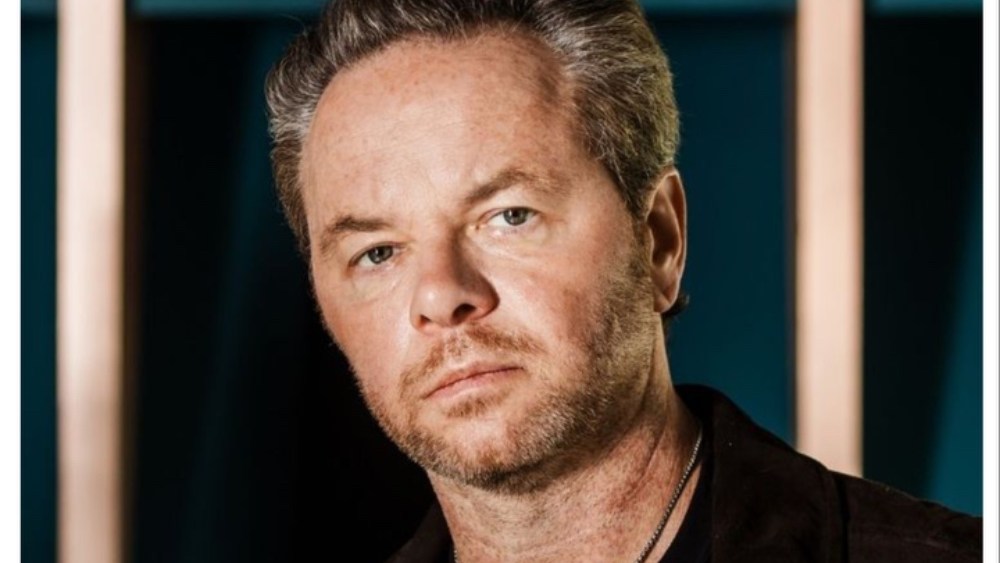
Noah Hawley, creator of TV series “Fargo,” “Legion” or “Alien: Earth,” remains optimistic about the industry.
“It has been a process to become optimistic,” he clarified at Canneseries.
“We are between the old and the new model, but there are masterpieces in every generation and we just have to figure out how to make them now. It’s a larger question about what tech companies have done to Hollywood – we have all been impacted by it. They tend to come into the industry, flood it with money and everyone feels: ‘Oh, it’s a renaissance.’ Then it all dries up.”
The last few years have been challenging. “Our biggest competition is YouTube, which spends zero dollars to make anything. You’re producing films and TV for hundreds of millions of dollars, and losing eyeballs every day to things that are free.”
Hawley started out as a novelist and still writes, but “TV is the fastest way to talk to the culture,” he said.
“If you have something vital to say, TV is a better medium.”
“Someone recently called me ‘the franchise whisperer,’ which is a valuable thing to be right now – our industry is so focused on franchises and existing IPs, and audiences will watch them more reliably. I also have a reputation for being an original storyteller, which doesn’t make much sense. But I’m interpreting these brands – what is ‘Fargo,’ what is ‘Alien’ – and telling an entirely new story to you that will evoke the feelings you had when watching the original.”
He’s also behind “Legion,” taking on the X-Men universe.
“Freud wrote an essay called ‘The Uncanny,’ grappling with the human belief in the supernatural. It’s when familiar things act in unfamiliar ways. A haunted house story is unsettling because your house isn’t supposed to do that. [I thought:] What if ‘Breaking Bad’ was about Walter White becoming a supervillain? I found Professor X’s son, who’s mentally ill, basically. He has these powers but he’s not sure whether they’re real. And if he doesn’t know, then that’s the show.”
Dan Stevens played the lead.
“He had really bad food poisoning [when filming the pilot]. He would go throw up in a bucket every time we yelled ‘cut!’ and then dance again. That’s the dedication of actors,” joked Hawley.
He doesn’t rewatch the originals before embarking on his shows, he admitted. Instead, he thinks about the emotions he remembers from them.
“When I think about [Ridley Scott’s] ‘Alien,’ there’s this strong emotion of discovery surrounding the lifecycle of this creature. It starts as an egg, comes out and attaches itself to you, and you think it’s the worst thing you’ve ever seen. But there’s more! Then the chestburster comes out,” he laughed.
“In the second film, you already know that evolution, so you replace surprise with suspense. To make you feel the same way you felt when watching Ridley’s movie, I needed to introduce new creatures.”
Second season of the show is on its way. “Fargo” had five seasons – so far.
“To me, ‘Fargo’ is about the battle between decency and cynicism. It’s not about good and evil; it’s about people who believe in the value of others and those who don’t. David Thewlis says in the third season: ‘The problem is not that there’s evil in the world – the problem is that there’s good. Otherwise, who would care?’ In my country, we are not going in the right direction. Decency isn’t winning – cynicism is,” said Hawley.
“In Season 5, everyone in that show was a Republican. Different versions of a Republican, but still. I was trying very hard not to be political with a capital P, but to talk about the humanity underneath it all.”
If the second season was about “the death of a family business and the rise of corporate America” and the third about “deconstructing the phrase ‘this is a true story’ in the world of alternative facts,” the last one was about the need for a justice system.
“One man, a sheriff, who believes he’s right, is no better than a villain. There’s a coherent mindset when you watch ‘Yellowstone’ or ‘1883,’ rooted in the idea that nobody can tell a man what’s right or wrong. He knows it in his bones. There are scenes when [Jon] Hamm lists some ridiculous laws, but that doesn’t mean the law itself is ridiculous,” he stated.
“I went into that season believing there’s a significant audience that believes he’s the hero, and my job was to push them, asking: ‘Are you still with him?’ But no one ever calls to say if it works or not.”
Despite the many iconic male characters over the years – “Billy Bob Thorton showed up with that hair and I thought: ‘We are making the same show.’” – women are still carrying the stories.
“These franchises are female in my mind. If women weren’t at the center of these stories, I would be doing it wrong.”
When interpreting known brands, his first mission is authenticity.
“You have to say: ‘I understand what ‘Alien’ is.’ Once I achieve that, I can do the original thing. I don’t think of it as ‘fan service’. It’s about feeling you’ve got it right. These things need to stand on their own two feet.”
For “Alien,” he came up with “the Peter Pan metaphor.”
“This story is about humanity trapped between the monsters of our past and the monsters of our future, like AI, which feels like the world of today.”
Has he used AI already?
“Not yet, but we’ve had these conversations. If I’m spending $150 million to $170 million to make a season of ‘Alien,’ that’s a lot of money, and corporations are desperate to find ways to spend less. I remain open-minded about how storytellers could use it, but it shouldn’t replace them.”
He added: “I wrote this novel and it has a plane crash and underwater sequences, so it’s expensive to make. But at the heart of it is a human drama. If all the bigger stuff was AI, would it be good to have this film in the world? The only way to see Kubrick’s ‘Napoleon’ would be for them to shoot parts of the movie and use AI for the rest. It’s inevitable. I would rather be in control of the solution of a problem than have it happen to me.”