

A striking image of the Artemis II heat shield, captured by US Navy divers, reveals the condition of the spacecraft’s thermal protection system after it splashed down in the Pacific Ocean on April 10, 2026.
As the Artemis II spacecraft returned from lunar orbit, attention turned to the heat shield that protected the crew during reentry into Earth’s atmosphere. The heat shield must withstand the intense heat generated by reentry speeds nearly 35 times the speed of sound. Following the issues observed with Artemis I, experts were keen to see whether the same design flaws would affect Artemis II.
A Critical Component for Safe Reentry
The heat shield is one of the most vital components of any spacecraft designed to reenter Earth’s atmosphere. During the Artemis II mission, the Orion spacecraft reentered at extreme speeds, generating temperatures that could reach thousands of degrees Fahrenheit.It must absorb and dissipate this heat to keep the astronauts safe. According to a NASA report, early inspections of the Artemis II heat shield revealed significantly less damage compared to Artemis I.
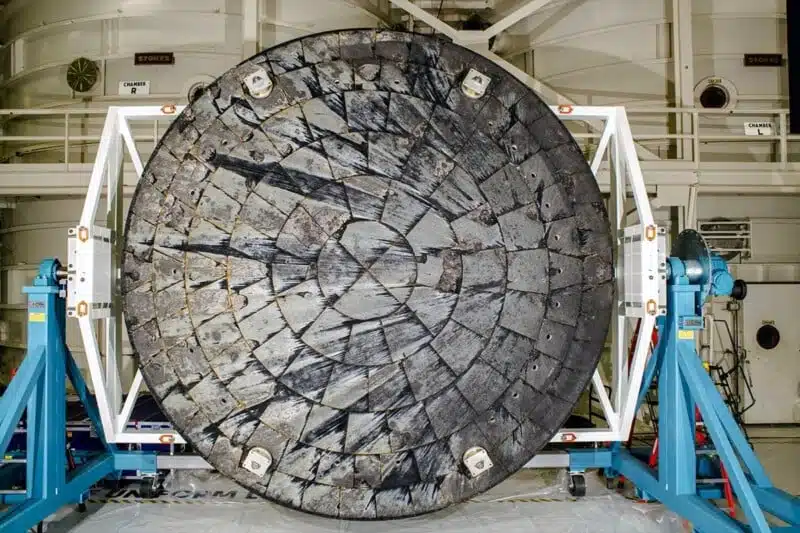 The burnt heat shield of Artemis I. Credit: NASA
This improvement suggests that adjustments to the reentry trajectory helped better control the heat buildup.
The Underwater Photo That Captured Attention
The photo of the heat shield submerged in the Pacific Ocean, taken by US Navy divers, quickly became one of the most iconic images of the Artemis II mission.
“Diver imagery of the spacecraft’s heat shield, initially taken after splashdown and further inspections on the recovery ship, found the char loss behavior observed on Artemis I was significantly reduced, both in terms of quantity and size,” NASA reported.
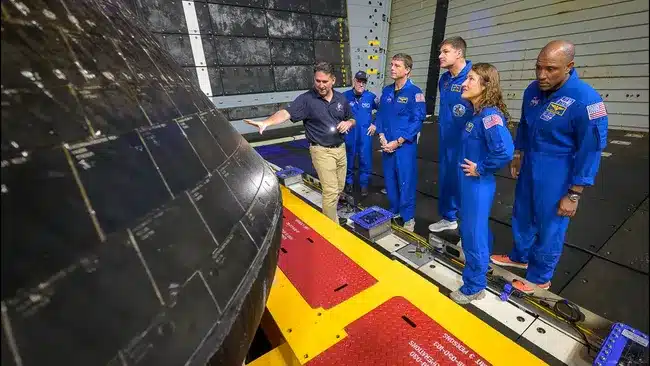 Artemis 2 astronauts inspect Orion capsule “Integrity” aboard the USS John P. Murtha on April 11, 2026, after splashdown off California. Credit: NASA/Bill Ingalls
NASA will continue to analyze it in the coming months to assess its performance, which could be critical for future missions, including those involving human landings on the Moon.
The Mission That Paved the Way to the Moon and Mars
The success of Artemis II’s heat shield marks a significant step forward for NASA’s lunar ambitions. While initial inspections suggest the shield performed well, further testing will take place to verify its durability for future missions.
As reported by PetaPixel, NASA remains confident that the improved performance of the heat shield will support the agency’s long-term goals for a sustainable human presence on the Moon. The results from Artemis II will inform the design of future spacecraft and mission planning.
“Using data from the first crewed mission under the Artemis program, NASA continues preparing the hardware and teams to launch and fly the Artemis III mission in 2027 ahead of subsequent missions to the Moon’s surface beginning in 2028,” as explained by the U.S Space Agency.
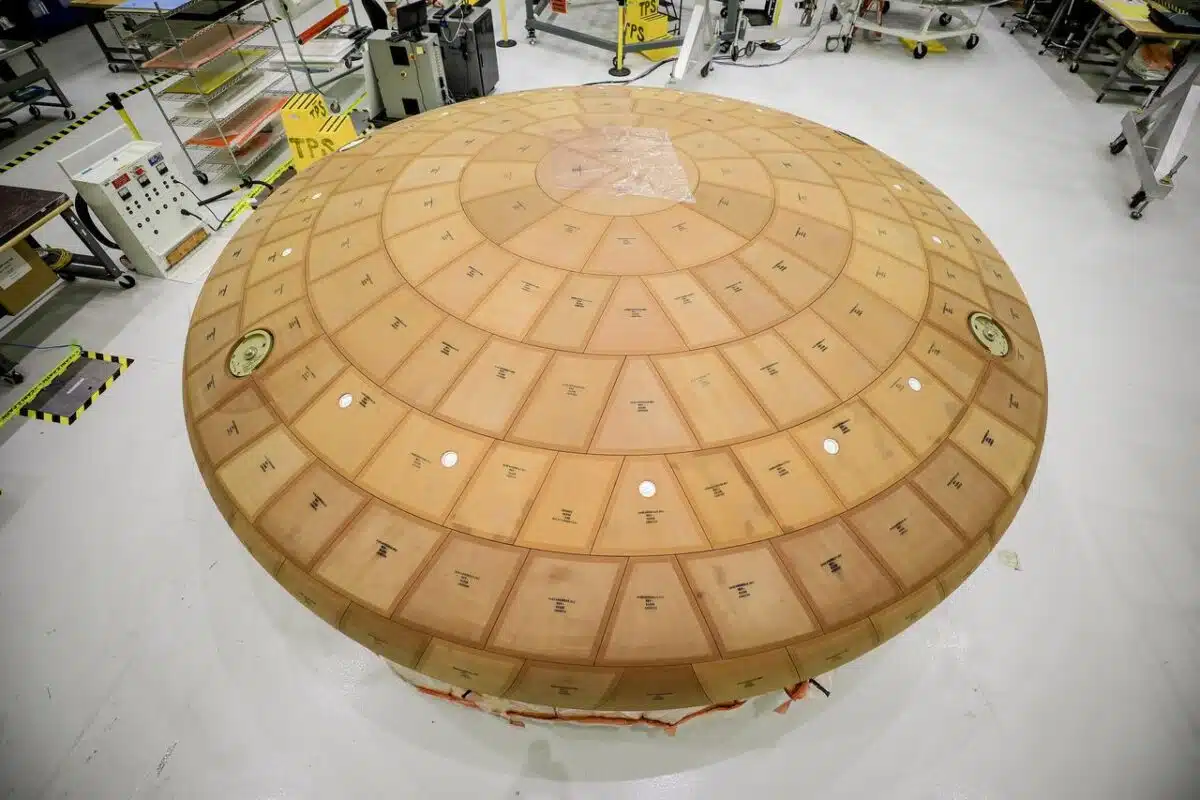 The thermal protection system that safeguarded the Orion capsule during reentry. Credit: NASA
That includes life support systems and addressing challenges encountered during previous missions, such as malfunctions in the space toilet used during Artemis II.