
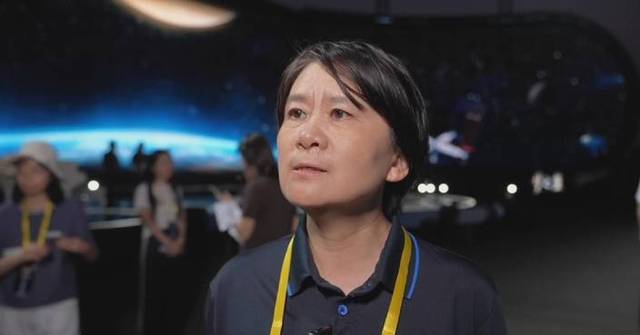
As China celebrates its 11th Space Day on Friday, experts have unveiled an ambitious roadmap for the future of deep space exploration.
From hunting for water on the Moon to mining the secrets of the early solar system, the country is accelerating its steps toward the stars.
“The Moon, Mars, other planets, and interplanetary space contain abundant resources. [For example,] there is a lot of water ice on the Moon, and helium-3 is an important fuel for fusion. We will bring these scarce resources back to Earth — a concept we call space-based manufacturing,” said Hu Chaobin, party secretary of the Deep Space Exploration Lab.
Leading the charge in the immediate future is the Chang’e-7 mission. Scheduled for launch later this year, the probe has a clear and historic objective: the lunar south pole.
“The Chang’e-7 [lunar probe] will go to the lunar south pole to look for water. If it finds water, it will be the world’s first,” said Zhang Yuhua, a deep space exploration expert with the Shanghai Academy of Spaceflight Technology under China Aerospace Science and Technology Corporation (CASC).
While the Moon remains a priority, China’s planetary exploration is also advancing rapidly. The Tianwen-2 probe, launched in May 2025, is currently nearing its target, the near-Earth asteroid 2016 HO3.
“The Tianwen-2 probe was launched last May and it’s been nearly a year now. Its in-orbit flight is all normal, and it is approaching the target asteroid. Scientists think asteroids or comets preserve material from the early formation of the solar system. If samples can be brought back from an asteroid, we might obtain material that is 4.6 billion years old. This is of particular significance for the research of space science,” said Zhang He, another deep space exploration expert from the China Academy of Space Technology of CASC.
Looking further ahead to the 14th Five-Year Plan period and beyond, the agenda includes some of the most complex missions ever attempted by the nation.
According to current planning, China’s Tianwen-3 probe is expected to launch around 2028 to retrieve Martian samples by 2031, while Tianwen-4 is slated for a launch around 2030 to explore the Jovian system.
“The Tianwen-3 and Tianwen-4 probes are also part of the national planned missions. Tianwen-3 will return to Mars and bring samples back to the Earth, while Tianwen-4 will go farther to explore Jupiter. In the future we will plan a second phase of planetary exploration projects, including missions to the solar system’s boundary. There will be many tasks worth looking forward to in the future,” said Sun Zezhou, a deep space expert at the China Academy of Space Technology, CASC.
As China pushes the boundaries of technology, the focus remains on expanding human knowledge and capability. As experts noted, future missions will also look toward the boundaries of the solar system, promising a decade filled with discovery.
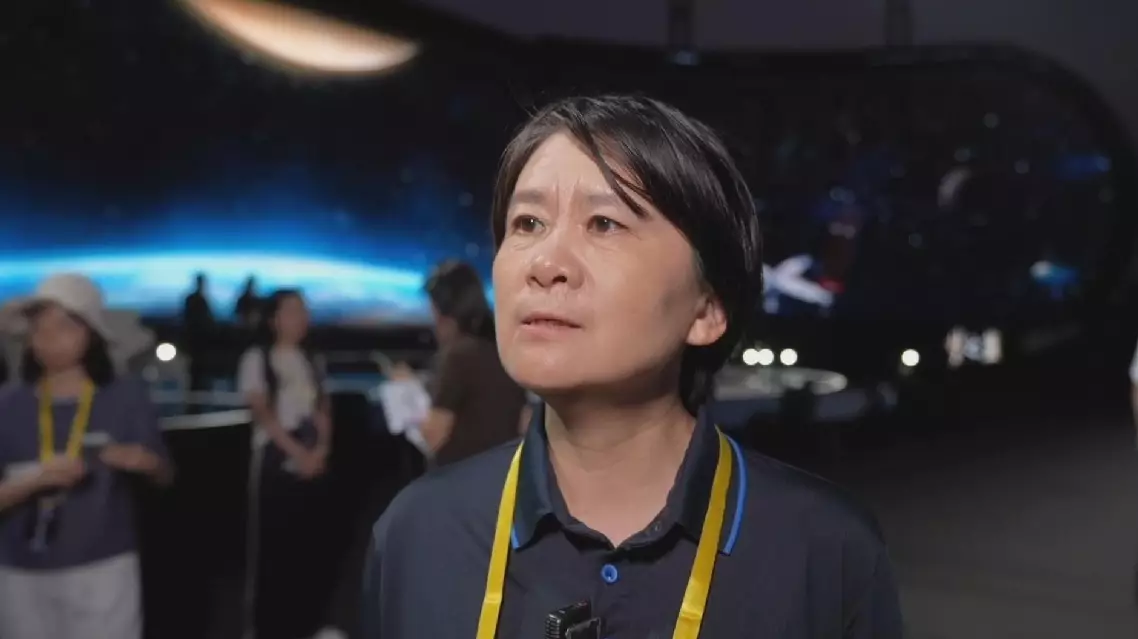
Scientists unveil deep space exploration roadmap around Space Day
China’s planned removal of tariffs on African products has opened an unprecedented opportunity for Moroccan potters, who are already adapting their ancestral craftsmanship to win over the Chinese market.
China will implement zero-tariff measures for 53 African countries with which it has diplomatic relations, starting May 1, 2026.
In a local pottery market in Rabat, Morocco’s capital, artisans are busy fulfilling orders for decorated plates, colorful tagines, and handcrafted vases, hoping that the tariff elimination will further ease their access to China’s vast consumer market.
“Pottery has a rich history, and we are committed to preserving this traditional craft. What keeps us going is the support of customers from Morocco and abroad. With the recent opening of the Chinese market and the possibility of exporting our products tariff-free, our creations can now reach that immense market, something that truly delights us,” said Youssef El Rahamli, a Moroccan artisan and exporter.
For him, opening up to China represents a significant milestone. Foreign demand has allowed him to increase production and hire more workers. In his workshop, several young people are now working to shape and decorate pieces destined for export.
According to Rahamli, the zero-tariff policy could reduce costs and make Moroccan pottery more competitive, offering new income opportunities for local artisans.
Economists say they believe that easier access to the Chinese market could create new opportunities for Morocco’s traditional industries.
“So I believe this measure presents real opportunities for Moroccan companies, because it will enhance the competitiveness of exporters. There will surely be an increase in export volumes, particularly for agricultural products, phosphates and their derivatives, industrial goods, and artisanal products. But all of this depends on Moroccan exporters’ ability to improve their offerings and services, diversify exports, and move toward high-value-added exports. And, of course, it is also important to adopt a digital-focused trade strategy and strengthen their presence at trade fairs in China to reach Chinese consumers,” said Khalid Achibane, a Moroccan economic expert.
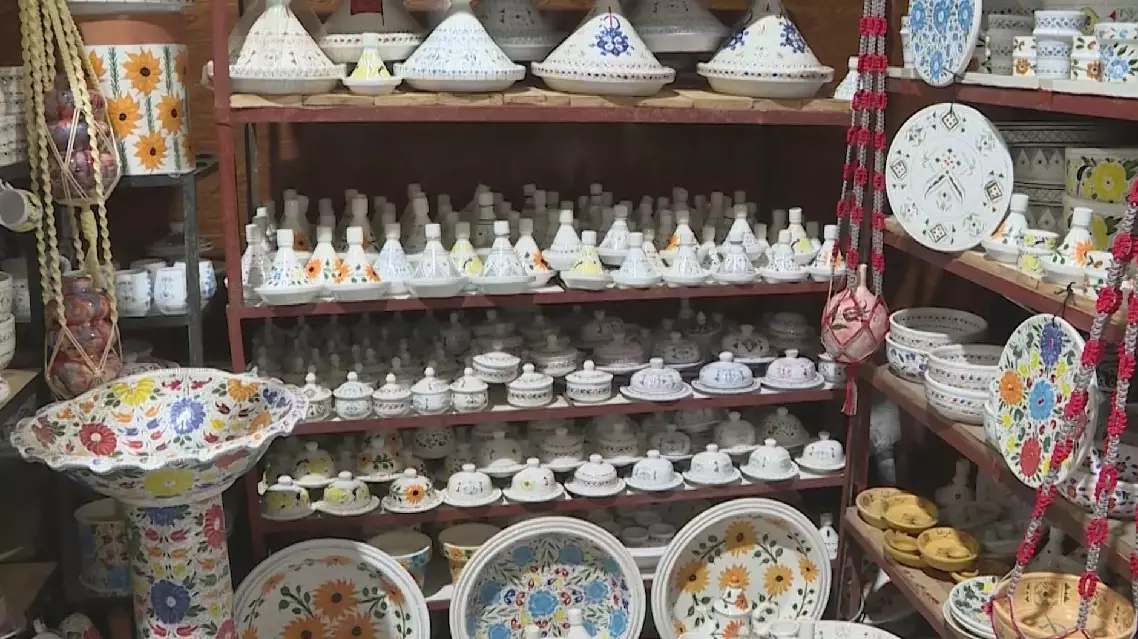
China’s tariff removal opens door for Moroccan potters