
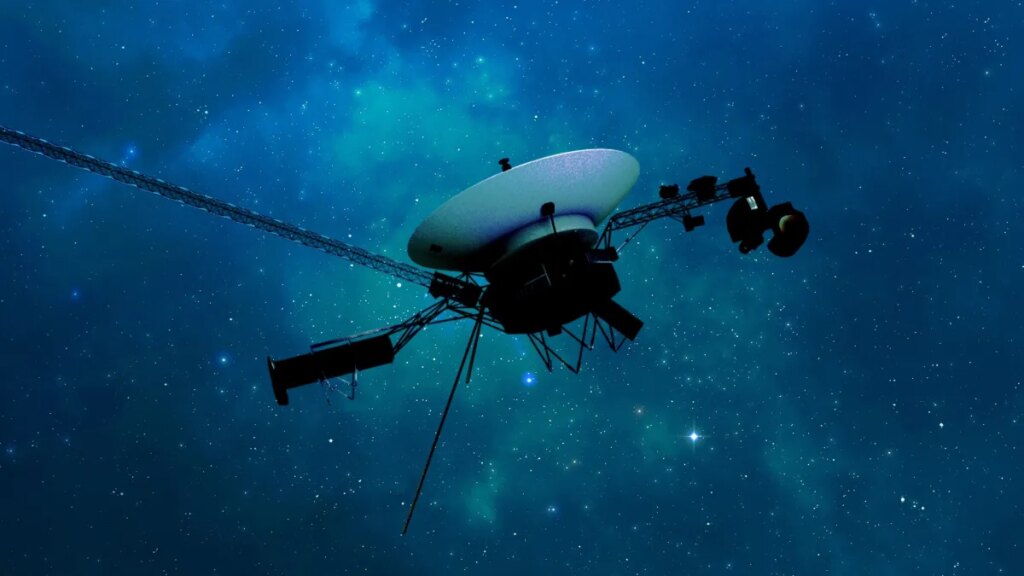
Nasa has been forced to switch off an instrument on humanity’s most distant spacecraft, Voyager 1, after an unexpected dip in power raised the risk of a wider shutdown.
Engineers believe the move will buy the probe, which was launched in 1977 and is now travelling through interstellar space more than 15.7 billion miles from Earth, at least another year of operation.
They hope to use that time to prepare for a far more ambitious and risky power-saving manoeuvre they are calling the “Big Bang”.
That Voyager 1 and its sister craft Voyager 2 are still operating is considered a scientific marvel. They were built in the age of cassette tapes at a time when the Ford Cortina was Britain’s bestselling car. Their computers have less memory than a modern car’s key fob.
But between 1979 and 1981, they captured the first close-up images of Jupiter and Saturn, revealing the planets’ turbulent atmospheres and intricate ring systems in unprecedented detail. In 1986 and 1989, Voyager 2 went on to capture humanity’s first, and still only, close-up views of Uranus and Neptune. Since then, they have become the first human-made objects to travel beyond the influence of the sun into the interstellar void.
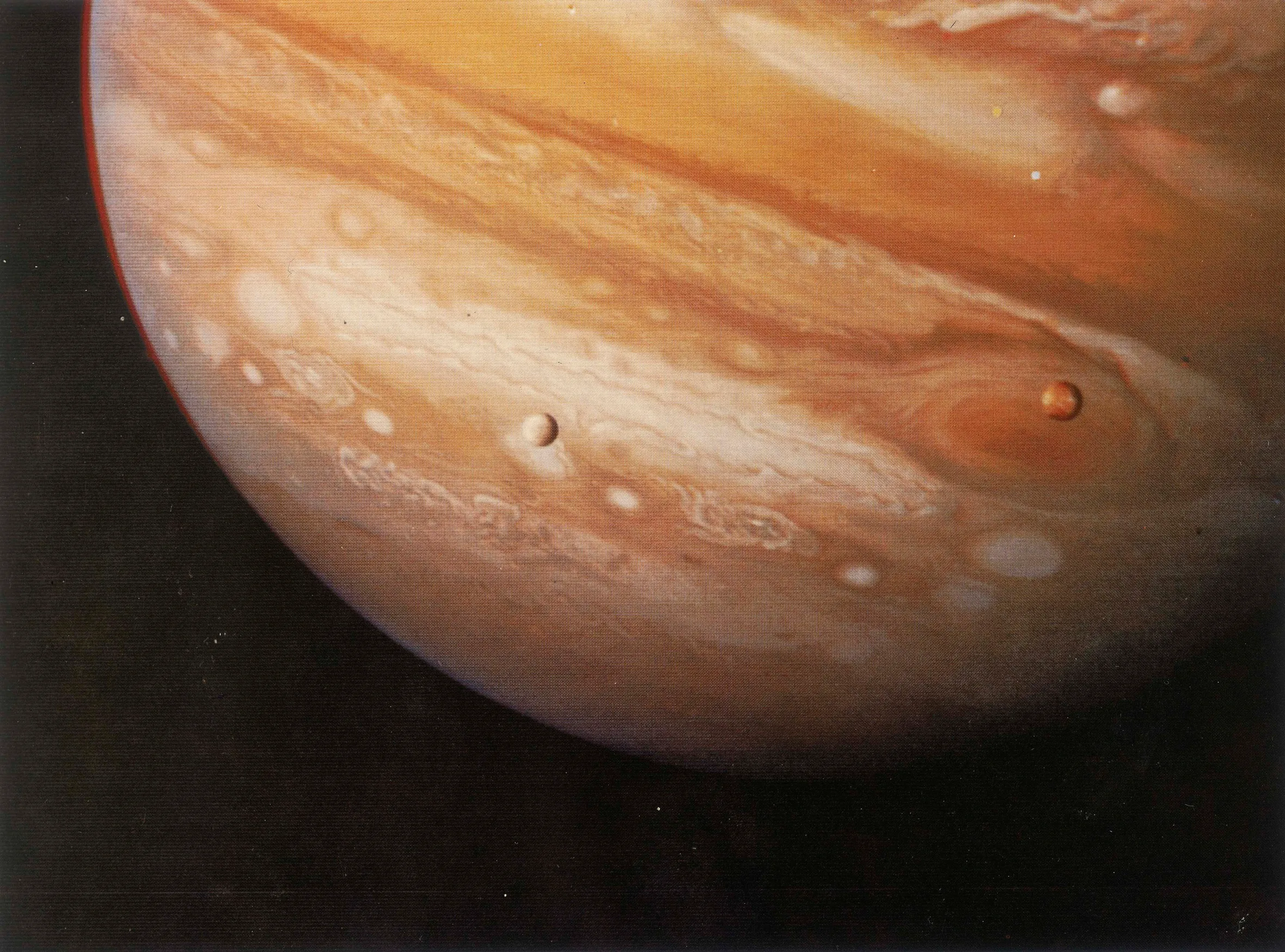 An image of Jupiter taken from Voyager 1 in 1979OXFORD SCIENCE ARCHIVE/PRINT COLLECTOR/GETTY IMAGES
Its primary goal now is to explore interstellar space — the space between the stars — and how the Sun interacts with it.
Nasa explained that a sudden fall in power levels during a routine manoeuvre in February had brought Voyager 1 uncomfortably close to triggering its automatic fault-protection system.
Had that system been activated, Voyager 1 could have begun shutting down its own components to protect itself, potentially leaving engineers at Nasa’s Jet Propulsion Laboratory facing a slow and uncertain recovery process, as radio signals take nearly a day to travel each way.
Instead, the team decided to act first. On April 17, they sent commands to turn off the Low-Energy Charged Particles experiment, an instrument that has operated almost continuously for nearly half a century.
It has measured ions, electrons and cosmic rays beyond the Sun’s influence, helping to map the structure of interstellar space, territory no other human-made object has explored.
“While shutting down a science instrument is not anybody’s preference, it is the best option available,” said Kareem Badaruddin, Voyager mission manager.
“Voyager 1 still has two remaining operating science instruments — one that listens to plasma waves and one that measures magnetic fields. They are still working great, sending back data from a region of space no other human-made craft has ever explored. The team remains focused on keeping both Voyagers going for as long as possible.”
Voyager 1 and its twin rely on radioisotope generators that convert heat from decaying plutonium into electricity, a supply that diminishes by about four watts each year.
After almost half a century, output is dwindling. Engineers have already shut down seven of the spacecraft’s ten original instruments.
The “Big Bang” plan represents the next, and perhaps most delicate, step. Rather than switching off instruments one by one, engineers intend to reconfigure multiple systems at once, turning off some components and replacing them with lower-power alternatives in a single sequence. The aim is to extend the spacecraft’s life still further without allowing temperatures to fall to critical levels.
The manoeuvre will first be tested on Voyager 2, which is closer to Earth and has slightly more power to spare, making it the safer test case. Trials are planned for May and June. If successful, the same procedure could be attempted on Voyager 1 no sooner than July.
For now, Voyager 1 continues its outward journey more than 15 billion miles from Earth. Later this year, it will pass a new frontier, becoming the first craft to travel more than one light day away from its home planet.