
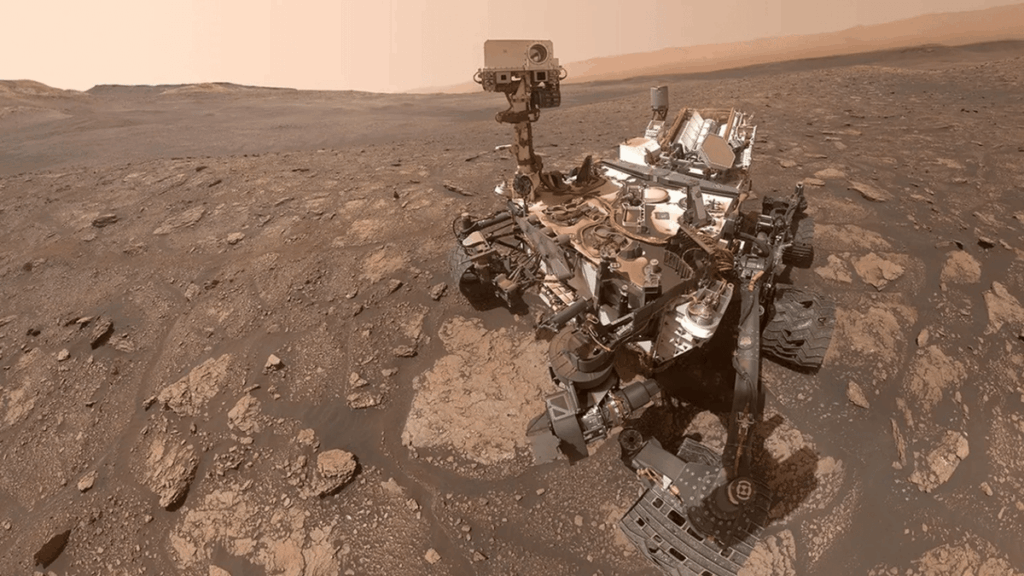
Researchers have doubled down on the idea that there may have once been life on Mars after analysts probed a Red Planet rock.
On April 21, a paper titled ‘Diverse organic molecules on Mars revealed by the first SAM TMAH experiment’ was published in the Communications arm of the popular Nature journal.
According to the study, Nasa’s Curiosity Mars rover miraculously uncovered a rock in 2020, which was later drilled and analyzed in a minilab.
The robot, designed to explore Gale crater and Mount Sharp on the red planet, is considered an integral part of Nasa’s Mars Science Laboratory (MSL) mission.
As per the paper, the rock was discovered on October 25 from a spot nicknamed ‘Mary Anning’ after an English fossil collector and palaeontologist.
After years of extensive research, experts believe that it is the most ‘diverse collection of organic molecules ever found’ on Mars.
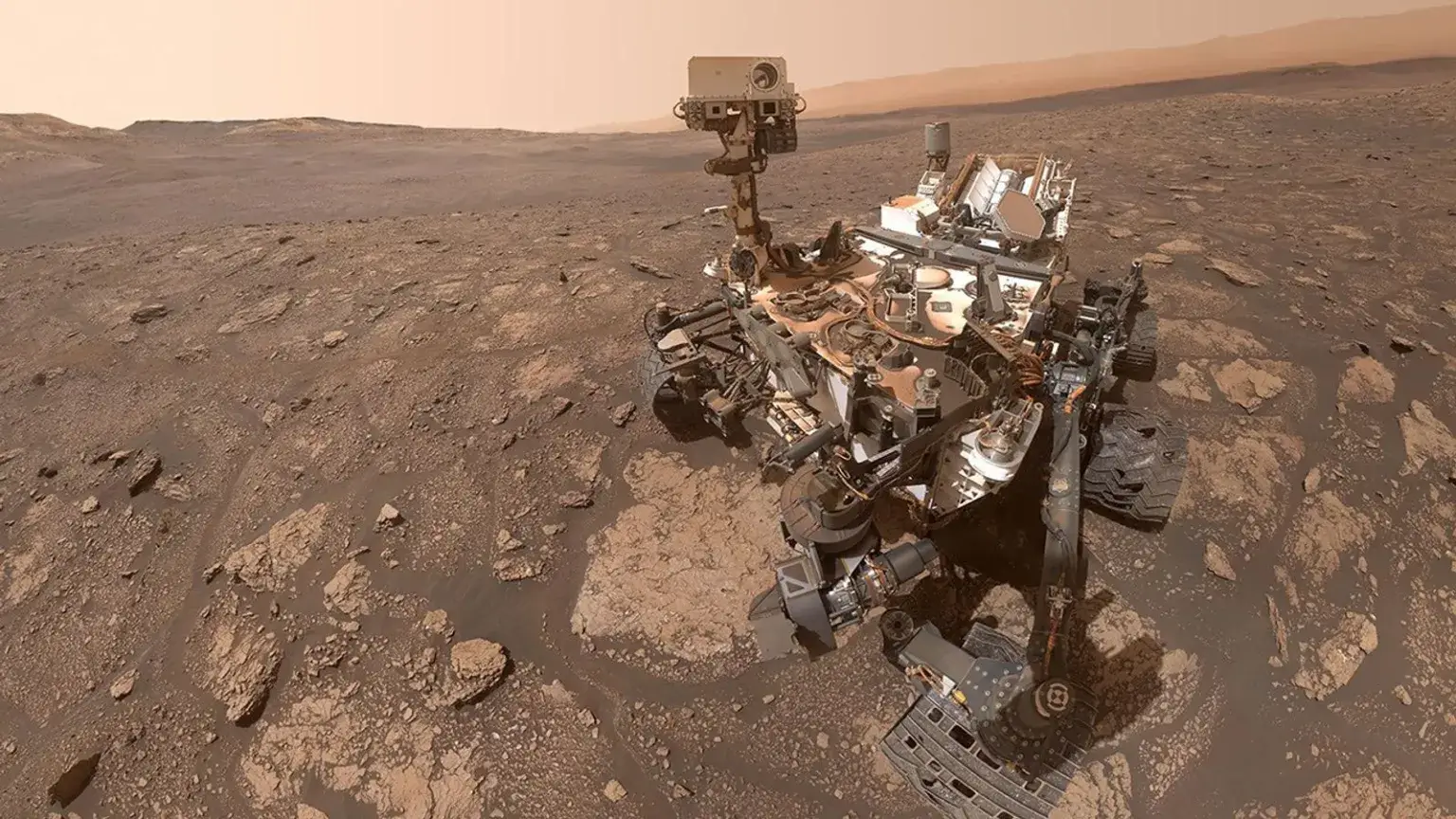 Nasa’s Curiosity Mars rover found a rock in 2020 that has reinforced the idea that live could survive on ancient Mars (NASA/JPL-Caltech/MSSS)
Of the 21 carbon-containing molecules identified in the sample, seven of them were detected for the first time on the sphere, as per Nasa.
The rock sample, dubbed ‘Mary Anning 3’, apparently contains organic molecules that experts have ‘no way of knowing’ whether they were made via biological or geologic processes.
This included the newly identified nitrogen heterocycle, a ring of carbon atoms that includes nitrogen, Nasa explained.
The experts alleged that the particular molecular structure is a predecessor to RNA and DNA, two nucleic acids that are key to genetic information.
Researchers confirmed that the discovery has renewed the idea that ancient Mars had the right chemistry to support life.
“That detection is pretty profound because these structures can be chemical precursors to more complex nitrogen-bearing molecules,” said lead paper author, Amy Williams, of the Department of Geological Sciences at the University of Florida in Gainesville.
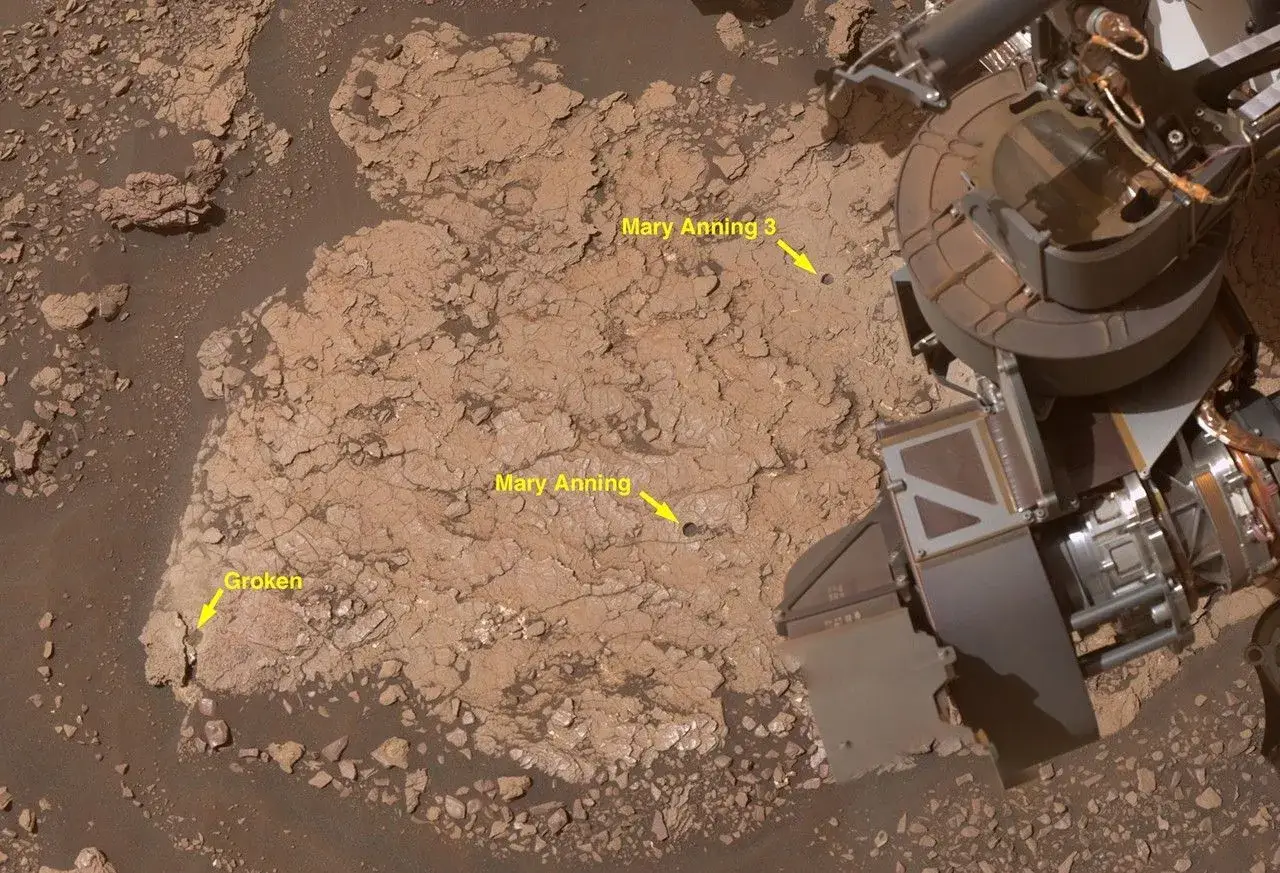 The Curiosity picked up the rock near Mount Sharp (NASA/JPL-Caltech/MSSS)
“Nitrogen heterorcycles have never been found before on the Martian surface or confirmed in Martian meteorites.”
She continued: “We think we’re looking at organic matter that’s been preserved on Mars for 3.5 billion years. It’s really useful to have evidence that ancient organic matter is preserved, because that is a way to assess the habitability of an environment.
“And if we want to search for evidence of life in the form of preserved organic carbon, this demonstrates it’s possible,” Williams added.
Alongside nitrogen heterocycle, analysts discovered benzothiophene, a carbon- and sulfur-bearing molecule that has previously been found in meteorites.
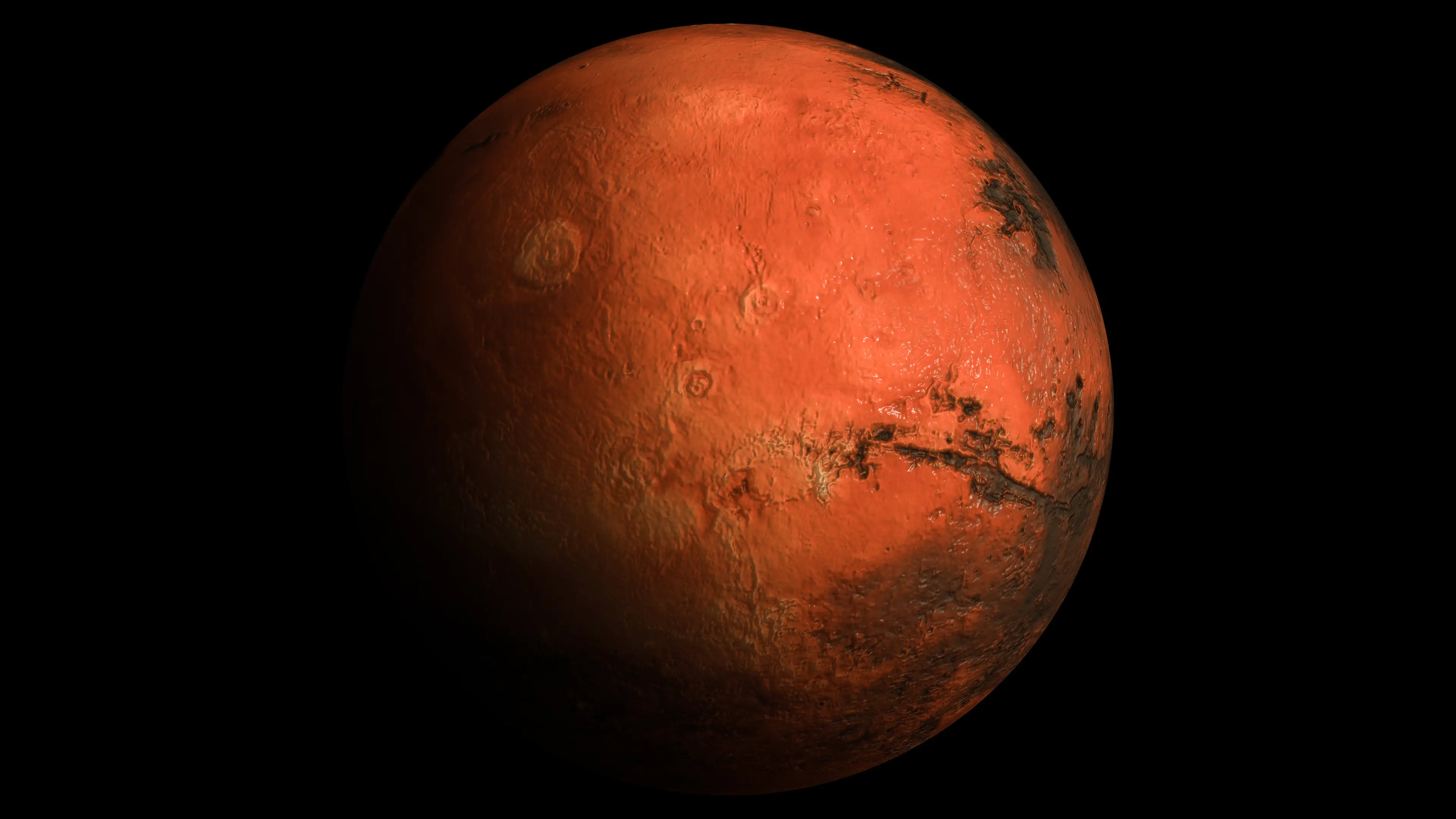 Mars is the seventh largest planet in the solar system (Nasa)
Nasa wrote that these meteorites, along with the organic molecules within them, are believed to have seeded prebiotic chemistry across the early solar system.
“This is Curiosity and our team at their best. It took dozens of scientists and engineers to locate this site, drill the sample, and make these discoveries with our awesome robot,” said the mission’s project scientist, Ashwin Vasavada of Nasa’s Jet Propulsion Laboratory in Southern California.
“This collection of organic molecules once again increases the prospect that Mars offered a home for life in the ancient past.”