
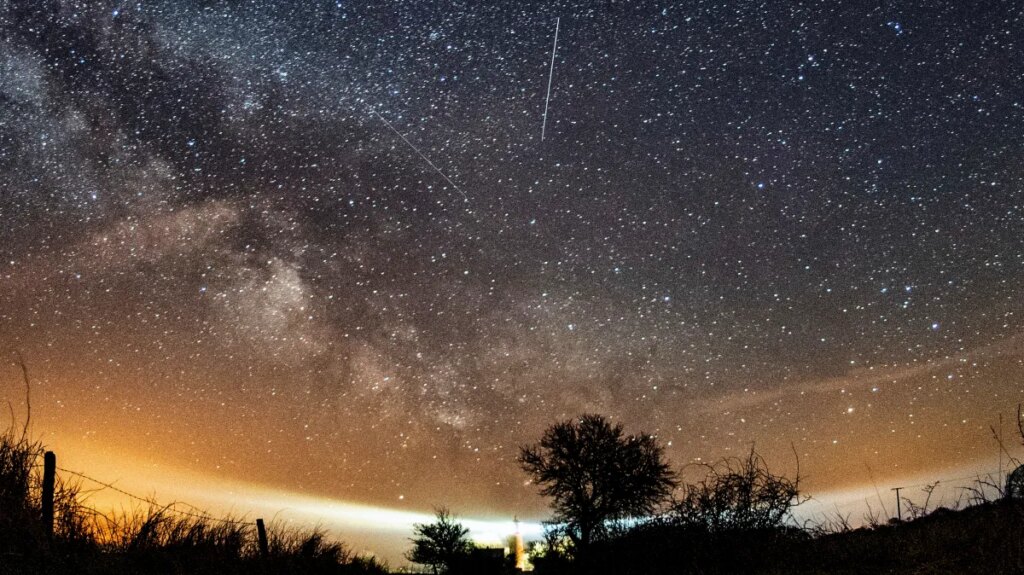
Comet Thatcher has not been visible from Earth since 1861 and will not return to our skies for another 257 years, but it will announce its presence via the Lyrid meteor shower this week.
For those lucky enough to glimpse it, the skies will be lit up by a celestial spectacle that will grow to a peak on Wednesday, April 22, then taper out over the rest of the month, with the prospect of seeing 10 to 15 meteors, but as many as 100 at the peak, per hour.
The chance of seeing the annual shower, which was the first recorded by ancient humans, is greater this year because the moon will only be a crescent and is due to set in the early evening around the peak, reducing the glare of moonlight that could obscure the light of shooting stars.
Here is our guide to spotting the shower.
Where should I look in the sky?
The meteors will appear to originate from within the Lyra constellation, shaped like a rhombus and triangle joined at one point, representing the harp-like lyre played by Orpheus and placed in the sky by Zeus to honour the musician in Greek mythology.
They will appear to come from near Vega, the bright star at the topmost tip of the Lyra constellation, which will be in the eastern part of the sky, but then they will streak away, making it advisable to simply look straight up.
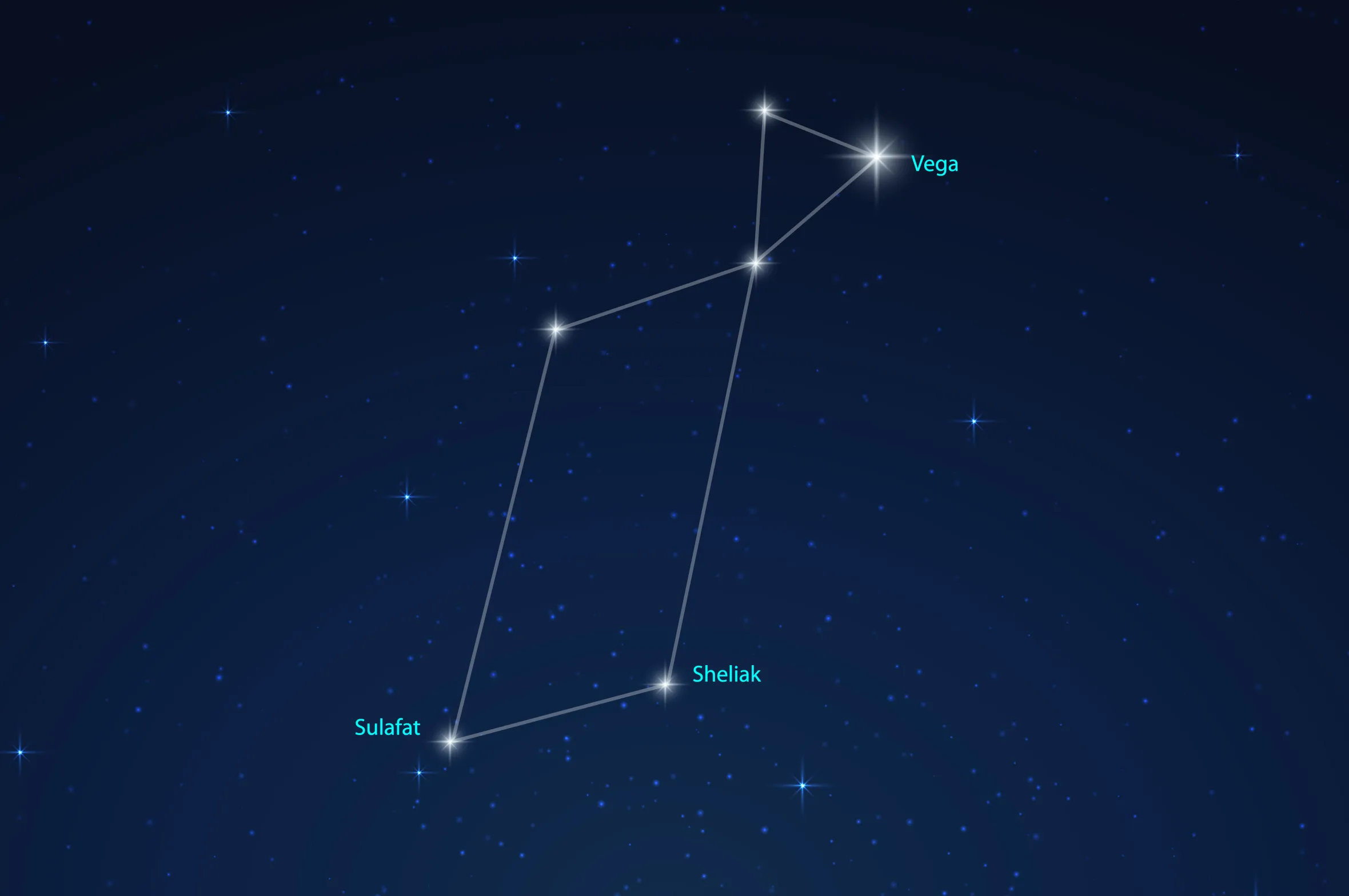 The shower will appear to radiate from the Lyra constellation, near the bright star Vega in the night skyGetty images
The biggest obstacle to catching a glimpse of the meteor shower will be light pollution and clouds, making it important to seek out skies that are both dark and clear, away from cities and, ideally, away from overcast weather conditions.
Where is the best place to see it in the UK?
In the UK, the Northumberland and Snowdonia national parks and Galloway Forest Park in Scotland are all designated “dark sky” parks that are perfect for stargazing in clear weather.
Where should I go to see it in the US?
In the US, Big Bend National Park in Texas, Cherry Springs State Park in Pennsylvania and the Death Valley and Joshua Tree national parks in California also have “dark sky” designations.
In the UK and the US, getting away from big cities into rural or coastal areas far from the glare of densely packed streetlights will increase your chances.
What time should I be looking?
In the UK, your best chance to see the shower will be between midnight on Wednesday and the early hours of Thursday morning, and in the US between 10.30pm and dawn, as this will be when Lyra is highest in the sky.
How can I maximise my chances?
The naked eye will be better than telescopes or binoculars, so you can see the whole sky and look towards the brief, fleeting trails produced by shooting stars wherever they appear.
It is also best to put away your phone and keep it hidden. You have almost no chance of capturing a photo or video of a meteor on your phone camera and the light from the screen will reduce your chances of spotting one. Give your eyes time to properly adjust to the darkness: a good 20 to 30 minutes. Wrap up warm if you are out in the countryside in late April.
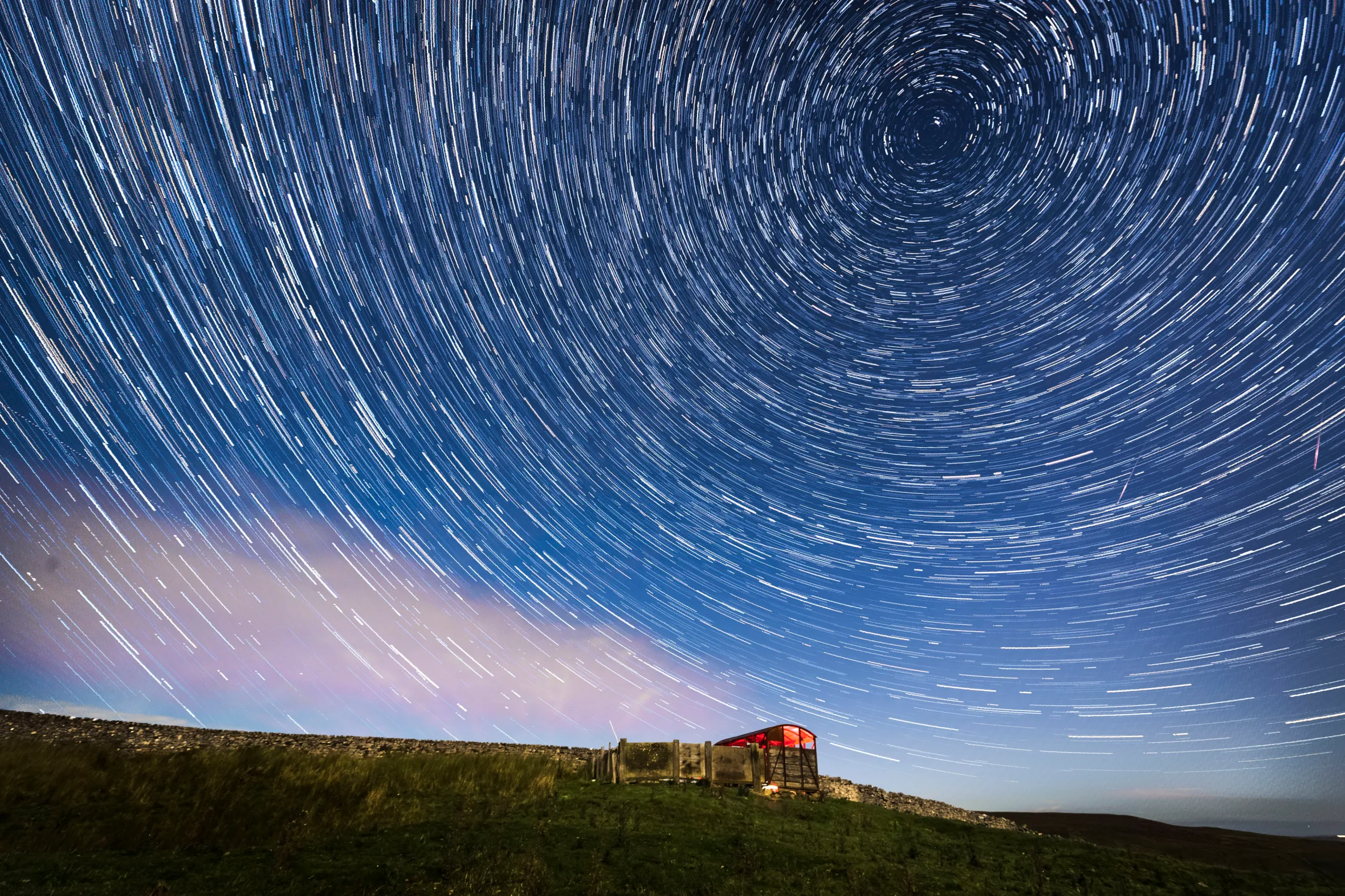 Mobile phones are unlikely to capture clear images of the shower. The fast-moving streaks are best seen with the naked eye in dark skiesDanny Lawson/PA
What creates the Lyrid meteor shower?
Comets are icy, dusty balls of rock. Due to their long, highly elliptical orbits, they spend most of their time far out in the frigid outer reaches of the solar system, often taking centuries or even millennia to complete a single circuit.
During their closer approaches to the sun, on their forays into the inner solar system, radiation from the sun begins to heat the comets. This creates two tails. One is an ion tail, a stream of gas that always points away from the sun. The second is a dust tail that leaves a curved trail along the comet’s orbital path.
The tails leave a faint tube-shaped ring of dust in space. Once a year in our planet’s own orbit, the Earth passes through this trail of dust.
As the grains hit our atmosphere at about 104,000mph, they heat up through friction as they come into contact with air molecules, causing them to glow. The Lyrids are known for leaving trails in the sky that can last for several seconds as the ionised gas hangs in the air. They can also produce spectacular fireballs if larger chunks of rock crash into our atmosphere.
How long have we known about the Lyrid meteor shower?
It was first recorded by astronomers in China in 687BC in the Zuo Zhuan historical text, where it was described as stars “dropping down like rain”.
The comet was named after the American amateur astronomer AE Thatcher, who reported it during its most recent close pass in 1861, when it came within 31 million miles of Earth, about 120 times further than the moon.
Is it my only chance to see a meteor shower this season?
No, the Eta Aquarid meteor shower will also be active, peaking in the early morning of May 6, but with a lesser chance of producing particularly bright fireballs.