
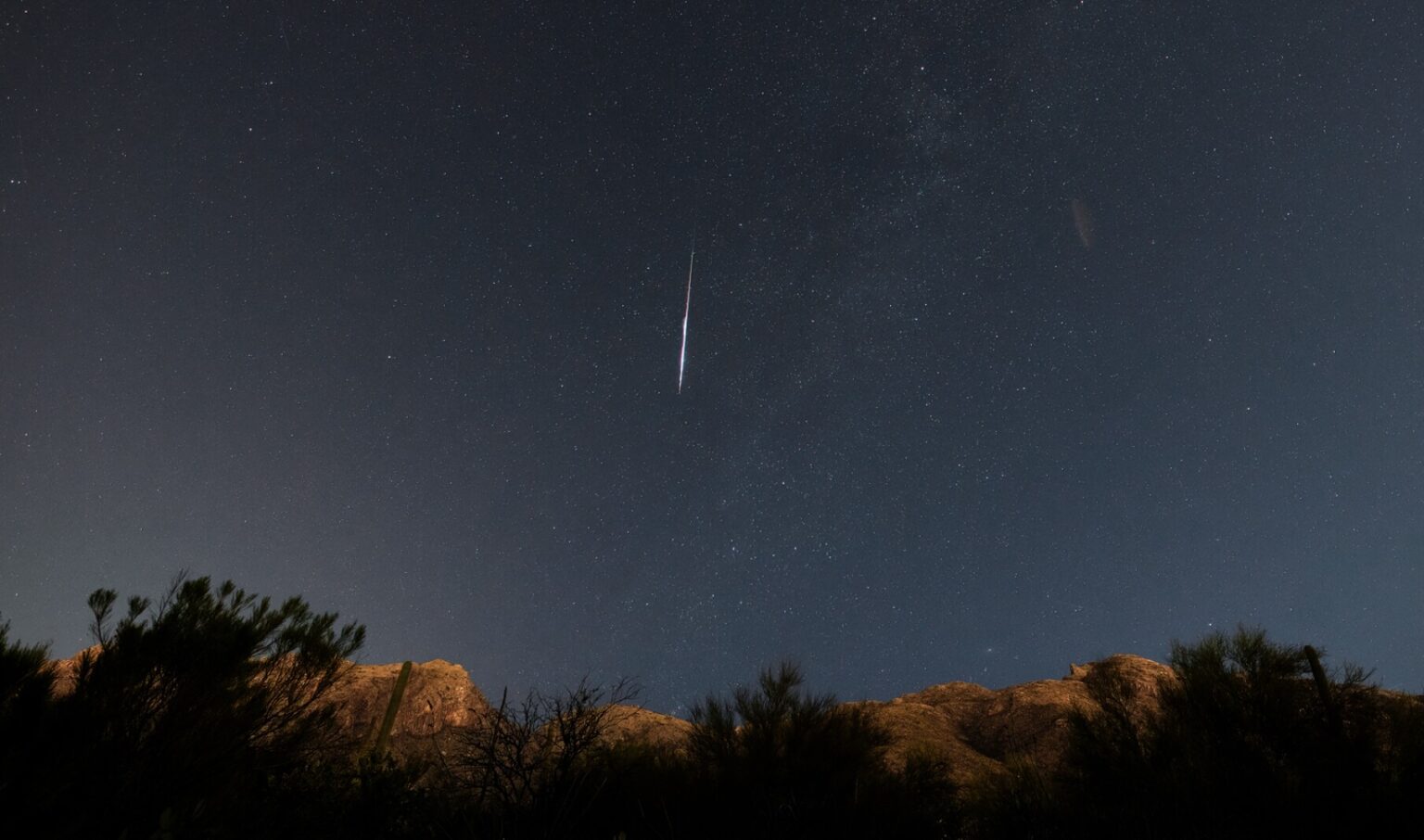
We’ve waited long enough. After a months-long draught when no meteor showers have played across our night skies, the annual Lyrids make their return during the early morning hours of April 22 and 23.
The moon will be a waxing crescent at the time and sets before the show gets underway. Without moonlight mucking things up, this year will be an ideal time to see a decent display.
Lyrids are fragments of Comet Thatcher. Each year, the Earth crosses the comet’s orbital path and we see sand-to-pea-sized pieces slam into our atmospheric window with speeds around 110,000 miles per hour. The sudden, rapid compression of the air in front of the speeding crumb heats it to incandescence.
At the same time, the rock’s tremendous etches a trail of excited, ionized gases across the heavens we see as a streak of light – a meteor!
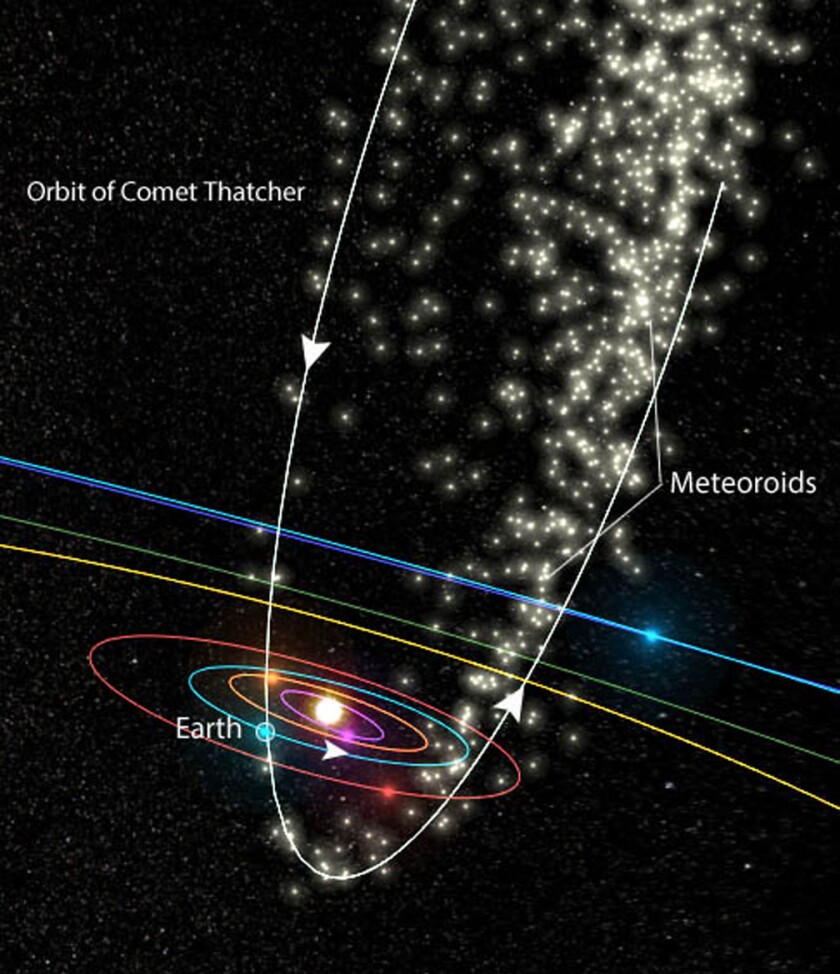
Lyrid meteors originate from material sloughed off by Comet Thatcher. Earth cuts through the comet’s orbit and debris trail every April.
Contributed / Ian Webster and Peter Jenniskens
As showers go, the Lyrids are modest, with about 15-20 meteors per hour visible from a dark sky. That’s about a quarter of the strength of the more familiar summer Perseids, so don’t expect a lot of rah-rah. But do expect to see at least a few pin-thin blazes of light if you give the shower an hour of your time.
Lyrids stream from a point in the sky not far west of the bright star Vega, which first appears low in the northeastern sky around 11 p.m. Vega is the brightest star in the Summer Triangle asterism and the first of the trio to rise.
Meteor showers are best and richest when the streaming point, called the radiant, is high enough in the sky so shower members aren’t blocked from view by the horizon. In this case that’s after midnight until around 4:30 a.m., the start of dawn. I usually set my alarm for 2 a.m. and stay out for an hour or two.
Lyrids will flare anywhere in the sky (thought their trails all point back to the radiant), so face the darkest, least light-polluted direction to watch. A comfortable lounging chair and warm clothing will make for an enjoyable time outdoors at that brave hour. As you wait for your first meteor to flare, consider that people just like you have been watching the Lyrids for some 2,700 years. Our first report of the shower comes from Chinese astronomers who saw it in 687 B.C.
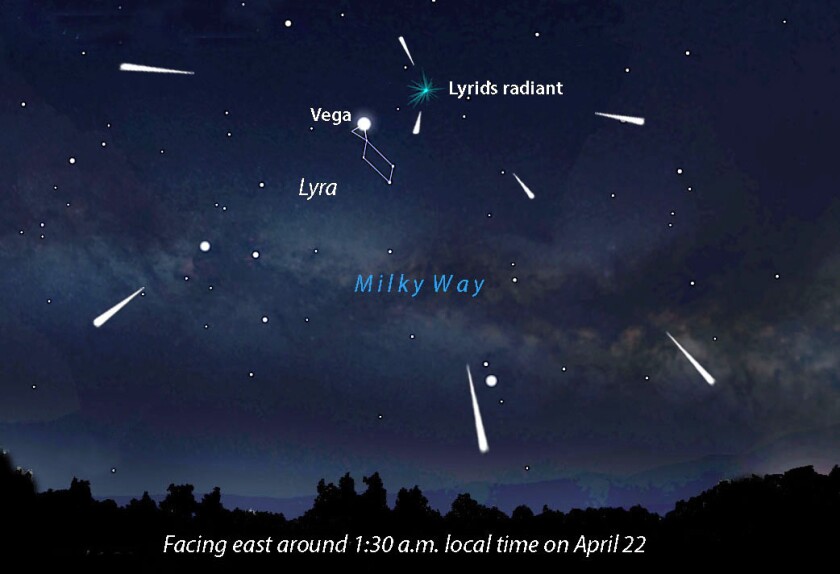
Lyrid meteors stream from near Vega in the constellation Lyra the Lyre, hence the name. The shower is best after midnight and will peak on April 22 but close enough to April 23 that you can watch on both dates.
Contributed / Stellarium with additions by Bob King
Meanwhile, in the evening sky, Venus sidles alongside the Pleiades (Seven Sisters) star cluster this week. From about April 22 through April 25, they’ll be close enough together to see in same binocular field of view. Face northwest during mid-to-late evening twilight about an hour to an hour and a half after sunset. Venus is the VERY bright “star” in that direction. Point your binoculars at the planet, and the cluster will be nearby. It’s always a small joy to see two famous cosmic objects hang out together.

“Astro” Bob King is a freelance writer and retired photographer for the Duluth News Tribune. You can reach him at nightsky55@gmail.com.