
Russia is considering placing a nuclear anti-satellite weapon in orbit that could target satellites and cause widespread disruption, a senior US military official said.
Gen. Stephen Whiting, head of the United States Space Command, a multi-service unified combatant organization, said the United States is “very concerned” about the plan, describing it as part of increased Russian activity in space since the start of the full-scale war in Ukraine.
JOIN US ON TELEGRAM
Follow our coverage of the war on the @Kyivpost_official.
“Russia remains a sophisticated space power and they continue to invest in counter-space weapons,” Whiting said in an interview with The Times.
“They are thinking about placing in orbit a nuclear anti-satellite weapon that would hold at risk everyone’s satellites in low Earth orbit, and that would be an outcome that we just couldn’t tolerate.”
Asked about Russia’s motivations, Whiting said Moscow views the United States and NATO as having an advantage in conventional weapons and is seeking other ways to respond.
“They believe that novel ways of trying to undermine the United States and NATO, such as by neutralizing our space capabilities, helps them to level the battlefield,” he said.
Whiting declined to discuss intelligence sources but said the report is taken seriously.
A nuclear detonation in low Earth orbit (LEO), defined by NASA and the US Space Force (USSF) as between 100 and 1,200 miles (160 to 2,000 km) above Earth, could destroy and degrade as many as 10,000 satellites, or 80% of those in space, including US, European, Chinese, and Russian orbiters.
Other Topics of Interest
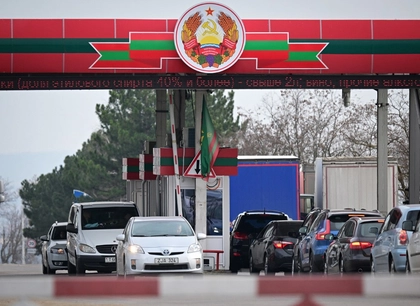
Moldova Declares Russian Troop Commanders Persona Non Grata
Moldova has declared senior Russian military officials in Transnistria persona non grata.
Military systems, the International Space Station (ISS), as well as civilian satellite communications for internet, mobile phones and GPS services, would be affected in space, while the effects of an orbital electromagnetic pulse (EMP) could also cause widespread, indiscriminate disruption and destruction of planetary electronic systems and devices, power grids, and communications equipment by inducing high voltage surges.
Such a move would violate the Outer Space Treaty, to which Russia is a signatory.
Whiting also said Russia has carried out “sustained satellite communication and GPS jamming” on a large scale, warning that it is affecting civilian aviation.
“The problem with GPS jamming is it’s being done in a way that’s affecting civil aviation in eastern Europe and across southern Europe,” he said.
“When we put at risk civilian airliners full of citizens just trying to go on business or holiday, that’s incredibly problematic.”
He added that space has “fundamentally transformed over the last decade” due to the development of space weapons by Russia and China.
While raising concerns about Russia, Whiting said China remains the United States’ biggest competitor in space, citing its rapid development of satellite communications, GPS jammers and spoofers, directed energy weapons, and anti-satellite missiles.