
The federal government has officially authorized Canada’s participation in a new suite of European Space Agency (ESA) programs, subject to ratification, marking an expansion of the country’s international space partnerships.
Recent Orders in Council dated March 30, 2026, authorize the formal signing of arrangements that embed Canada into four multilateral ESA initiatives: Moonlight, FutureNAV, ACCESS, and the European Resilience from Space for Earth Observation (ERS-EO) Programme.
The move highlights the ongoing shift in Canada’s space strategy. As the Canadian Space Agency (CSA) realigns its focus, its international collaborative budget has grown significantly, bolstered by a historic $664.6 million (€407.71 million) injection into ESA commitments.
As noted in recent SpaceQ coverage regarding the CSA’s 2026–27 Departmental Plan, this realignment is heavily focused on industrial and economic returns: “Leveraging the massive €407.71 million funding injection announced in late 2025, the CSA expects at least 45 Canadian organizations to secure contracts through the Canada-ESA Cooperation Agreement, explicitly tying these investments to Canada’s defence industrial base…”
By redirecting capital, Canada is positioning its domestic industry to try and build foundational infrastructure, dual-use defence platforms, and integrated commercial space technologies alongside its European allies.
The new ESA subscriptions
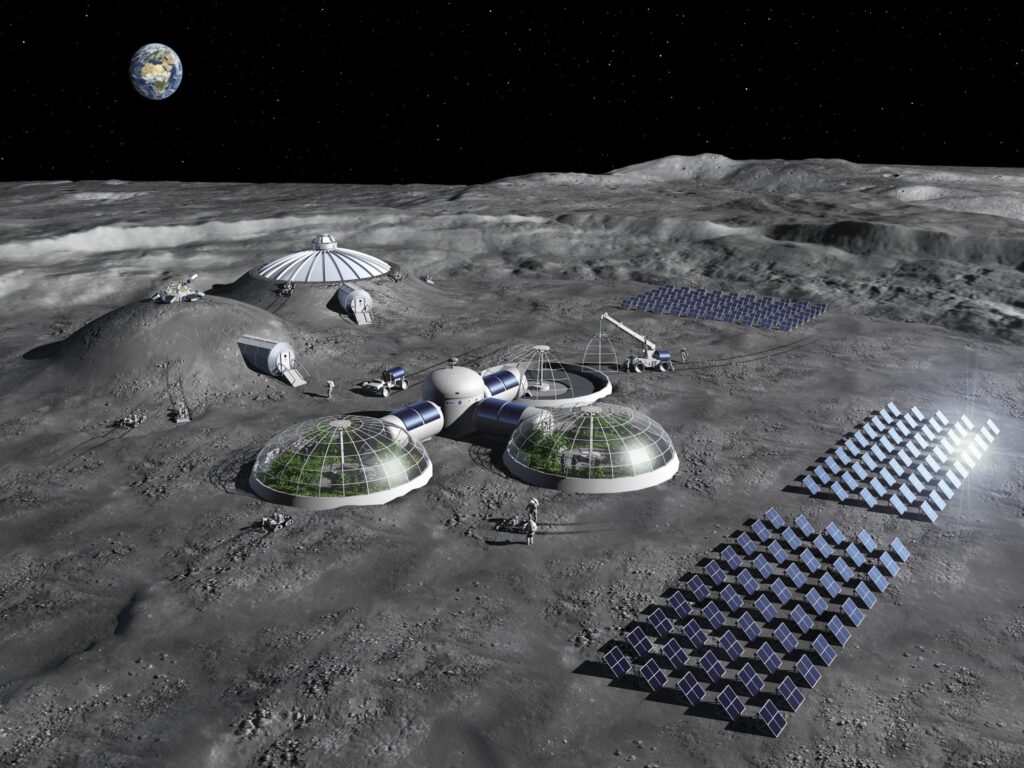
The Moonlight Programme: Canada will contribute to building the telecommunications and navigation backbone for the Moon. The Moonlight Lunar Communications and Navigation Services (LCNS) initiative aims to deploy a constellation of satellites to provide uninterrupted connectivity and pinpoint surface navigation, particularly around the lunar south pole. This ensures Canada remains an indispensable infrastructure provider in the Artemis era.
The FutureNAV Programme: Focused on next-generation Positioning, Navigation, and Timing (PNT) technologies, FutureNAV moves beyond traditional GPS/Galileo networks. Canada’s participation will provide domestic access to advanced architectures like the LEO-PNT (Celeste) demonstrator, which uses Low Earth Orbit satellites for highly resilient, jam-resistant navigation signals, as well as the Genesis flying observatory mission.
The ACCESS Programme: Accelerating Commercialisation and Competitiveness of the European Space Sector (ACCESS) acts as an industry accelerator. By joining ACCESS, Canada is buying into the massive European supply chain, providing domestic startups and SMEs with the funding mechanisms and flight heritage needed to secure anchor customers and scale globally.
ERS-EO Programme: The European Resilience from Space for Earth Observation is a highly strategic, dual-use initiative designed to build an autonomous, space-based Earth-observation network for security and defence. This aligns closely with Canada’s domestic push to protect critical infrastructure, offering secure, persistent satellite imagery and shared “Security Resilience Nodes” to mitigate emerging geopolitical threats.
Related
Marc Boucher is an entrepreneur, writer, editor, podcaster and publisher. He is the founder of SpaceQ Media. Marc has 30+ years working in various roles in media, space sector not-for-profits, and internet content development.
Marc started his first Internet creator content business in 1992 and hasn’t looked back. When not working Marc loves to explore Canada, the world and document nature through his photography.