
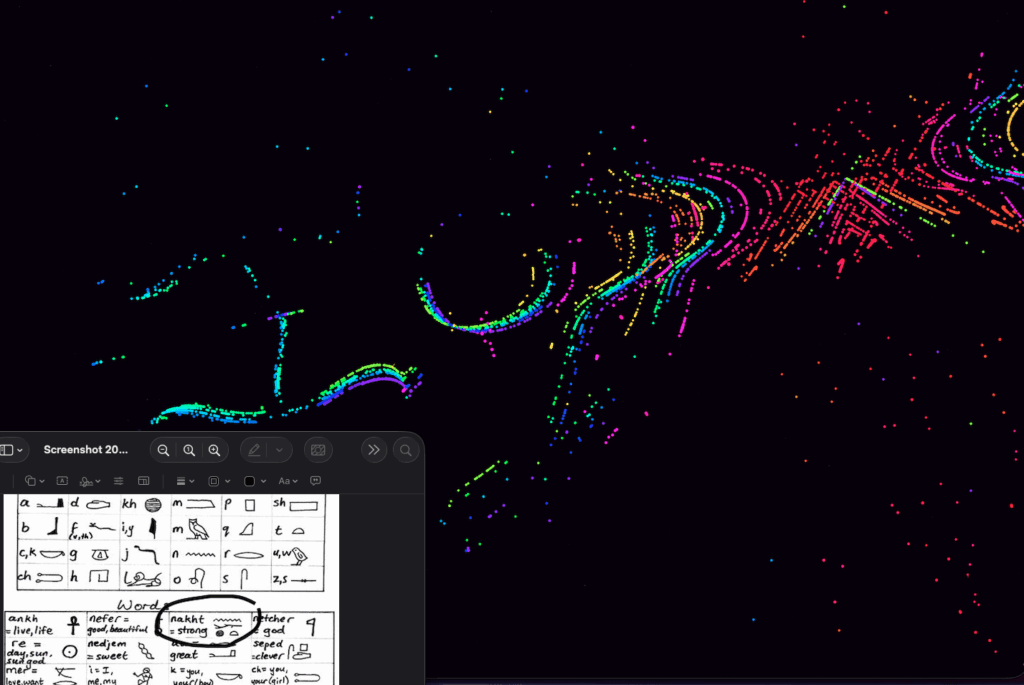
In ancient Egypt, names were a kind of spoken blessing — and Nakht was no exception. Translating to ‘strong’ or ‘the strong one’, this word shows up in tombs, papyri, and iconography across millennia as a personal name and title meaning strength, might, and resilience. The very choice of the name was a wish for power and protection — like a prayer etched into stone and sand.
When written in hieroglyphs, Nakht isn’t just a random collection of symbols — it’s a purposeful combination of images that conveys sound and meaning. Egyptian writing didn’t spell vowels the way modern alphabets do; instead, consonants were represented by clear, pictorial signs. For a word like Nakht, scribes would use a sequence of signs such as:
- the bread loaf sign for the “t” sound, a simple, semicircular shape familiar from everyday life (this sign is one of the phonetic building blocks of hieroglyphs);
- a water ripple sign for “n,” representing the life‑giving Nile itself; (water signs also stood for fluid, flowing sounds and the letter n);
- and an arm or branch‑like sign for the “kh/t” sound, emphasizing action and bodily strength. *
Together, these look like a tiny pictorial sentence carved into tomb walls — like seeing the idea of strength visualized as objects you might have touched or seen in ancient Egypt. The hieroglyph is not just a letter‑by‑letter script, but a visual code rooted in everyday life, nature, and cultural symbolism.
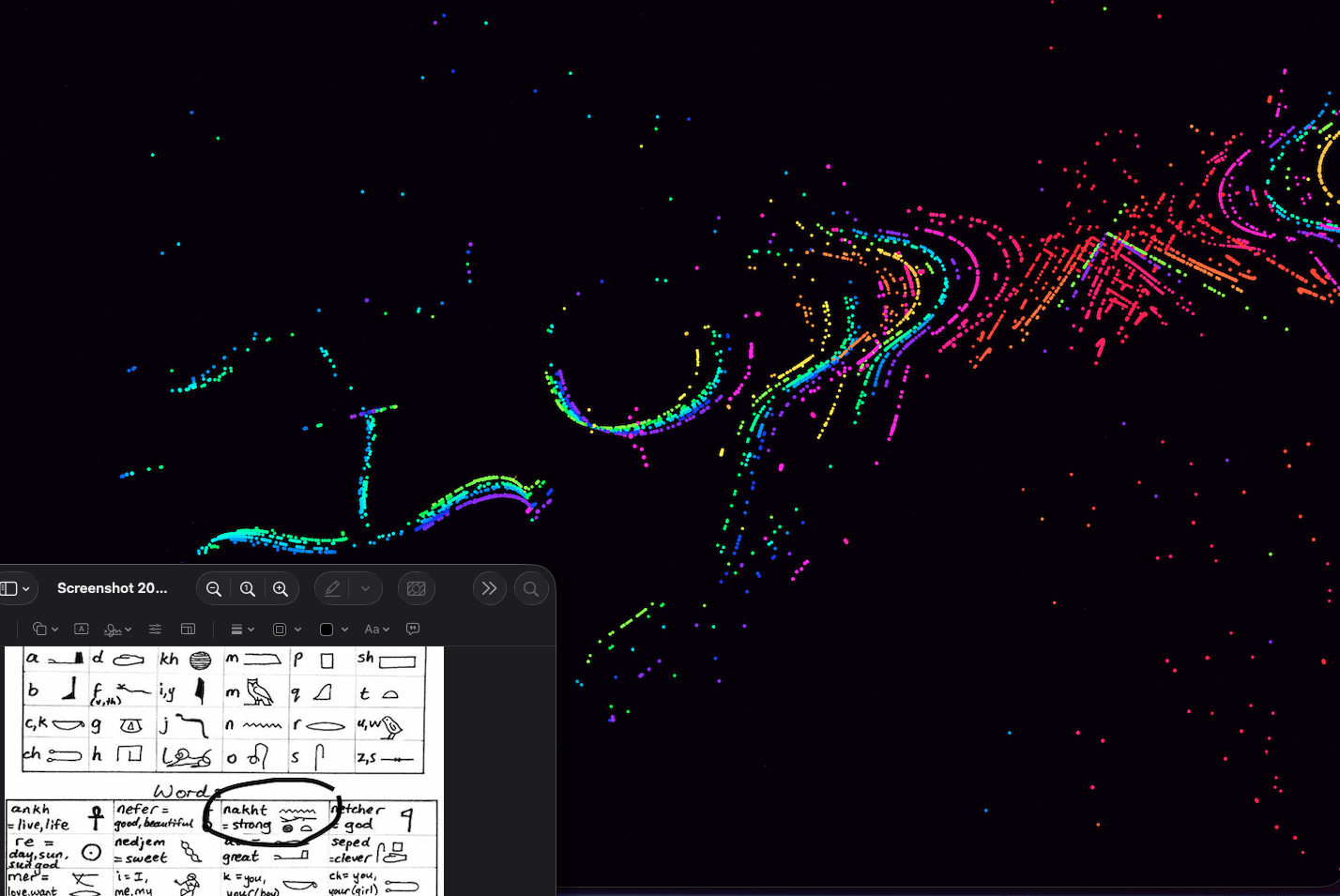
I recorded myself saying “Nakht” and turned the sound into a Cymatic image — a geometric pattern created by the vibrations of my voice. What’s fascinating is seeing how a human vocal sound can generate organic geometry in our world, and then comparing that modern pattern to these ancient visual building blocks. Both are ways of making the invisible visible — whether it’s sound waves turned into shapes or the soul of a name turned into sacred art.
Curious to hear thoughts — do you spot echoes of the actual hieroglyphic imagery in the pattern? Is there something about the way humans give form to words, ancient or modern, that speaks to a deeper connection between sound, shape, and meaning?
by Even_Bicycle3055
7 Comments
There’s echoes in the pattern in the way that all geometric patterns echoes geometry. The software being designed to interpret sound into a visual medium has more impact on the output than the input itself.
Holy shit. That is fascinating in terms of how ancients man have understood resonance itself over phases as the correct symbolic representation for spoken language.
Looks nothing like the symbol. And I imagine none of the other words you’ve shown would match their cymatic image either. Care to say the word ankh and then post it here as well?
What’s the makeup of the app? Open source?
Really interesting 🙂
How do you know how the Egyptians pronounced Nakht?
Can you explan a bit more about your sound to geometry mapping?