
This article left me with this question I wasn't able to google a satisfactory answer to.
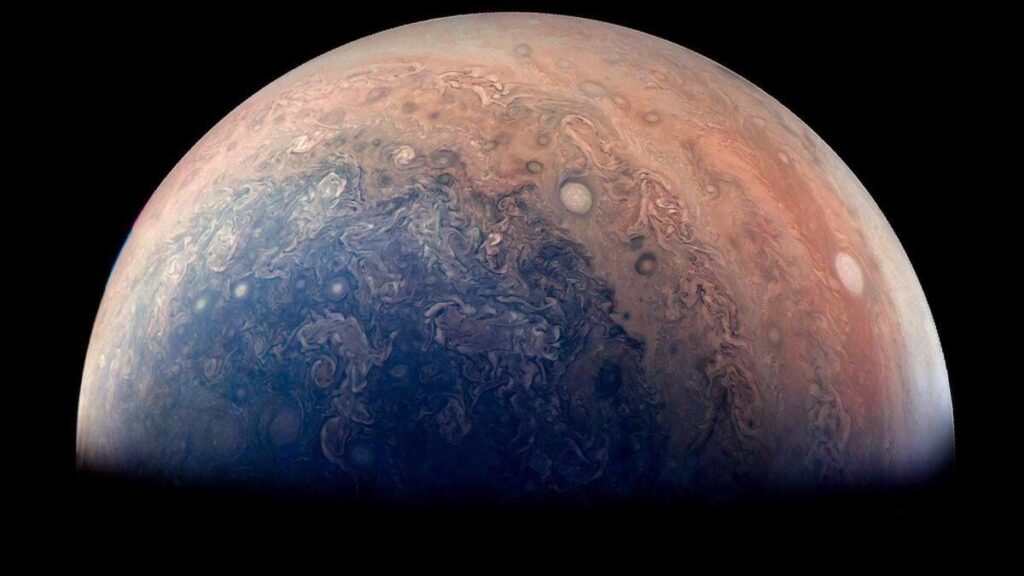
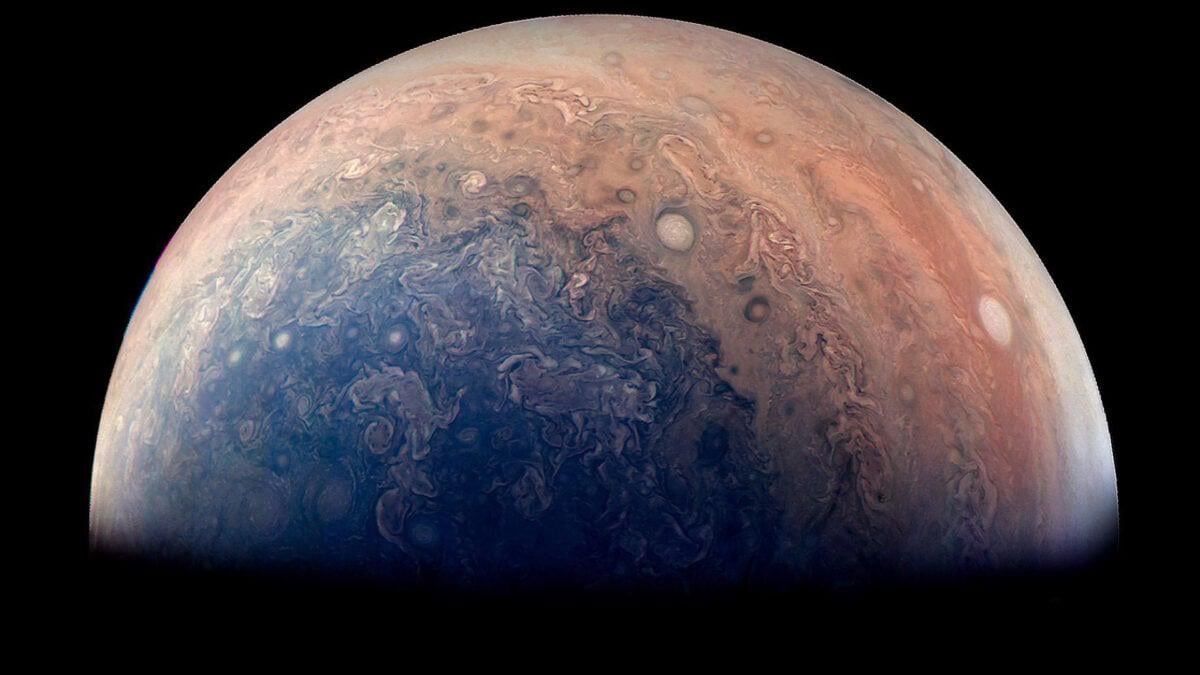
What is the "edge" or the "top" of the atmosphere of a gas giant that we use to measure its diameter?
As I understand it, we measure the diameter of rocky planets from their solid (or liquid water ocean?) surface. The thickness of the atmosphere is only a thin coating compared to diameter of the planet. But also, the "edge of space" or "the top of the atmosphere" is really an arbitrary line, and the atmosphere just gets more and more diffuse the further from the surface you get until it is indistinguishable from interplanetary space. And also any sort of boundary is extreme variable due to variations in solar wind.
So, how does this work with gas giants? Their atmospheres would also just keep getting less and less dense until they match interplanetary space. So, how do you measure a diameter?
by rainbowkey
1 Comment
They define the “edge” using transmission spectroscopy (measuring starlight passing through the atmosphere), observing thermal glow, and setting arbitrary pressure levels (like the 1-bar level) where density becomes too low to measure.