
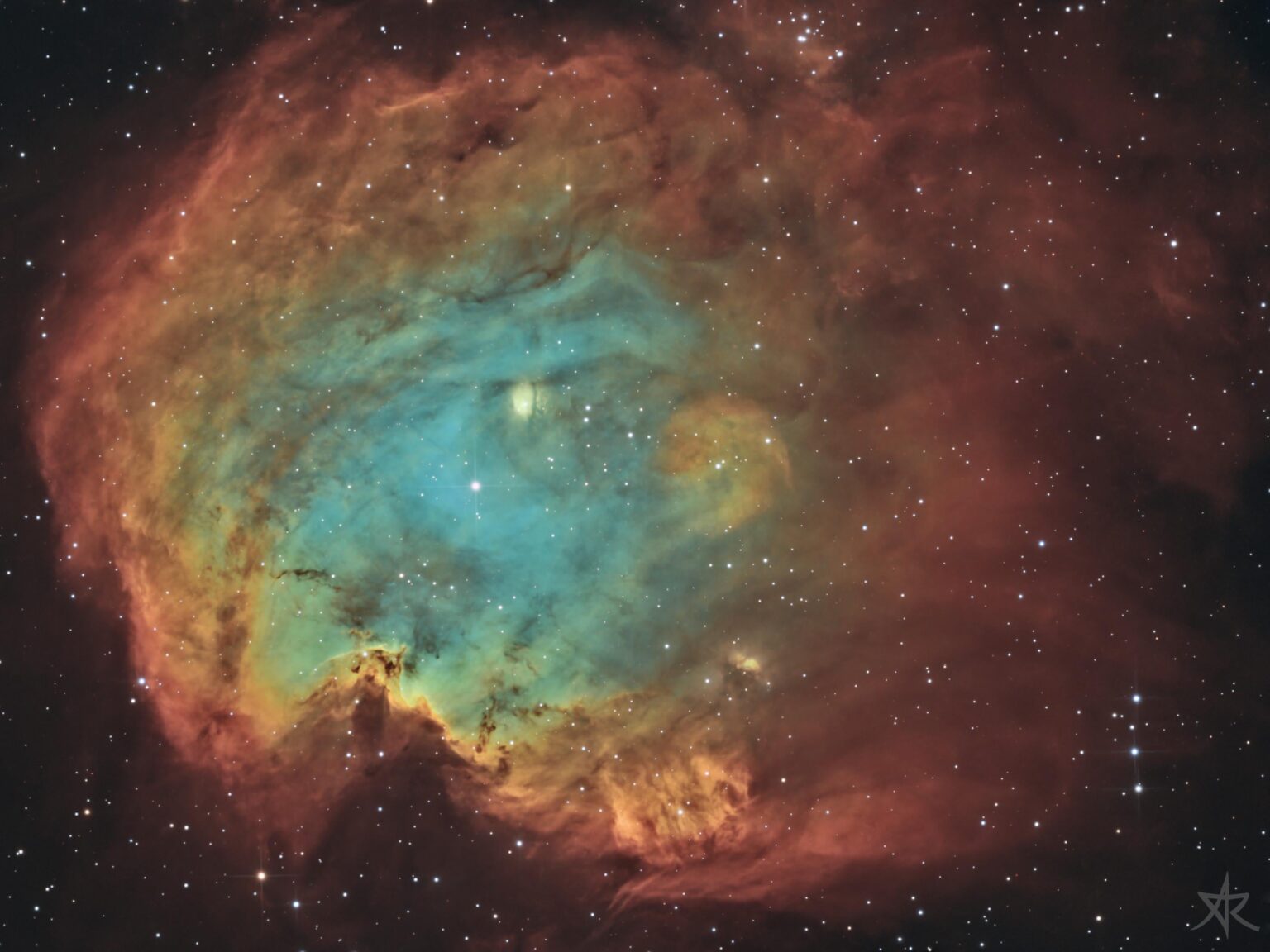
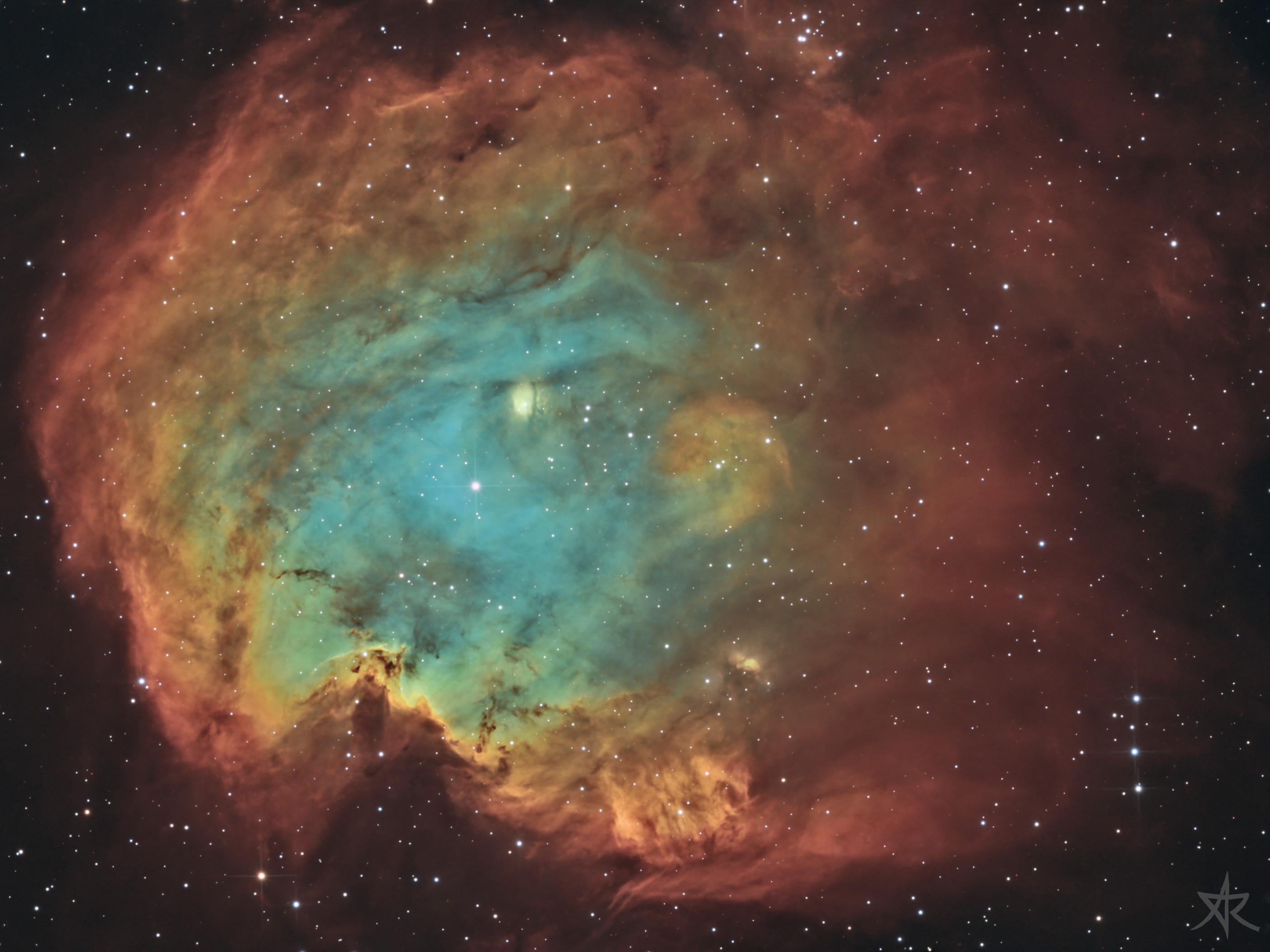
I used a blend of classical SHO with Foraxx. I like the Foraxx colors more but a classical SHO typically has less grain. With Foraxx, the noise from the more grainy Oiii channel is propaged to the other channels, leading to a noisier composite. Getting luminance info from the classical SHO solves this. As a fresh SHO image is typically overwhelmingly green, this had the added nice effect of re-introducing some green to the Foraxx palette.
Capture:
H: 19x 300s
O: 21x 300s
S: 22x 300s
total: 5 hours 10 minutes
Equipment:
- OTA: Skywatcher 130PDS newtonian
- Camera and filter wheel: QHY minicam8 mono
- Guiding: WO uniguide 50 + asi224mc + uv/ir cut filter
- Mount: hypertuned HEQ5 with Rowan belt mod
- Morefine M9 mini PC, Pegasus Astro Powerbox micro
- Capture software: NINA
Conditions:
- Bortle 5
Processing:
Pixinsight: WBPP
Pixinsight: SHO combination
On SHO and also on separate channels:
BlurX
NoiseX
Seti astro statistical stretch
StarX
GHS
Pixinsight: Foraxx palette generation with Utility Script
In Affinity Photo 2:
Blend "classical" SHO as luminosity with Foraxx
Blend a HDRMT of the SHO as soft light
High pass filter as soft light
Selective color correction and saturation
Curves etc.
Add in Foraxx stars with a bit of color finetuning
by Sleepses