
Every now and then, it’s worth bringing Baalbek back into the conversation.
https://www.youtube.com/shorts/lS2zFNbfFtc
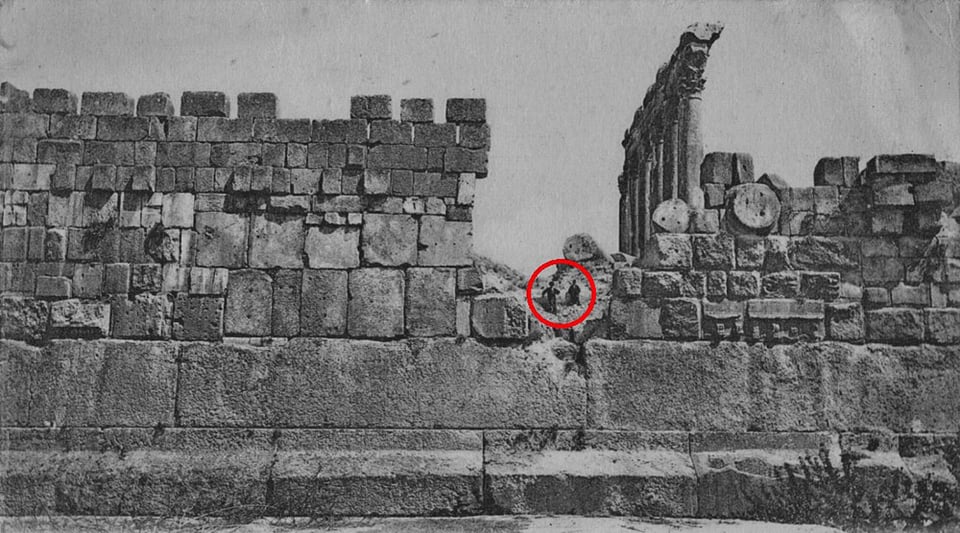
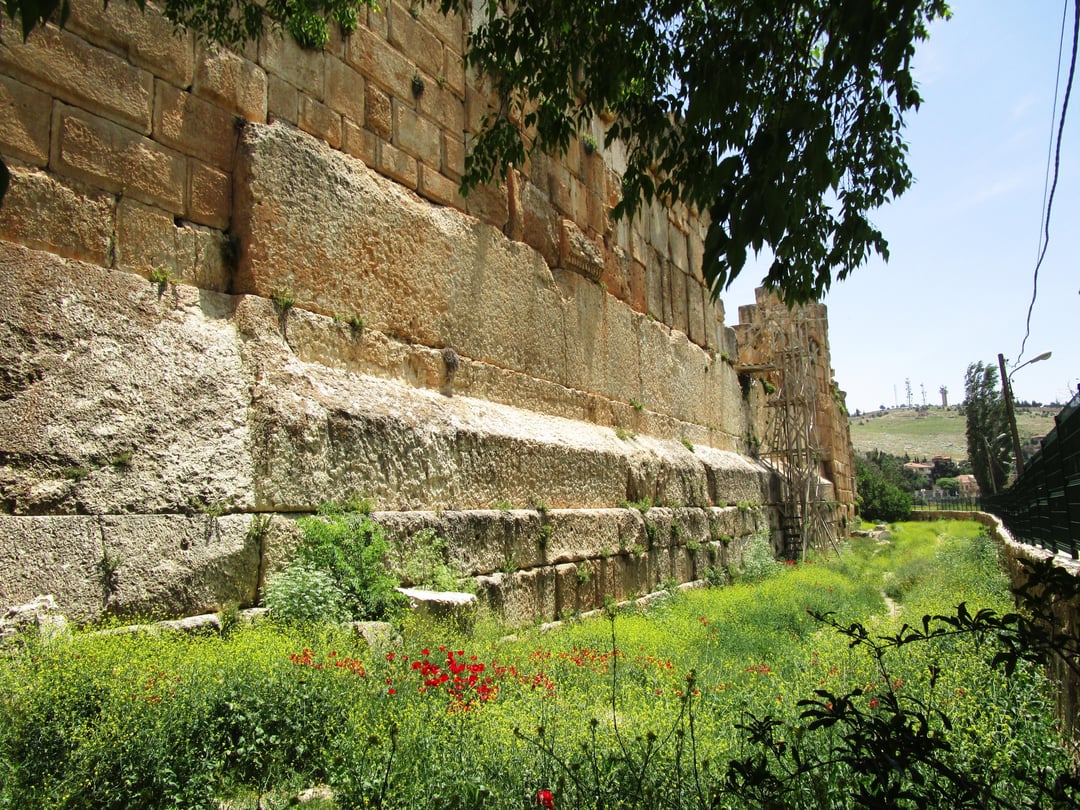
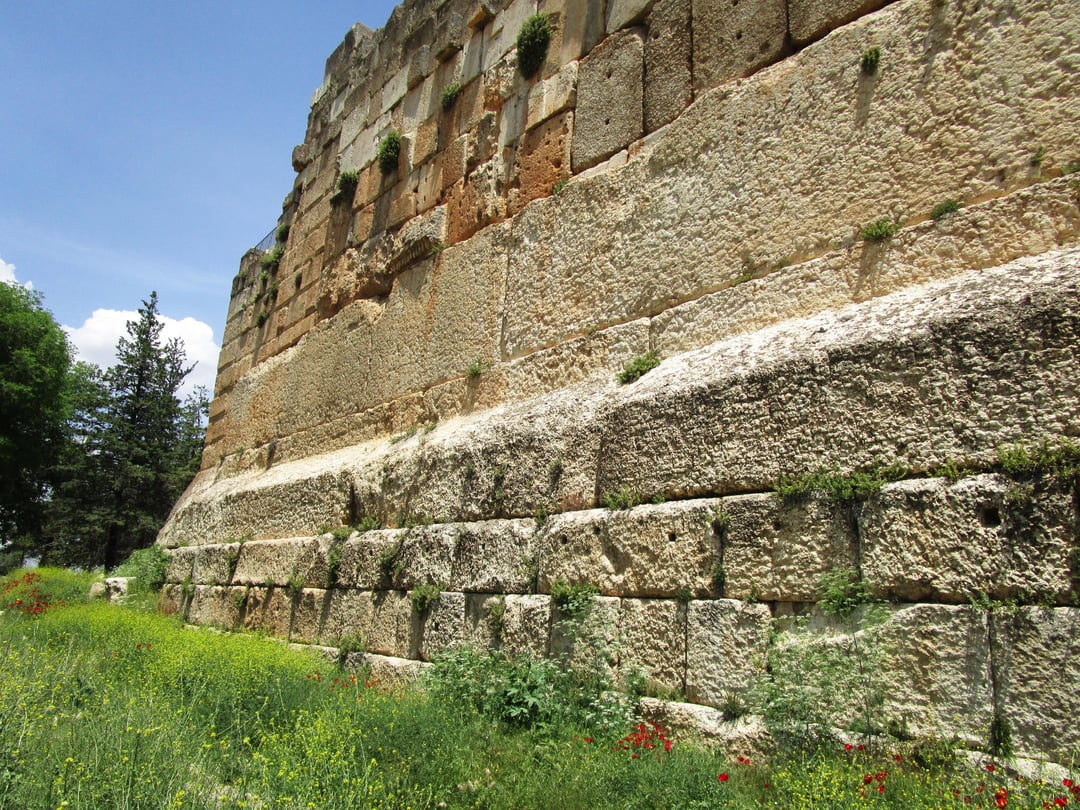
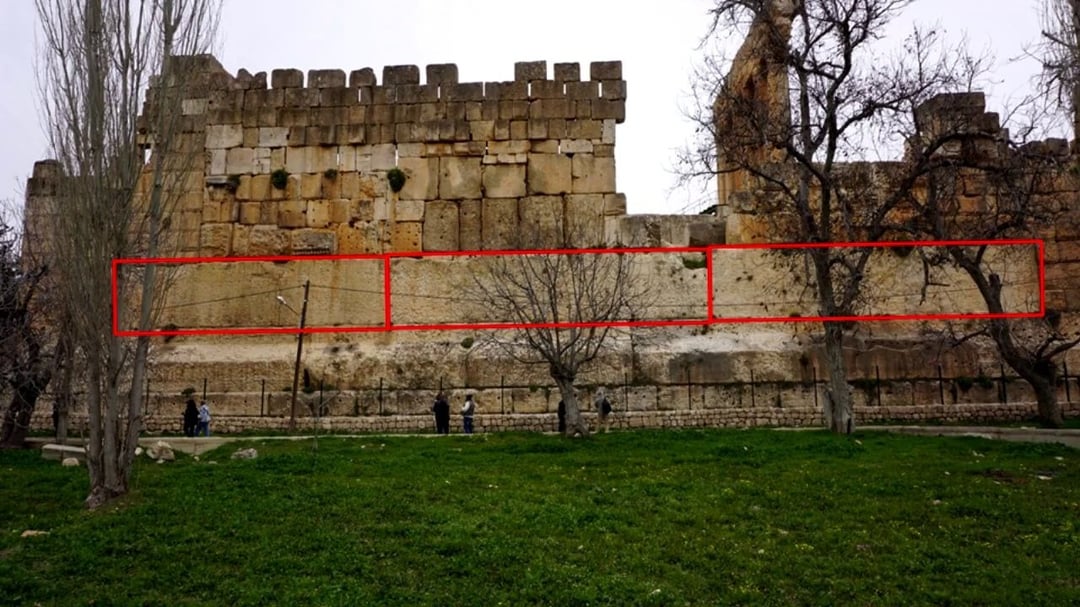
The Trilithon stones of Baalbek, in present-day Lebanon, are among the largest stone blocks ever used in ancient construction. Each block measures roughly 19–20 meters in length, about 4.2 meters in height, and is estimated to weigh 750–800 tons. What makes this especially puzzling is that these gigantic stones were placed on top of a wall built from much smaller blocks, several meters above ground level.
This raises some fundamental questions:
How were stone masses of this size transported at all?
And more importantly, how were they lifted and positioned so precisely onto a smaller underlying wall?
Conventional explanations usually involve ramps, rollers, levers, and enormous amounts of human labor. In theory, these methods are possible — yet many find them unconvincing when considering the sheer size, weight, and precision involved.
Some researchers suggest lost or underestimated construction techniques, while others believe the Romans reused an older, pre-existing foundation. What is certain is that no single, fully proven explanation exists to this day.
I’m sharing an image that clearly shows the scale comparison between the Trilithon stones and the smaller blocks beneath them, because this contrast is what makes the mystery so compelling.
What do you think is the most plausible explanation?
Lost engineering knowledge? Exceptionally advanced ancient techniques? Or something we still don’t fully understand?
Looking forward to your thoughts and discussion.
by UAPRealitys
46 Comments
“Many find them unconvincing” is the weakest of arguments…
Why did they only use 3 giant blocks instead of making everything from them? If you claim they had the power to do this at will, I find that unconvincing.
Really well trained juiced up giraffes
Carefully
Pulleys, levers, lots of man power
Why does everyone underestimate what a large group of humans can do? Several hundred humans would easily be able to do it using the “conventional explanations.”
> How were stone masses of this size transported at all?
Slowly and at great expense using ramps, rollers, levers, and enormous amounts of human labor.
> And more importantly, how were they lifted and positioned so precisely onto a smaller underlying wall?
Slowly and at great expense using ramps, rollers, levers, and enormous amounts of human labor.
> are among the largest stone blocks ever used in ancient construction
The largest. Heavier stones have been moved but I’m not aware of any larger actually used in a building.
Why assume they were lifted? Given the scale of construction here, a fairly gradual ramp wouldn’t be unreasonable. Especially since you could align it with the path they need to be transported from the quarry anyway.
This man has some convincing experiments:
[https://www.youtube.com/@wallingtonw/videos](https://www.youtube.com/@wallingtonw/videos)
-not for the scale of these stones however.
Space aliens. They came here in rock spaceships because they didn’t have plastics or metals. Everything they made was rock and that’s how we got the word ROCKet. /s
“If white people didn’t do it, it must have been aliens”.
# Ancient Aliens Debunked.
For Baalbek, go to 38:24
[https://www.youtube.com/watch?v=OFVbITJLLbQ](https://www.youtube.com/watch?v=OFVbITJLLbQ)
Build sand up around it, kill a few hundred people getting it in place, remove sand. Simples
Why is it only brown people needed alien help? https://hyperallergic.com/pseudoarchaeology-and-the-racism-behind-ancient-aliens/
Teams of working mammoths, Flintstone’s style
a crane and rope
In reality, no one knows, only theories….
The most prevailing evidence shows the Baalbek stones were cut in a quarry that was uphill and above the location where they rest. Humans have had the same exact identical mental capacity for 100,000 years. Humans today are no more intelligent than humans 100,000 years ago; the only difference is we have thousands of years of accumulated knowledge. As far as we know, they had little to none outside oral traditions they died with civilizations that fell to famine, disease, war, etc.
Knowing that you are just as smart, are just as stupid and idiotic as the people who built this (however you choose to view ancient people), all they had to do was cut the stone, then use water or oil and wedges to slide it down hill into position.
I think it’s possible that the lifting never included “up” onto those other stones. The quarry was higher so adding fill for a controlled decent would minimise a harder aspect of the job.
They were really into cross fit probably
What’s the Greek / Roman dude say, something like “give me enough leverage and I can move the world”
Pat answers repeating only the lowest level effort in answering this enigma only please.
Ropes, pulleys, beasts of burden, slave labor and basic engineering principals. OP’s argument basically boils down to “I don’t know how I would do this, therefore its some thing crazy and must be some mysterious explanation.”
Yes, this was a massive project but nothing about it is beyond reason. There’s plenty of evidence of massive roman engineer projects and we know they built huge complicated derricks and were capable of mustering resources and man power to carry it out. Just look at the historical records of some of the insane engineering carried out during sieges.
I really don’t get why this keeps being a “mystery” to some. I guess it’s just bait for people with poor reasoning skills.
https://flintstones.fandom.com/wiki/Brontosaurus/Gallery?file=Bronto_Crane_promo.jpg
They clearly moved them with a tractor and a beam
This is nothing. The Thunder Stone is much heavier than these (1500 metric tonnes).
It was moved in 1770 without any machinery.
If the Russians can do it in 1770, then so can the ancients.
OH MY GOD ITS 21 CENTURY CAN YOU STOP ACTING LIKE PEOPLE WERE RETARDED BEFORE 1900 WTFFFF
The real head-scratcher isn’t just the weight, but the physics of the logistics. Even if you accept the ramp theory, the pressure exerted by an 800-ton block would likely crush standard wooden rollers into dust or sink them deep into the soil. It suggests the Romans—or whoever was there before them—had mastered soil compaction and material science to a degree that we haven’t fully credited them for. I suspect the “missing link” is a specialized, heavy-duty crane or capstan system made of iron-reinforced timber that simply didn’t survive the elements, leaving us with only the impossible result and none of the tools.
This was actually one big rock; they carved it all out there and never moved it. Voila!
I say this in jest, but I will not be surprised to hear it echoed in some materialist mental gymnastics.
It’s feasible to understand that humans could have done it. The real question is why ancient humans would waste so much time and energy moving these megalithic stones for construction. They would be struggling to survive pretty much their whole life, so why would they bother.
A ramp. Those stones weigh an estimated 700 – 800 TONS. How long would this gradual ramp of yours be?? Don’t get me wrong, I don’t think little green (or grey) men flew down in spaceships but moving them on a flat surface manually would be impossible almost. Now you want to add incline??

I think the big question that always gets overlooked is WHY? I mean, if you want to build a strong, solid temple, you use thousands or millions of stones or bricks, since they’re easy to arrange and transport. It’s not like there was some kind of competition to see who could lay the most ridiculously large stone, because if that were the case, we’d see other sites of similar construction. Whenever I hear experts “explain” how these temples were built (and I use the correct word, BUILT), nobody bothers to think about a theory of why they would do such a thing. Why there, and not 200 meters or 2 kilometers to the north? Why not build it closer to the quarry, or better yet…WHY NOT BUILD IT RIGHT IN THE DAMN QUARRY????? And why does the person who ordered its construction remain anonymous? Or is there a stela, a hieroglyph, or something that details who ordered its construction and when? If so, please let me know. I never heard a rational explanation of this whole matter.
levers
Like peru, all the ancient stonework on the bottom are huge…. And piled on top by later people are smaller stones.
No one knows how they lifted and moved 1000 ton stones. Likely man power and some sort of leverage device.
I’ve been to Baalbek and it’s not the height of the stone that is impressive. It is the identical perfect engravings and cuts you find on them.
Roman’s and Greeks moved huge stones. Theres actually a complete wright up with drawings of how they moved these megalithic stones. Levers, wheels rope and pulleys. Manpower and the use of animals.
Giants.
the official explanations always feel like soft sunlight trying to disguise a deep shadow…
Reminds me of stone hedge someone’s argument for moving them was building a large wooden wheel around both ends and the stone becomes the axel between. Easier to move by rolling.
Here tho it would be 1 gigantic wooden wheel on each end. Something like this or similar could work.
Let me give you the real answer, it’s in scripture that Satan and his angels were cast to earth out of heaven, the book of Enoch describes it best, they obviously taught man how, all over the world we see murals carved in rock all resembling the same creatures and we find the same structures, built similar and dated back to the same times. My belief is that fallen angels gave man the technology to do it. It all washed away in the flood, the knowledge was scattered and stopped as well at Babel.
I don’t think they were lifted. They were poured. It’s an early form of concrete.
why isn’t considered option that maybe these stones were not lifted at all but just pushed into place on the ground? lets just say (in theory) they start doing the first block layer, they move blocks into place. Then they move a lot of dirt etc around blocks so that 1st block layer is now “under ground”. then they start moving next layer of blocks on top of 1st layer. In that way there is no need for lifting massive blocks, just “wheel” them on the ground. And so on they move blocks and massive amount of dirt until the top is finished. After that they excavate all that dirt away and voila – you have moved all those massive blocks by not lifting none of them. This is my understanding or lets say my imagination on how these massive blocks were moved on the place all over the world. I know this dirt moving and later excavate is a lot of work but i cannot imagine 2000 years ago they had some crazy technology on how to LIFT those 800 thousand ton blocks. All they had was great primitive logic and tools that could do the job. Here’s a 9year old YT link where some old guy proves how to single-handedly move 20 ton rock with wooden tools. Pure logic [https://www.youtube.com/watch?v=E5pZ7uR6v8c](https://www.youtube.com/watch?v=E5pZ7uR6v8c)
Same concept is maybe used in Stonehenge also. People have argued from the beginning of time that there must have been some method how they lifted those top blocks on top of it but maybe these were’nt lifted at all. Vertical stones was pushed up on dirt and stabilize, then they moved million tons of dirt around it so that all vertical stones was “under ground” , rolled horizontal blocks on top of them and after it was done – excavated all that million ton of dirt away.
just a theory or concept i cannot get out of my head for years now. And it accually makes senss kind of.
sry for my english, im from Estonia , or how some of them says: from Narnia.
Slaves
Pro-tip: They weren’t lifted. They were formed in place. Mystery solved.
Check out Natron Theory.
Carefully
By crane