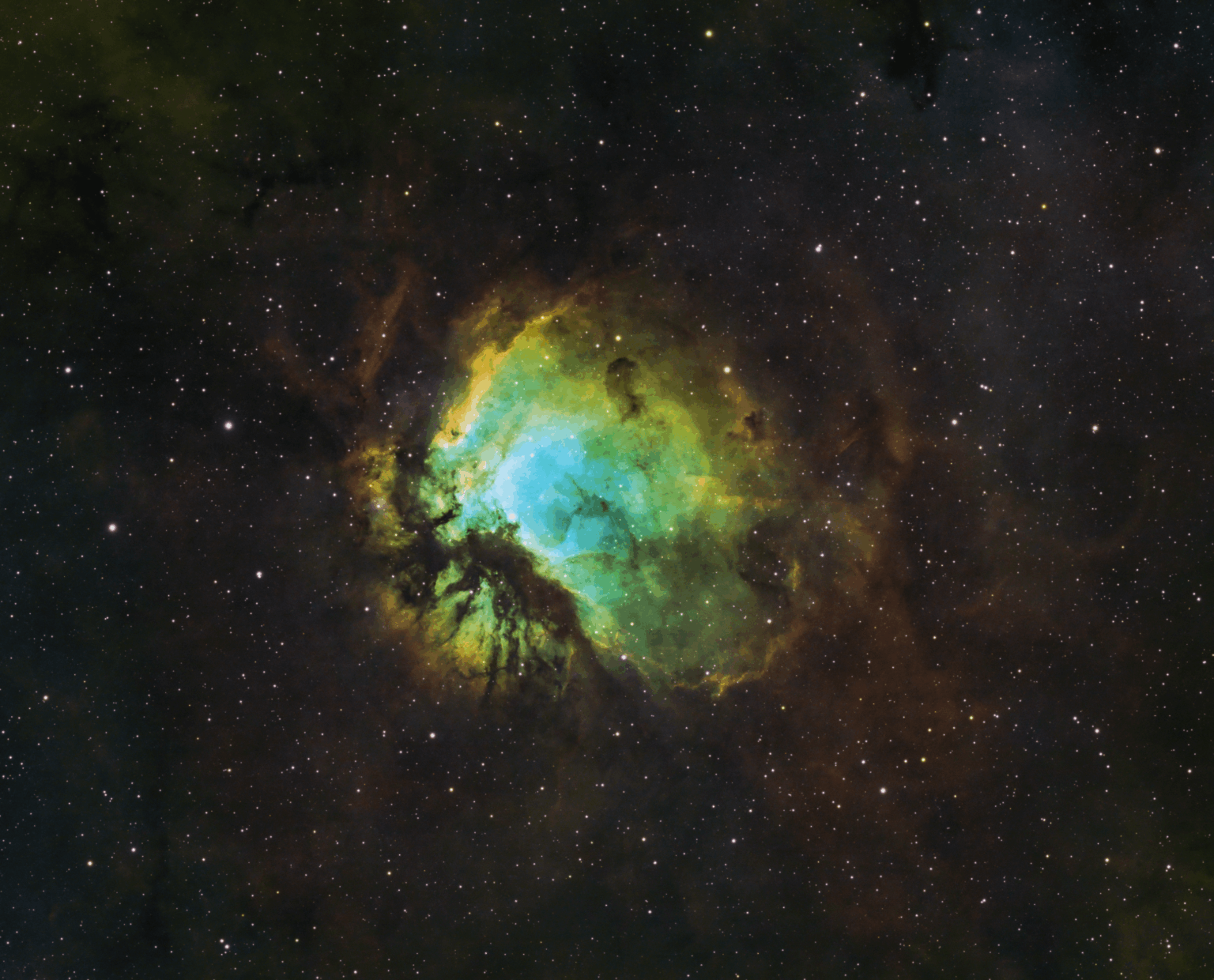
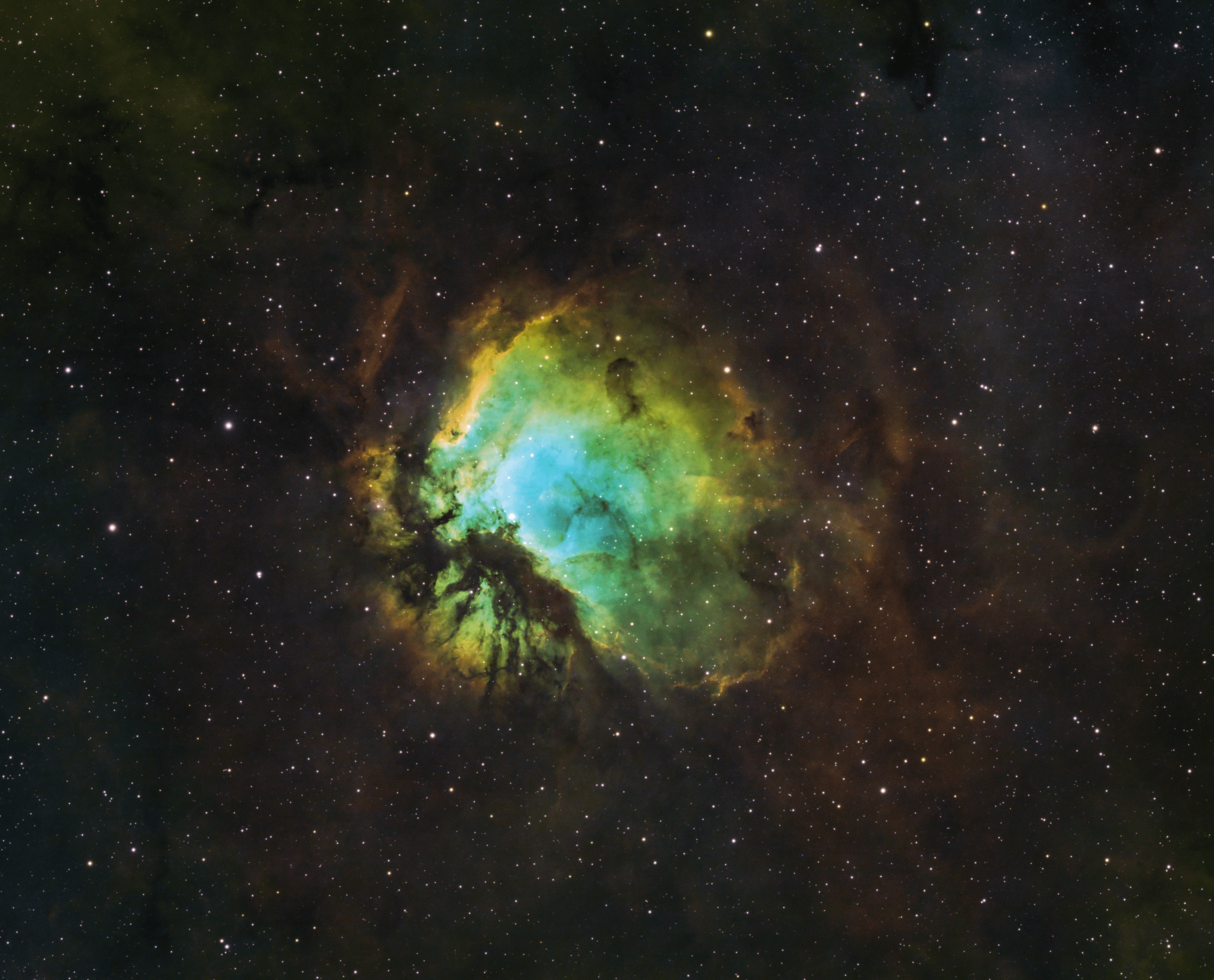
Processing data from 2022, this was about a year into narrowband imaging so there were problems with calibration at the time and I decided to shelved the project from completion. I decided to process the data I have since I have improved on my process since then. Over all, the final image is pretty good and more “nature” as most completed images I seen made the OIII more blue than what OIII should look like. I also like OIII to be more blue but since this project was tough to process and there was much less OIII signal versus HA and SII, I decided to keep it like it is.

1 Comment
**Comments**
Processing data from 2022, this was about a year into narrowband imaging so there were problems with calibration at the time and I decided to shelved the project from completion. I decided to process the data I have since I have improved on my process since then. Over all, the final image is pretty good and more “nature” as most completed images I seen made the OIII more blue than what OIII should look like. I also like OIII to be more blue but since this project was tough to process and there was much less OIII signal versus HA and SII, I decided to keep it like it is.
* Astrobin : https://app.astrobin.com/i/fp0gpz
**Moon Phase, Light Pollution, and Date**
* Average Moon Phase: 49%
* Bortle 7
* 2022: Mar. 11, 13, 20,21, 26, 27.
* 2022: Apr. 3, 7, 10, 16, 22, 24, 27.
* 2022: May. 9, 10, 11, 17, 20, 28, 29, 30.
* 2022: Jun. 1.
**Equipment**
* Telescope/Lens: **William Optics Fluorostar 156 (1217 mm at f/7.8)**
* Flattener/Reducer: William Optics Flattener 68III (1.0x Native focal length)
* Auto Focuser: ZWO EAF
* Filter: **Chroma 31mm SHO 3nm Telescope Filter – Unmounted**
* Filter Wheel: ZWO EFW (8 x 31mm/1.25″)
* Mount: **CEM 120**
* Camera: **ZWO ASI294MM Pro**
* OAG: ZWO OAG
* Guider: ZWO ASI120MM-MINI
* Dew Heater Controller: Pegasus Astro Pocket Micro (Clean up Cables)
* Dew Heater: AstroStrap Dew Heater for 7″ Telescopes (FLT 156)
* Polar Alignment: QHYCCD Polemaster (Precise polar alignment)
* Intel NUC (For imaging, dither, auto guiding, plate solve)
**Software**
* PHD2 (For Auto Guiding)
* QHYCCD PoleMaster Software (Polar Alignment)
* Nighttime Imaging ‘N’ Astronomy (NINA) (Automation with Dithering, plate solving, mount control)
* iOptron Commander Pro (CEM 120 control)
* Pegasus Astro Pocket Powerbox (Control the Pocket Powerbox Micro)
* Photoshop (Processing)
* PixInsight (Processing)
**Acquisition**
* Total Exposure: **39 Hours**
* Chroma SII – 174 x 300s (14 hrs 30 mins)
* Chroma HA – 102 x 300s (8 hrs 30 mins)
* Chroma OIII – 192 x 300s (16 hrs)
* Temperature: -15°C to -10°C
* Flats: 20 per filter
* Darks: 100
* Bias: 200
* Gain: 120
* Offset: 50
* Bin: 1×1
* Pixel Scale: 0.78″/pixel
**Processing in Photoshop and PixInsight**
PixInsight
* Subframe Selector
* Image Calibration
* Star Alignment
* Blink
* Image Integration
* RC-Astro BlurXTerminator
* RC-Astro NoiseXTerminator
* Morphological Transformation (Star Reduction)
Photoshop
* RC-Astro StarXTerminator
* RC-Astro NoiseXTerminator
* Selective Layer NoiseXTerminator
* Adjusted levels
* Adjusted Curves
* Selective Curves Adjustment
* Layer set as “Linear Dodge (Add)” to add back the stars
* Star Color Correction
* Blacks Correction
* Vibrance Applied
* Clarity Applied
* Dehaze Applied
* Sharpening Applied
* Color Noise Reduction
* Crop out edge artifacts