Because you need substance to heat up. Radiation is not heat.
goettel on
There’s nothing (much) to retain heat in the vacuum.
Hopeful_Group7684 on
Space is cold because it is a near-perfect vacuum: there are hardly any particles that can store or transport heat, unlike on Earth with its atmosphere that stores heat (convection). The sun heats objects in space only through direct radiation, but without a medium (like air), the heat cannot be distributed efficiently; shaded areas remain extremely cold, while objects directly exposed to the sun can become very hot because the heat radiates away slowly.
airdenmark on
I will give you the shortest and easiest answer: vacuum = no medium
BrothaBear35 on
Same reason it’s cold at night in the desert.
KrimxonRath on
Look up “convection”. You need material to convect heat. At the same time if you stand in the sunlight on the moon (for example) it’ll be extremely hot while being in the shadows would be extremely cold. Think hundreds of degrees plus or minus. Convection evens out things on earth (air) so we don’t deal with such extremes.
itzKori on
Heat transfers three ways. Conduction (molecule-to-molecule contact), convection (fluid movement), and radiation (electromagnetic waves). In the vacuum of space, conduction and convection are impossible because there are no molecules bumping into each other. Only radiation works, and it only heats what it directly strikes.
This is also why a thermos flask uses a vacuum layer to keep your coffee hot. Without molecules to transfer heat, it stays trapped inside.
AdEmotional8815 on
Heat is when the rays hit something to heat up. More or less.
Pyrhan on
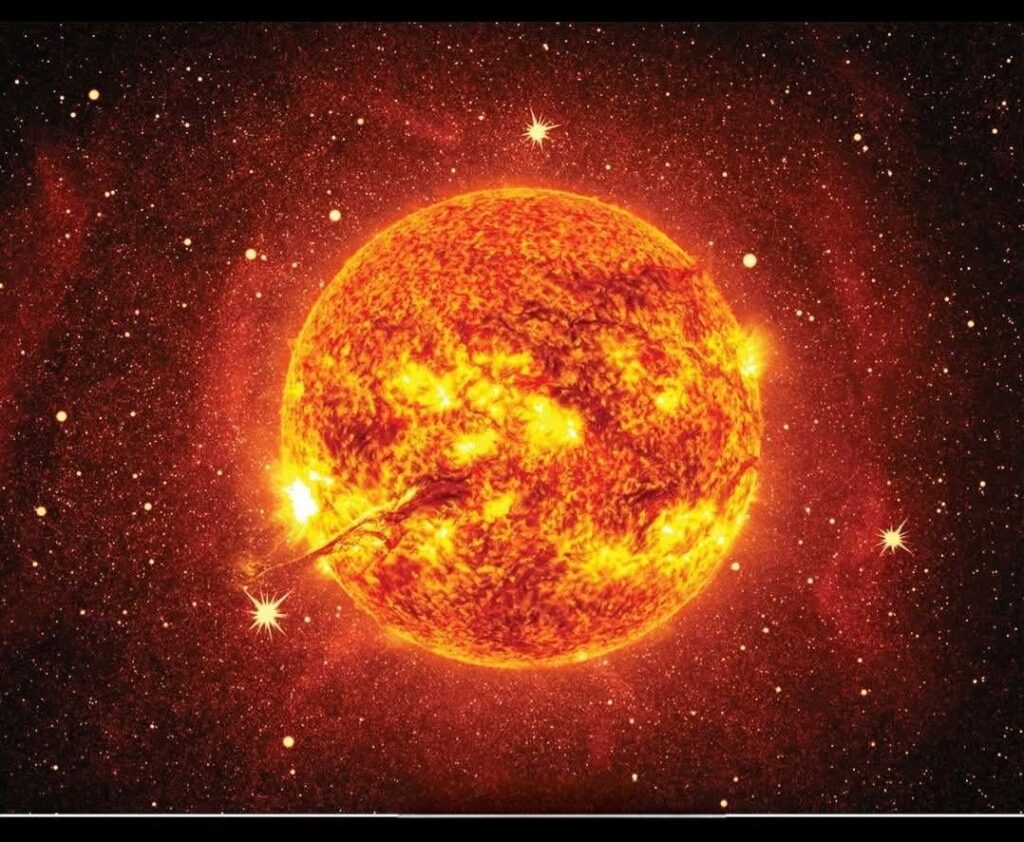
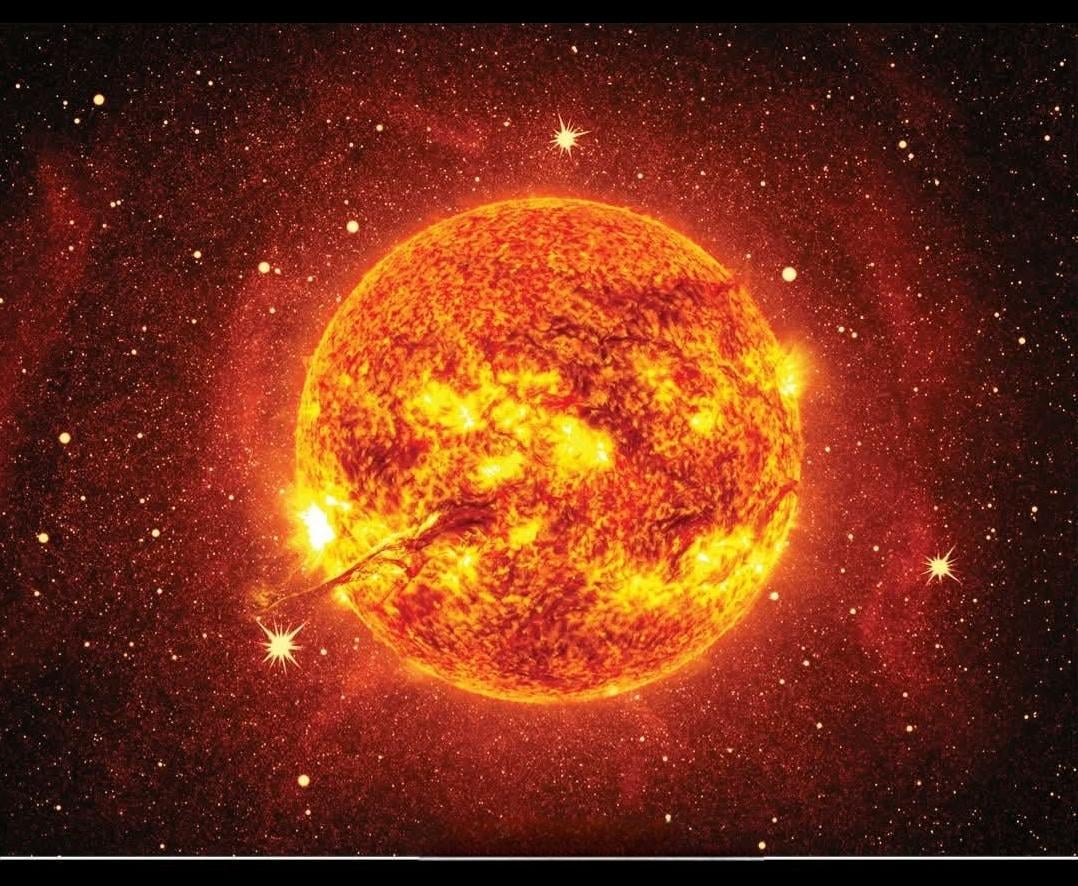
Space is actually very hot if you’re in direct sunlight.
It’s only cold if you’re in the shade of something, or very far away from the sun.
Sorry-Rain-1311 on
It’s not. It’s hot as hell out there.
Heat as we experience it is particles of matter in movement. The more heat, the more energy, so the more the particels move. They move around, and bump into neighboring particles making them move, and that how heat transfers from one thing to another. That’s conduction. It’s like pouring hot coffee into a cold mug, and the coffee transfers some of its heat to the cup.
In space there are no particles to move around, but there is still solar radiation. Radiation in this context is the pure heat energy itself as electromagnetic waves- infrared waves to be exact. All “heat” is infrared radiation, and that radiation energizes particles making them move like we already discussed. That’s like when you hold your hand near the burner on your stove, and you can feel the heat without having to touch it.
The “coldness” of space is left over from the earlier days of high altitude exploration using balloons when we lacked instruments that could properly measure the infrared radiation. So as the balloon went up, the atmosphere got thinner, and the thermometer got colder, but only because there was no air to transfer the heat to it. Early scientist speculated that it’d just keep getting colder the further you went, so space must be freezing. They didn’t know about infrared radiation yet.
if you visit space during the daytime you can wear t-shirt and shorts
morbihann on
“Stuff” can be hot or cold.
Space is mostly lack of “stuff”
TheHabro on
Space is actually not cold or hot. It’s a vacuum so there are no particles or medium filling it (there are only few particles per cm^(3), which is almost nothing). And without medium there’s no transfer of heat. Of course, can be transferred by radiation (this is how Sun’s energy comes to us), but you still need to transfer it to something and there’s nothing in space to transfer it to.
Still, if you were unprotected floating in space, you’d sooner get horrific sun burns than freeze. You’d be hit by solar radiation unfiltered by our atmosphere.
snogum on
Space has nothing to heat up
norlin on
Space is not cold. Space (as a complete vacuum) does not have the “temperature” property at all, only objects in space have the temperature.
Also, there is a simple solution for the solar probes overheating issue – just send them at night.
Acedrew89 on
Gotta have something to heat. Space is empty like the cold air in winter. Earth is a big rock sitting next to a fire.
Consistent-Job-6400 on
there isn’t alot of particles to carry the heat around i guess, the earth’s atmosphere has air so it probably scatters and carries the heat around, I honestly have no idea if this is true..

18 Comments
Because you need substance to heat up. Radiation is not heat.
There’s nothing (much) to retain heat in the vacuum.
Space is cold because it is a near-perfect vacuum: there are hardly any particles that can store or transport heat, unlike on Earth with its atmosphere that stores heat (convection). The sun heats objects in space only through direct radiation, but without a medium (like air), the heat cannot be distributed efficiently; shaded areas remain extremely cold, while objects directly exposed to the sun can become very hot because the heat radiates away slowly.
I will give you the shortest and easiest answer: vacuum = no medium
Same reason it’s cold at night in the desert.
Look up “convection”. You need material to convect heat. At the same time if you stand in the sunlight on the moon (for example) it’ll be extremely hot while being in the shadows would be extremely cold. Think hundreds of degrees plus or minus. Convection evens out things on earth (air) so we don’t deal with such extremes.
Heat transfers three ways. Conduction (molecule-to-molecule contact), convection (fluid movement), and radiation (electromagnetic waves). In the vacuum of space, conduction and convection are impossible because there are no molecules bumping into each other. Only radiation works, and it only heats what it directly strikes.
This is also why a thermos flask uses a vacuum layer to keep your coffee hot. Without molecules to transfer heat, it stays trapped inside.
Heat is when the rays hit something to heat up. More or less.
Space is actually very hot if you’re in direct sunlight.
It’s only cold if you’re in the shade of something, or very far away from the sun.
It’s not. It’s hot as hell out there.
Heat as we experience it is particles of matter in movement. The more heat, the more energy, so the more the particels move. They move around, and bump into neighboring particles making them move, and that how heat transfers from one thing to another. That’s conduction. It’s like pouring hot coffee into a cold mug, and the coffee transfers some of its heat to the cup.
In space there are no particles to move around, but there is still solar radiation. Radiation in this context is the pure heat energy itself as electromagnetic waves- infrared waves to be exact. All “heat” is infrared radiation, and that radiation energizes particles making them move like we already discussed. That’s like when you hold your hand near the burner on your stove, and you can feel the heat without having to touch it.
The “coldness” of space is left over from the earlier days of high altitude exploration using balloons when we lacked instruments that could properly measure the infrared radiation. So as the balloon went up, the atmosphere got thinner, and the thermometer got colder, but only because there was no air to transfer the heat to it. Early scientist speculated that it’d just keep getting colder the further you went, so space must be freezing. They didn’t know about infrared radiation yet.
Why Is Space Not Always Cold? How Heat Affects Spacecraft | American Military University (AMU) https://www.amu.apus.edu/area-of-study/science/resources/why-is-space-not-always-cold/#:~:text=But%20what%20about%20the%20%E2%80%9Clight,its%20day%20and%20night%20cycles.
if you visit space during the daytime you can wear t-shirt and shorts
“Stuff” can be hot or cold.
Space is mostly lack of “stuff”
Space is actually not cold or hot. It’s a vacuum so there are no particles or medium filling it (there are only few particles per cm^(3), which is almost nothing). And without medium there’s no transfer of heat. Of course, can be transferred by radiation (this is how Sun’s energy comes to us), but you still need to transfer it to something and there’s nothing in space to transfer it to.
Still, if you were unprotected floating in space, you’d sooner get horrific sun burns than freeze. You’d be hit by solar radiation unfiltered by our atmosphere.
Space has nothing to heat up
Space is not cold. Space (as a complete vacuum) does not have the “temperature” property at all, only objects in space have the temperature.
Also, there is a simple solution for the solar probes overheating issue – just send them at night.
Gotta have something to heat. Space is empty like the cold air in winter. Earth is a big rock sitting next to a fire.
there isn’t alot of particles to carry the heat around i guess, the earth’s atmosphere has air so it probably scatters and carries the heat around, I honestly have no idea if this is true..