
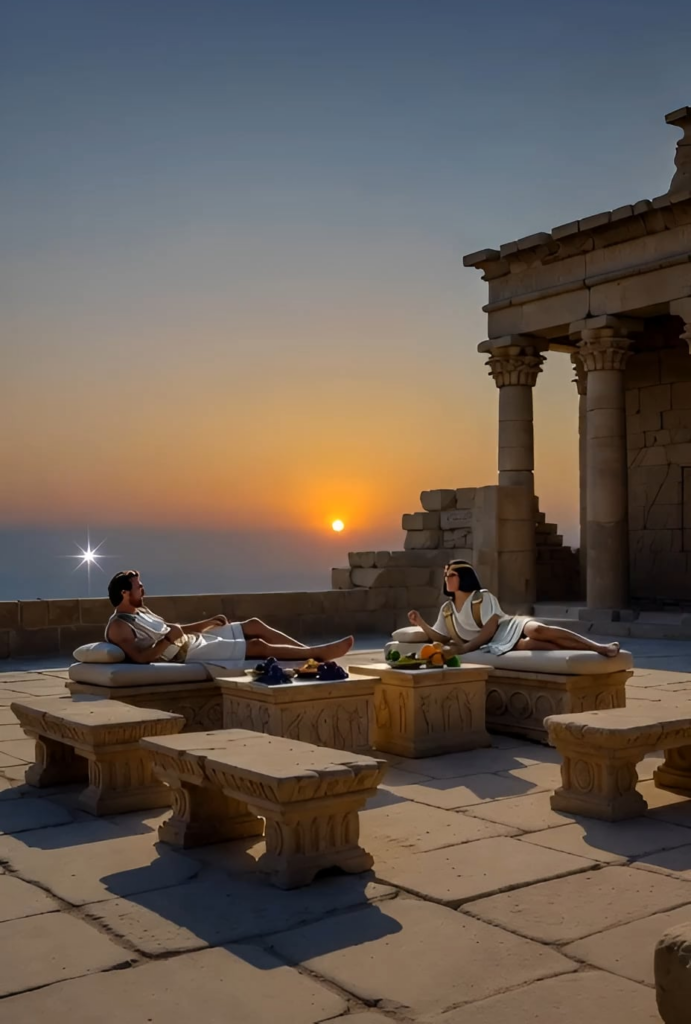
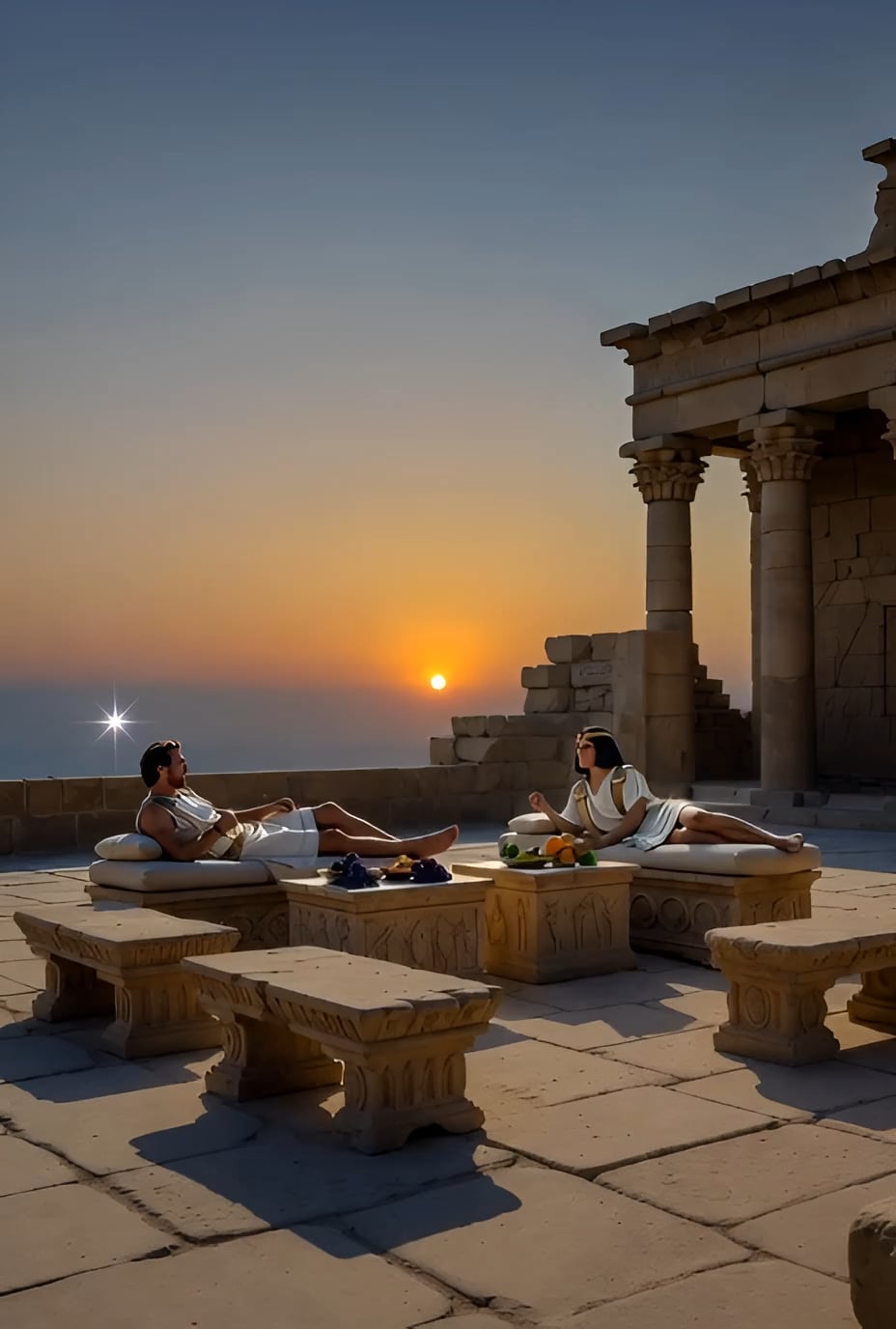
It's time again for the star Sirius to reach its yearly Midnight Culmination, also known as transit at midnight. This event happens for any star on various days, but only for Sirius it's on midnight into the new year. This year is a bit special as it's almost perfectly at solar midnight, only about 10 seconds off. Before the years around 2000, it was several minutes off for some centuries. With this time correlation, the beginning of the year in the Gregorian Calendar is marked by Sirius, the brightest star.
An interesting correlation, because in ancient Egypt, Sirius defined the new year by its yearly Heliacal Rising. That is the first appearance in the morning sky for a few minutes before sunrise, after a two month absence, announcing the yearly flooding of the Nile, an important event for that ancient civilization.
Maybe Julius Caesar, the creator of the Julian Calendar, got that Sirius idea which astronomical event to use to begin his calendar with during his stays at Cleopatra's palace in Egypt? His Julian Calendar is the same as today's Gregorian, which only added the 100 and 400 years leap year exceptions. Before Julian's, the Romans used a different calendar, which started the year in March, which is the reason for today's months' names September through December having the numbers 7 to 10 in their names. The Sirius heliacal rising is also special as its location on the horizon in the East is changing much less than for other stars.
by HolgerIsenberg
2 Comments
https://preview.redd.it/yy3tj8j5kmag1.png?width=823&format=png&auto=webp&s=3f2ee801aad59d23bb6bfe51d7a24d1c308390d2
To see the Sirius midnight culmination, enable the Meridian line in the settings on [https://stellarium-web.org/](https://stellarium-web.org/) and adjust the clock to around midnight into the new year. Works for any location. Depending on the longitude in the timezone range, it can be off by 15 minutes.
Probably. He based his calendar on the Egyptian calendar’s framework which was solar based, while the traditional Roman calendar was lunar based.