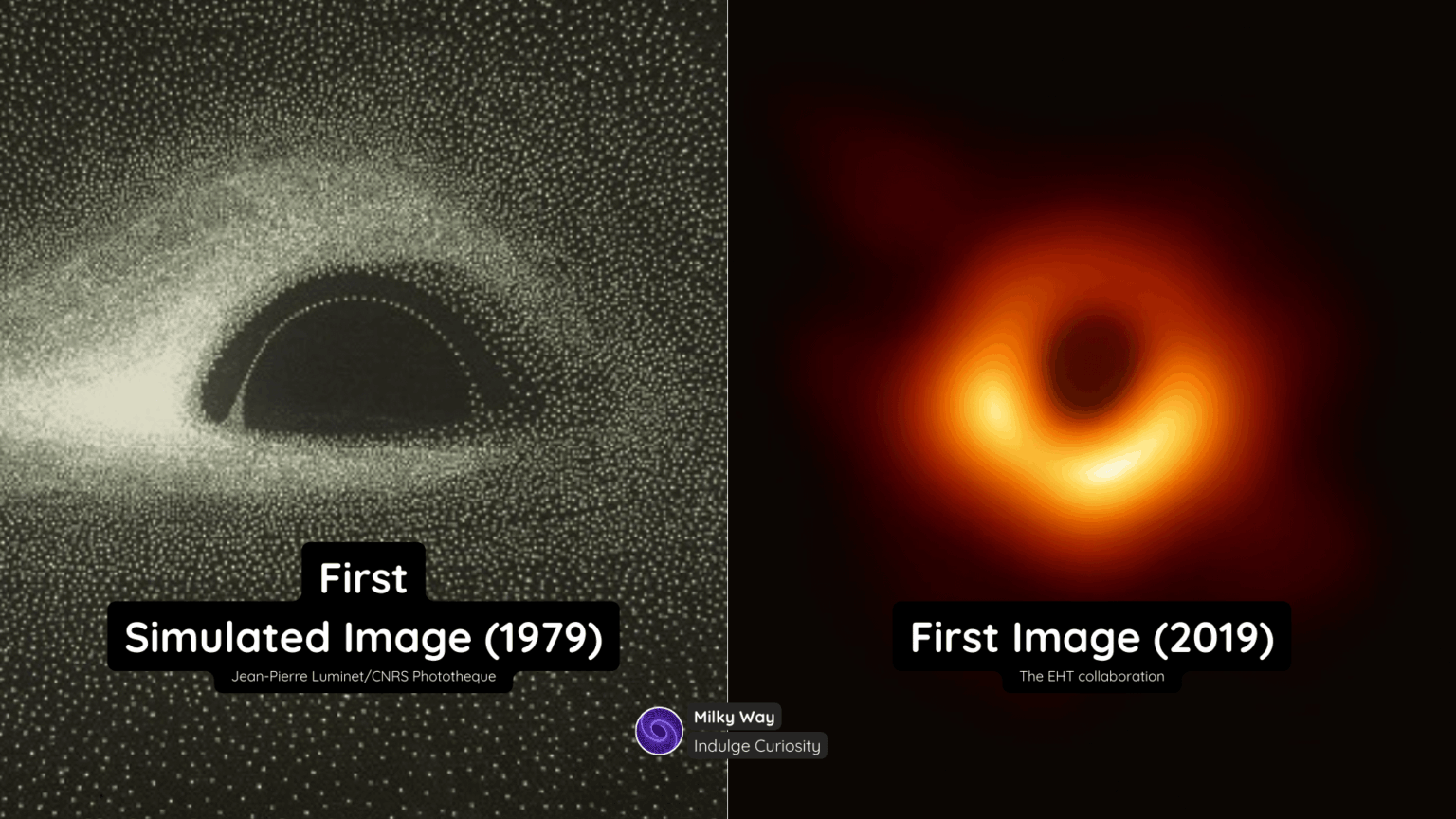
If you see all the details of how this “photo” of the M87 black hole was made, if you see how the data was captured without explaining how they managed to synchronize it, since each telescope used was at a different distance and moving in different directions and speeds, and then you see how the algorithm used always gives a different result even using exactly the same data, you start to look at this “photo” with different eyes. Excuse me, but I don’t buy these black hole photos. So, for me, a layman and a bit ignorant, the first drawing, even if done by hand, seems more accurate. It just lacked being blue/purple.
Justa_CuriousBoi on
IT’S SO **COOL** how you can clearly see the _Droppler effect_ in both of them🤩
rashi_aks08 on
I love this.. love the consistent pursuit of knowledge, curiosity and understanding!!
ZadnikZ on
Any idea where I can find a high resolution file of the first image of a black hole?
InternationalOne2449 on
First we know of.
xenomorph2122 on
*the algorithm used always gives different result even using exactly the same data*
Please don’t tell that you don’t know that ALL photos are post-processed and literally you can have lots of different results based on the settings of this post-processing.
They are doing basically the very extreme version of what your phone’s camera does (processing light data into an image). And regarding the position “problem”, that’s how your body work, even when you receive 2 images slightly different from your eyes, the brain normalizes the images into 1.
More: I don’t agree with your statement, but I think your downvotes are unfair. Science is enriched with debate.
tanzoo88 on
There is whole documentary for the image on the right. Think it took years to plan that photo and the total data was 24 or 32 TB which had to be processed.
TD160 on
That first simulation did pretty, pretty, pretty good.

9 Comments

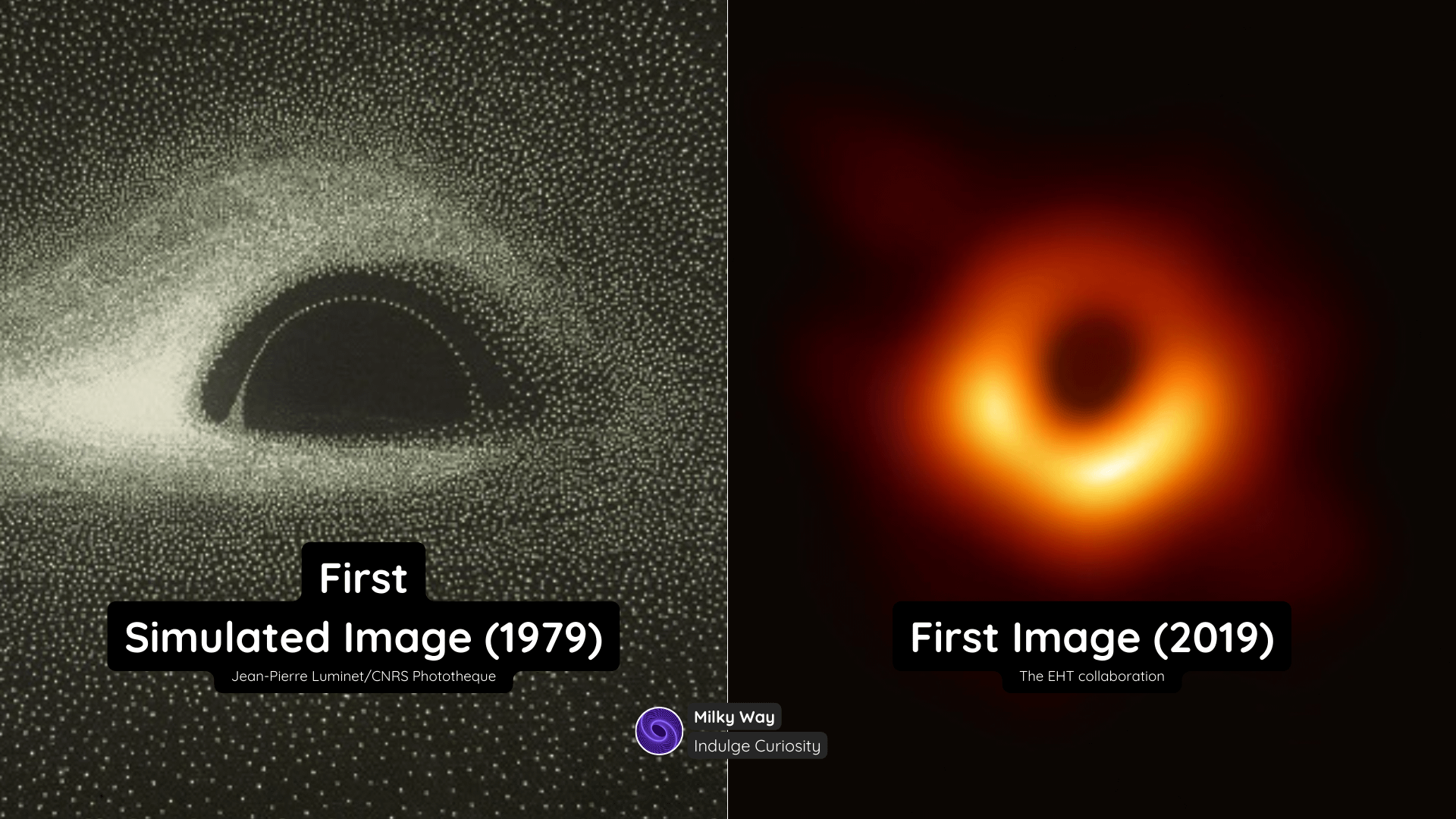
If you see all the details of how this “photo” of the M87 black hole was made, if you see how the data was captured without explaining how they managed to synchronize it, since each telescope used was at a different distance and moving in different directions and speeds, and then you see how the algorithm used always gives a different result even using exactly the same data, you start to look at this “photo” with different eyes. Excuse me, but I don’t buy these black hole photos. So, for me, a layman and a bit ignorant, the first drawing, even if done by hand, seems more accurate. It just lacked being blue/purple.
IT’S SO **COOL** how you can clearly see the _Droppler effect_ in both of them🤩
I love this.. love the consistent pursuit of knowledge, curiosity and understanding!!
Any idea where I can find a high resolution file of the first image of a black hole?
First we know of.
*the algorithm used always gives different result even using exactly the same data*
Please don’t tell that you don’t know that ALL photos are post-processed and literally you can have lots of different results based on the settings of this post-processing.
They are doing basically the very extreme version of what your phone’s camera does (processing light data into an image). And regarding the position “problem”, that’s how your body work, even when you receive 2 images slightly different from your eyes, the brain normalizes the images into 1.
More: I don’t agree with your statement, but I think your downvotes are unfair. Science is enriched with debate.
There is whole documentary for the image on the right. Think it took years to plan that photo and the total data was 24 or 32 TB which had to be processed.
That first simulation did pretty, pretty, pretty good.