

The California Institute of Technology is in jeopardy of losing its 70-year grip on NASA’s Jet Propulsion Laboratory as Washington considers bids from outsiders.
NASA announced plans last month to see if there’s another bidder who can deliver more bang for the buck, just as Caltech approaches the tail end of a 10-year, $30 billion contract that expires in 2028.
If Caltech is replaced as a sole-source contractor, it would represent the first time NASA has selected a different contractor for the job since it was set up in response to the Soviet Union’s launch of Sputnik, igniting the space race.
The 167-acre Caltech, which is located in a leafy section south of downtown Pasadena, has managed JPL’s campus in the foothills of the San Gabriel Mountains for nearly seven decades. Caltech’s roots date back even further when the lab was founded by university faculty and students in 1936.
News of the bidding process for a new JPL contractor comes amid budget cuts, layoffs and the local community jitters over possible disruptions to the high-tech industry that dominates the San Gabriel region.
Thomas Rosenbaum, who is retiring as Caltech president in Pasadena at the end of June, is cautiously optimistic that the scientific and research university — among the best in the nation — still has a lock on the contract. He’s preparing to win that bid by setting up an internal review process that will begin writing the university’s proposal in the competition.
“I’d be surprised, given the complexity of this, if it happens before the end of summer, or maybe in the fall,” Rosenbaum told the Southern California News Group. “That’s a NASA decision. We don’t have any input into that whatsoever.
Rosenbaum said he first heard about the possible competition about a year ago.
“I think it’s perfectly reasonable for the government to ask if it is getting the best value. We obviously feel that we are delivering enormous value,” he said. “We had hoped that, as in the past, we had demonstrated the results that would justify a sole source procurement. Having said that, the government has every right to ask to evaluate the value, and we’re fully prepared to compete for the contract.”
Until now, the contract had been rubber-stamped decade to decade.
Lining up
NASA’s procurement opens the door for scores of interested bidders.
On July 29, 2025, NASA held an “industry engagement day” to perform a required performance review of JPL’s $2.6 billion budget and the job that Caltech is doing. While the lab saw it’s budget reduced about $500 million in the current fiscal year ending Sept. 30, Rosenbaum believes the deepest of the cuts are behind it. He believes there could be some extra funding ahead for spending on national security projects.
Still, the financial climate within NASA remains tough. The White House has proposed slashing its $24.4 billion budget by about $6 billion in the fiscal year beginning Oct. 1.
The list of more than 100 attendees at last year’s review included a “who’s who” in the academic, scientific and research community. They included representatives from Caltech, Aerospace Corp., University of Southern California, Georgia Institute of Technology, Oak Ridge Associated Universities, Texas A&M University Space Institute, Amazon Business, Boeing Co., BWXT Advanced Technologies, Leidos (formerly La Jolla-based Science Applications International Corp., but later bought by Lockheed Martin Corp. in 2016) MITRE Corp., Southwest Research Institute and Teledyne Brown Engineering Inc.
When Rosenbaum learned NASA wanted to move forward to competitively bid the JPL contract, he urgently created a “capture team,” which in government-speak is a specialized group of professionals responsible for winning a major deal.
“You craft what you hope is the most powerful proposal that delivers value, and then you have an internal effort where you judge whether that effort is hitting the mark by bringing in outside experts,” he explained. “It gets refined as the outlines of the competition become better defined. You can’t do this last minute.”
That May 22 announcement sent shock waves throughout the Caltech and JPL ecosystem built in the San Gabriel Valley with hundreds of alumni-founded businesses and research spinoffs launched across industry lines in biotechnology, clean energy, robotics and software.
Surprise call
“I was surprised when I heard from Tom in a phone call a few days before the official announcement,” said Pasadena Mayor Victor Gordo. “The economic component of this is of concern. It would be very difficult for not just the Pasadena community if Caltech lost the contract, but for all of Southern California, and all of California. I would say to you that the investment here would disappear.”
In the meeting with SCNG, David Klug, Pasadena’s economic development director, unfolded a brochure showing off six guiding principles for economic development — top of which is the Rose Parade city ‘s ability to parlay a public-private partnership to advance deep tech initiatives with Caltech and JPL.
“We’d have to tear up the plan and start all over,” said Klug, speculating what might happen if Caltech lost JPL.
Caltech says 100-plus Caltech-affiliated startups have launched over the past decade alone — many of which have been acquired by larger players in their niches.
These companies, which hold a close relationship with Caltech and JPL, include Deep 6 AI, bought by Tempus AI in March 2025; Honeybee Robotics, bought by Blue Origin in 2022; Xencor; Mandala Space Ventures; Motiv Space Systems, which Long Beach-based Rocket Lab announced plans to buy last month; Protomer Technologies, acquired by Eli Lilly in 2001 for $1 billion; Sophia Space; and Captura, a climate-tech startup spun out of Caltech from the university’s venture fund.
Representatives with these companies refused to comment on their concerns — if they had any — regarding NASA’s procurement process.
A spokesman for Bill Gross, founder of the Pasadena-based technology incubator Idealabs, said the venture capitalist “is not able to provide perspective” on the procurement because he sits as one of the 39 voting members on Caltech’s board of trustees.
The board — which also includes 23 non-voting “life members” — extends throughout Southern California, including the real estate billionaire and Irvine Co. chairman Donald Bren and his wife, entertainment lawyer Brigette Bren, former Air Force Secretary Barbara Barrett, Marc Stern, chairman of asset management firm TCW Group Inc., Bobby Inman, the former director of the CIA and National Security Agency, and former top-level executives from Northrop Grumman, Allergan and venture capitalist and private equity firms.
NASA is mum
NASA officials at the agency’s headquarters in Washington, D.C., and at JPL in Pasadena, also declined to discuss the contract renewal.
“Because of federal procurement guidelines, it would be inappropriate for the lab’s director to discuss the request for proposals or to speculate on outcomes,” wrote JPL spokesman Matthew Segal in a statement emailed to SCNG requesting an interview with JPL Director Dave Gallagher.
Gallagher, who has nearly four decades holding various roles with JPL, was appointed head of JPL last summer to replace his predecessor Laurie Leshin, who departed for personal reasons. Caltech, as manager of JPL, selected Gallagher as director of JPL.
The closeness of the two organizations is undeniable. Seven of 300 professional faculty hold joint appointments at Caltech and JPL. Nearly 300 Caltech alumni work at JPL.
U.S. Rep. Judy Chu, who represents the Pasadena, is concerned the outcome of the procurement process could undermine the economic vitality of the region.
“While I am confident that a competitive process will make clear that Caltech’s management of JPL continues to be the best and most cost-efficient path forward, I am deeply concerned that NASA’s decision to reopen JPL’s management contract for competition after more than six decades could create significant disruption at a time when NASA is pursuing some of its most ambitious missions in years,” Chu wrote in a statement.
“I am particularly concerned about the impact this decision could have on JPL employees, who have already had to endure multiple rounds of layoffs over the past several years. This uncertainty could result in NASA losing even more of these highly skilled scientists, engineers, and technical experts to the private sector or other countries, weakening capabilities that are critical to our nation’s leadership in technology and space exploration.”
Since February 2024, JPL has laid off more than 1,400 employees in four rounds of cuts at the Pasadena lab, leaving it with roughly 4,600 workers at its campus 7 miles northwest of Caltech, which has a staff of 2,500.
The layoffs have come at one of the nation’s premier space exploration research centers as Congress has trimmed hundreds of millions of dollars from the lab’s operations.
‘Painful retrenchment’
“For the foreseeable future, we do not expect any more layoffs but, of course, it depends on the budget process in Washington, D.C. It was certainly a painful retrenchment,” said Rosenbaum, who earlier this month was busy packing up his office for retirement.
“JPL is a national treasure. There is no other entity, other than China, which has landed on Mars once,” he said. “We’ve landed it nine out of 10 times. We’ve developed that technology. We continue to push the boundaries, and if you want humanity to reach for the stars, you’re going to need Caltech and JPL.”
In retirement, the 71-year-old plans to take a break from teaching, write technical papers on the subject of quantum mechanics and spend time mentoring students in a basement lab of the Ronald and Maxine Linde Hall of Mathematics and Physics. (He doesn’t watch television, but does make an exception for some sporting events.)
Under his dozen-year stewardship, the university’s endowment has doubled to $4.48 billion, and collected more than a $1 billion in donations for new buildings and labs. To date, 48 Caltech alumni, faculty and others are Nobel laureates.
On June 17, Rosenbaum stood at his last new building ceremony on campus before a crowd of hundreds of donors, faculty and others to unveil a four-story building that will house a subterranean lab designed for cutting-edge quantum research.
What is Caltech known for?
“I think it is making sure that Caltech is the destination choice for the most talented people around the world, and when I say Caltech, I mean the whole ecosystem, including JPL,” Rosenbaum said. “We do not have a plan to grow. We try to get better, not bigger. Caltech is going to be here for hundreds of years.”
His 54-year-old successor, astrophysicist and former Johns Hopkins Provost Ray Jayawardhana, starts July 1.
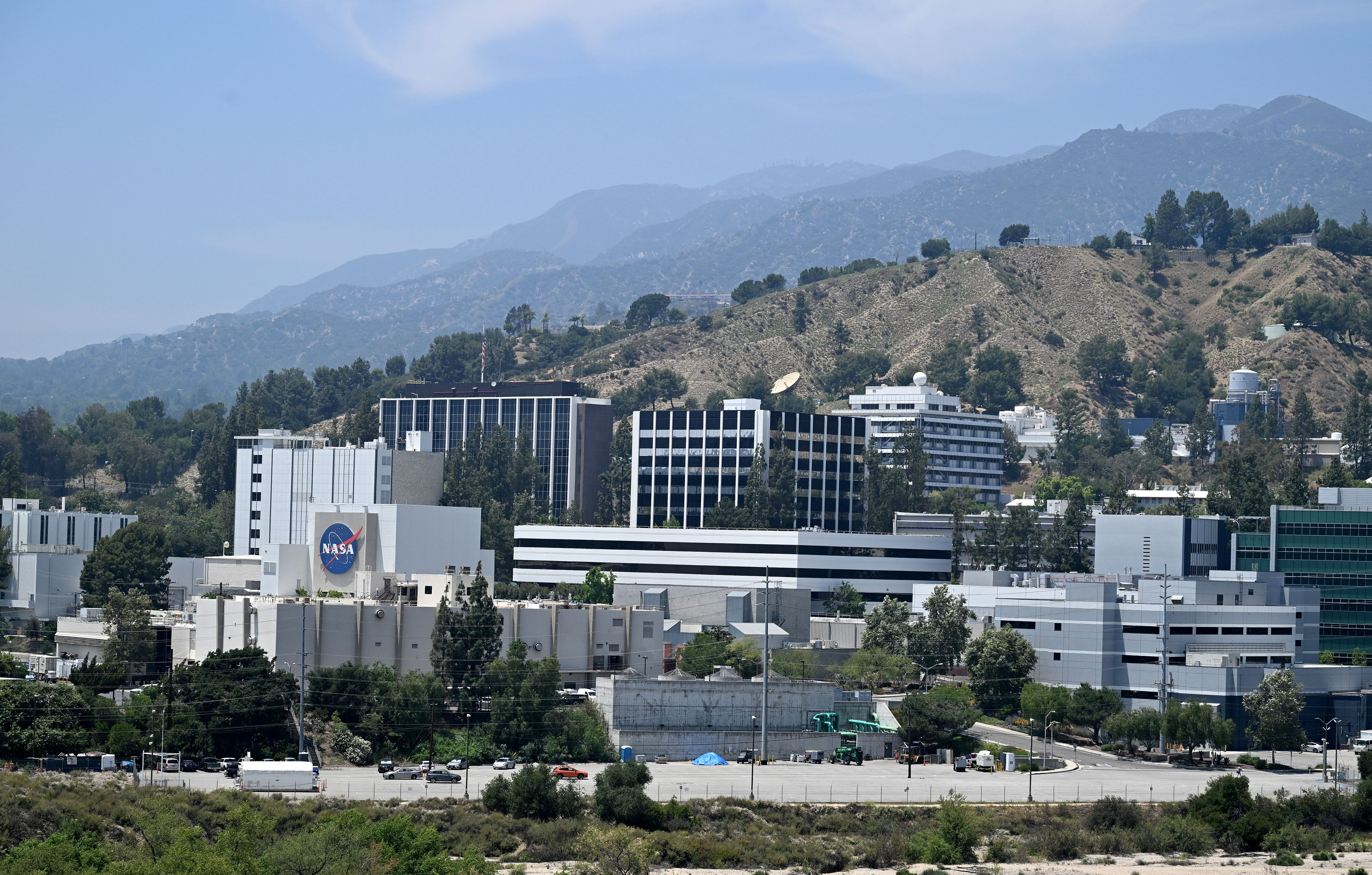
Jet Propulsion Laboratory is owned and sponsored by NASA and administered and managed by Caltech seen here on June 13, 2025. (Photo by Dean Musgrove, Los Angeles Daily News/SCNG)
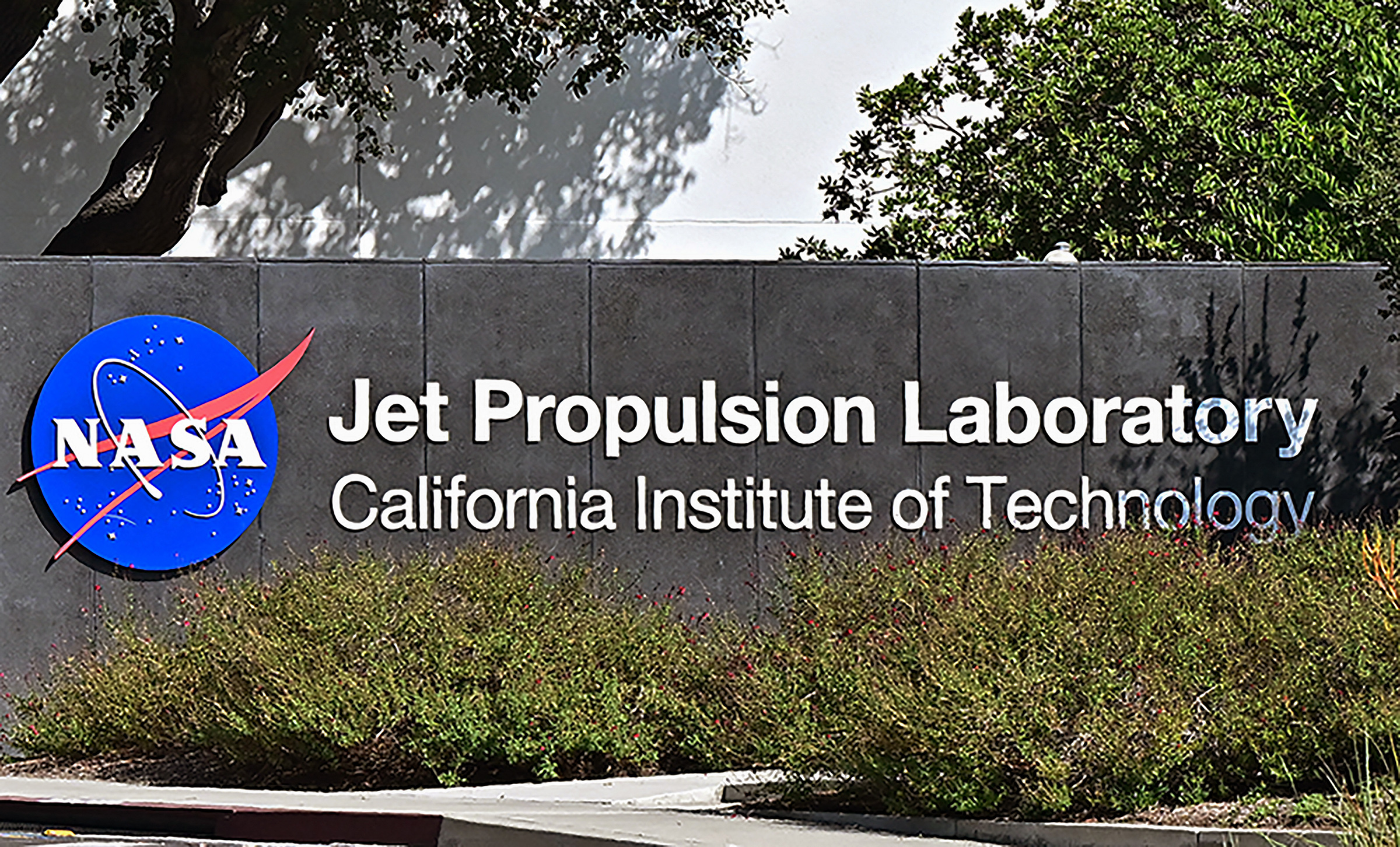
Signage is seen at NASA’s Jet Propulsion Laboratory (JPL) in La Canada Flintridge on Oct. 8, 2025. ((Photo by FREDERIC J. BROWN/AFP via Getty Images)

Pasadena Mayor Victor Gordo in his office at Pasadena City Hall on Wednesday, June 10, 2026. (Photo by Hans Gutknecht, Los Angeles Daily News/SCNG)

Pasadena Mayor Victor Gordo in his office at Pasadena City Hall on Wednesday, June 10, 2026. (Photo by Hans Gutknecht, Los Angeles Daily News/SCNG)
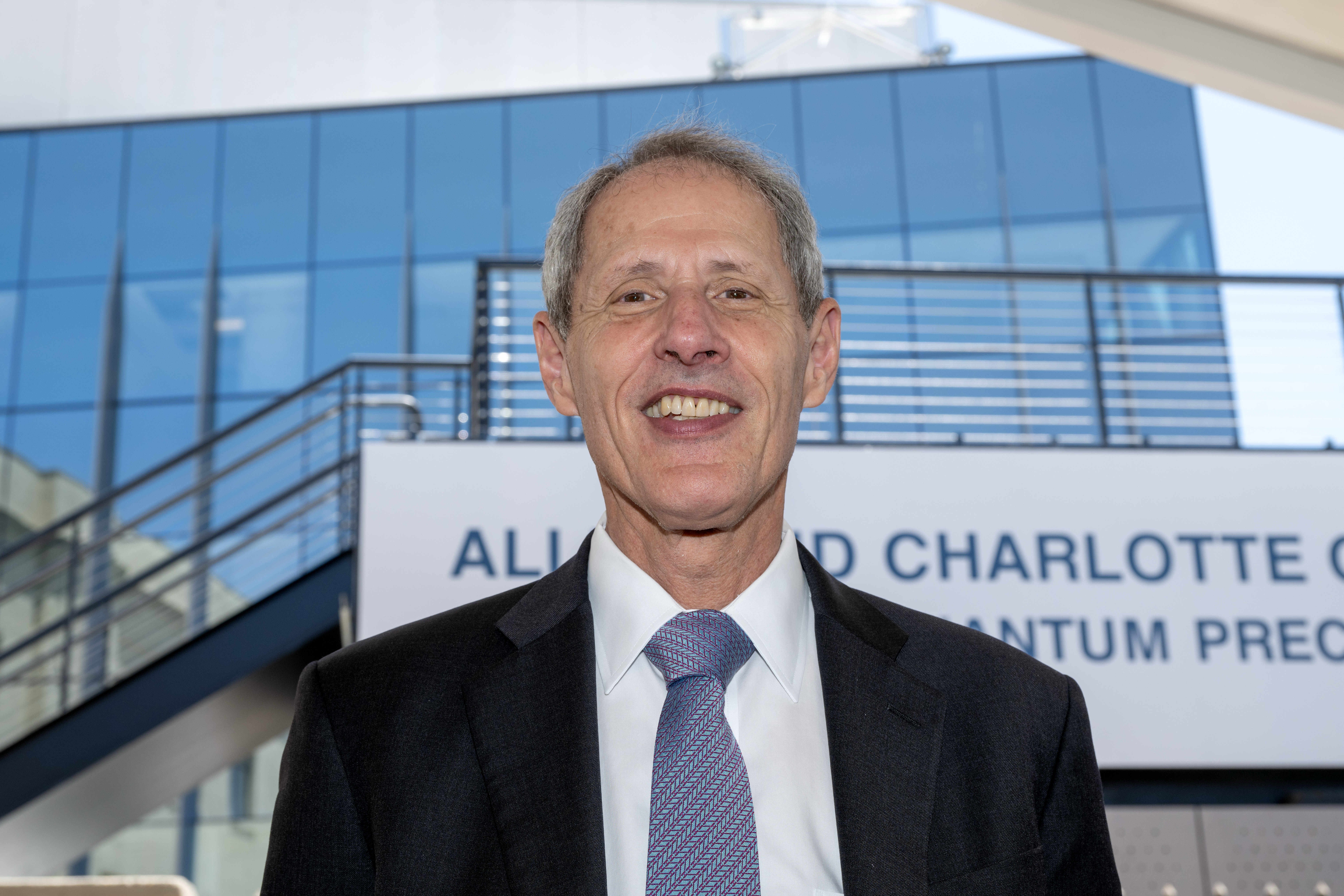
Caltech President Thomas Rosenbaum, during the dedication of the new Allen and Charlotte Ginsburg Center for Quantum Precision Measurement at Caltech in Pasadena on Wednesday, June 17, 2026. (Photo by Hans Gutknecht, Los Angeles Daily News/SCNG)

Caltech President Thomas Rosenbaum, during the dedication of the new Allen and Charlotte Ginsburg Center for Quantum Precision Measurement at Caltech in Pasadena on Wednesday, June 17, 2026. (Photo by Hans Gutknecht, Los Angeles Daily News/SCNG)
Show Caption
1 of 6
Jet Propulsion Laboratory is owned and sponsored by NASA and administered and managed by Caltech seen here on June 13, 2025. (Photo by Dean Musgrove, Los Angeles Daily News/SCNG)