

June 17, 2026
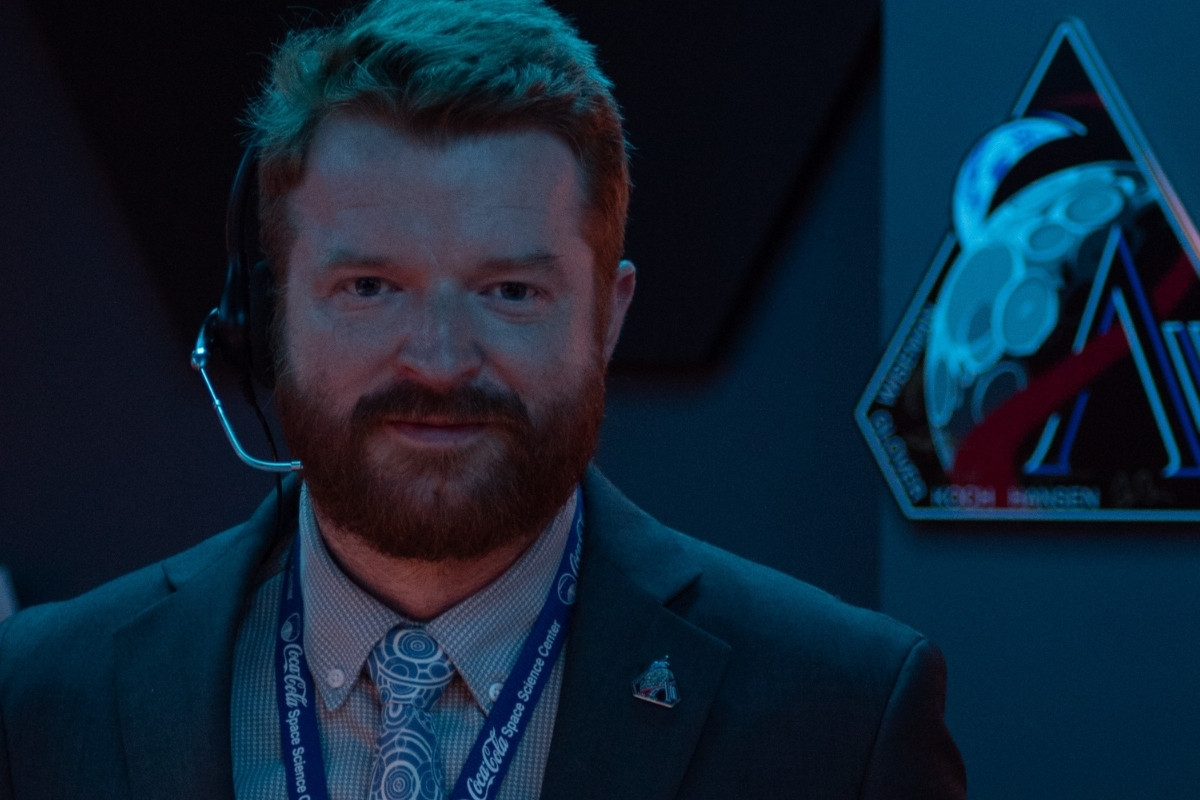
Six-year-old Cameron McCarty loved reading the “Big Book of Planets.” As an undergraduate
at Columbus State University, he studied the moon while earning a degree in Earth and space sciences.
On April 1, 2026, McCarty ’14 was part of a NASA team that launched the four-member
Artemis II crew to the moon for a historic 10-day lunar flyby. As a payload operations
director at NASA’s Marshall Space Flight Center in Huntsville, Alabama, McCarty oversees
a mission control team and works directly with the flight director at NASA’s Johnson
Space Center in Houston.
A native of Columbus and a graduate of Hardway High School, he focused his studies
on astrophysics and planetary geology in the Department of Earth & Space Sciences. At the same time, he shared his classroom knowledge with visitors at the university’s
Coca-Cola Space Science Center. As a child, McCarty’s father worked at the center, and the younger McCarty attended
every summer camp there he could.
As a college student, he had access to the center’s research-grade telescopes, which
fueled his passion for space and deepened his interests in astrophysics and planetary
geology. As a student assistant at the center, he also shared his enthusiasm for astronomy
with visitors and local K-12 students.
“Getting to go out to elementary and middle schools gave me great outreach and communication
skills,” he recalled. “Working at a museum helped my professional development and
presentation skills. So many soft skills that translate directly over to my professional
career.”
His outreach included creating an engaging physics and astronomy show in the style
of “Bill Nye the Science Guy” for visiting youth at the center and helping to develop
an interactive global webcast covering major events such as the 2012 Transit of Venus.
In 2013, he captured a stunning solar eclipse image in Australia, which was featured
as NASA’s Astronomy Picture of the Day and streamed live by National Geographic for its webcast that day.
Dr. Shawn Cruzen, a professor and executive director of the Coca-Cola Space Science Center, has observed
McCarty’s career grow from his time as an undergraduate.
“Cameron is multi-talented, and he learned much during his time at Columbus State
and the Coca-Cola Space Science Center, both academically and professionally. Since
that time, he has been extremely helpful in mentoring our next generation of students
toward careers with NASA,” Cruzen recounted. “But perhaps the trait I admire most
in Cameron is simply his willingness to boldly go and chase opportunities, seemingly
without intimidation or any tendency for self-elimination; I believe we can all learn
from him in this regard.”
Internships vital to professional success
Combined with Cruzen’s mentorship, McCarty’s research and experience working at the
center led to two different internships with NASA’s Office of STEM Engagement prior
to his graduating from Columbus State.
“I give those two internships significant credit for getting me where I am today,”
he said. “The connections, friends and experiences from those helped significantly.
From there, I just kept my sights set on NASA; I knew I wanted to be a part of a mission
someday.”
After graduating from Columbus State, McCarty went on to earn a master’s degree in
geology and Earth science from the University of Tennessee. During his graduate studies,
he served as the engineering camera payload uplink lead through NASA’s Jet Propulsion
Laboratory in Pasadena, California, for the agency’s Mars Opportunity rover. McCarty
credited this experience with fueling his passion for mission operations, which eventually
led to a full-time position at NASA Marshall. There, he initially managed real-time
payload operations for the International Space Station—until his duties and leadership
expanded to include the ISS in addition to his more recent Artemis duties.
NASA then focused on returning to the moon, and McCarty took on a key role in modern
space exploration. NASA considers the Artemis II mission—its first crewed lunar flyby
in over 50 years—as a key step toward a long‑term return to the moon and future crewed
missions to Mars.
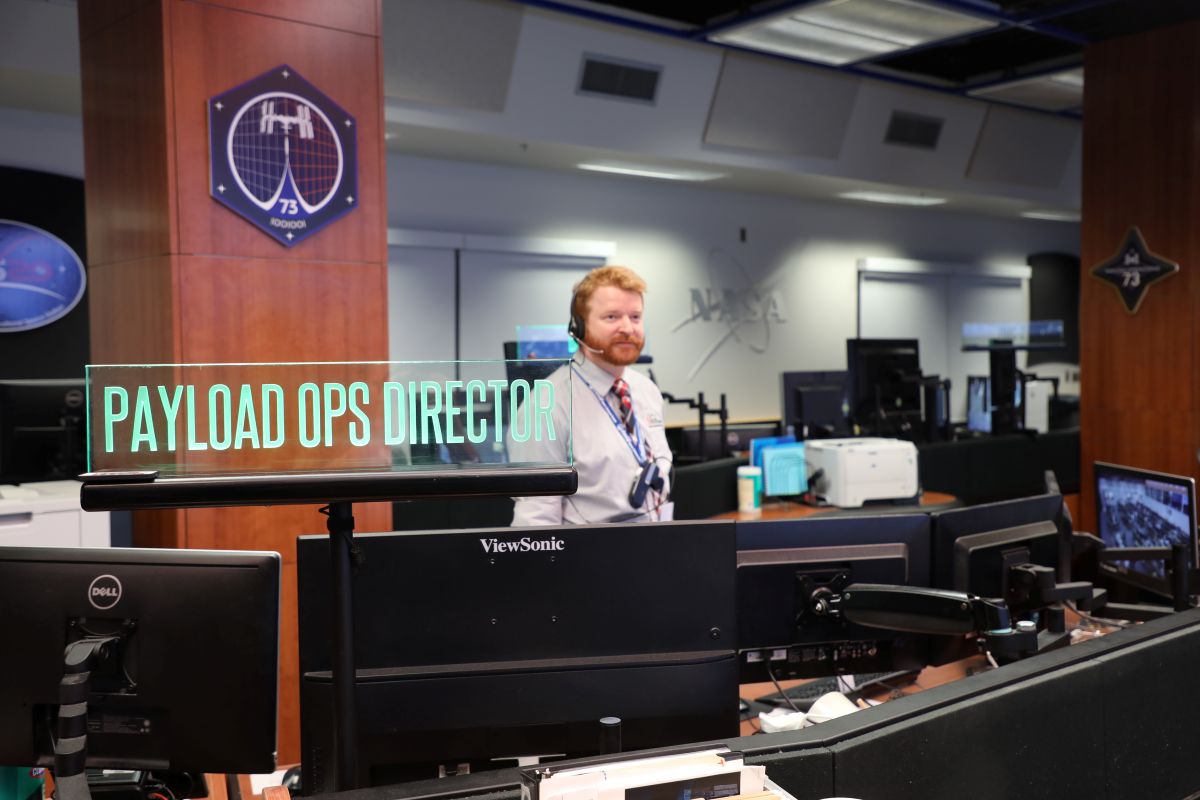
He led the real-time ground team responsible for tracking the science payloads on
the Artemis II mission. While Houston’s Flight Control managed the spacecraft, he
directed the Payload Mission Operations Division team operating human health science
activities happening in real time on the way to the moon.
McCarty enjoys being involved in payload operations, highlighting that the International
Space Station program has led to major breakthroughs in medicine, technology, materials
science, alternative energy and real-time disaster relief.
“Some of my most memorable days on console are when the science doesn’t go exactly
how we expected,” he noted. “It’s science—it doesn’t always happen like you think
it might. That’s when the scientists learn new things, and it’s why you have us as
the ground team to reschedule or rethink their operations on the fly to help accomplish
all the tasks.”
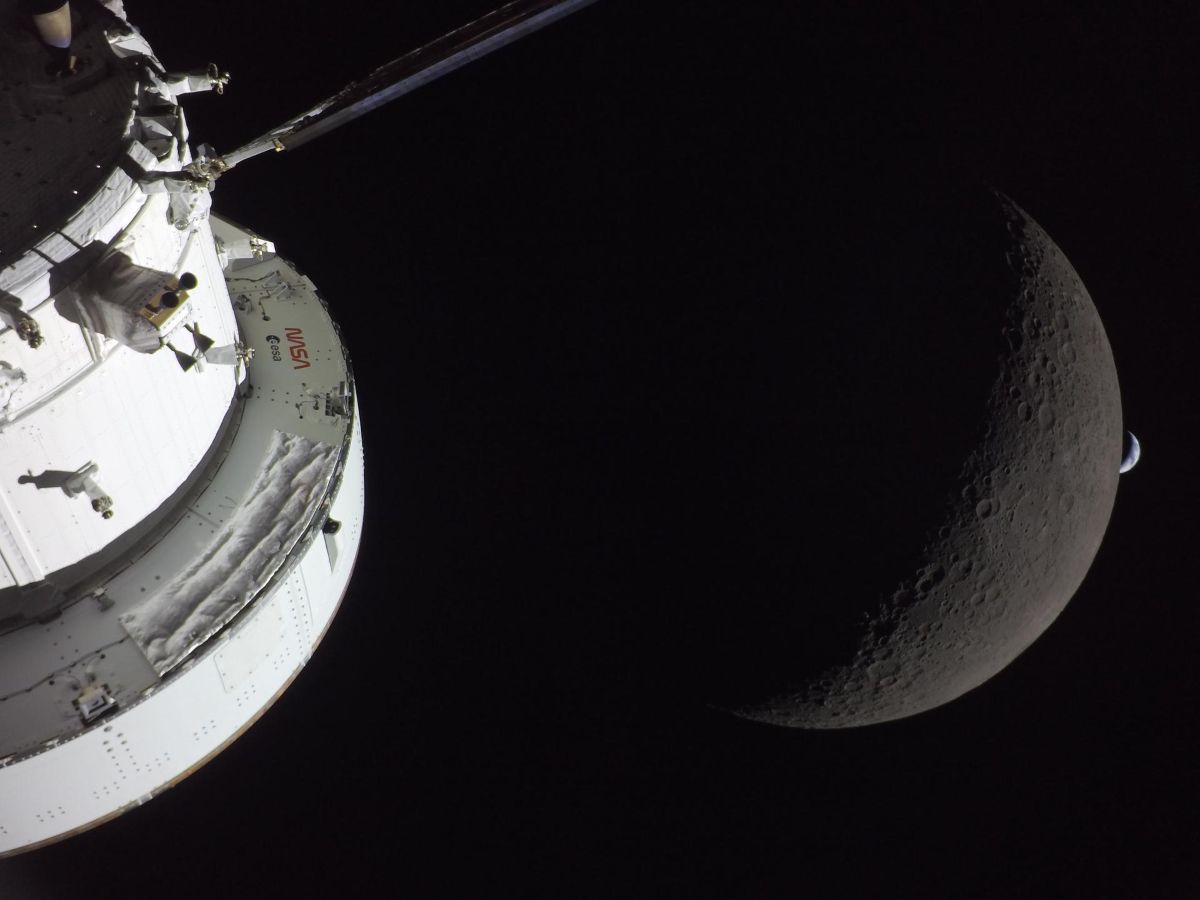 NASA’s Orion spacecraft captures the Moon and the Earth in one frame during the Artemis
II crew’s deep space journey at 6:42 p.m. ET on the sixth day of the mission. The
right side of NASA’s Orion spacecraft is seen lit up by the Sun. A waxing crescent
Moon is visible behind it. And then, a crescent Earth, tiny compared to the Moon,
is about to set below the Moon’s horizon on the right. Credit: NASA
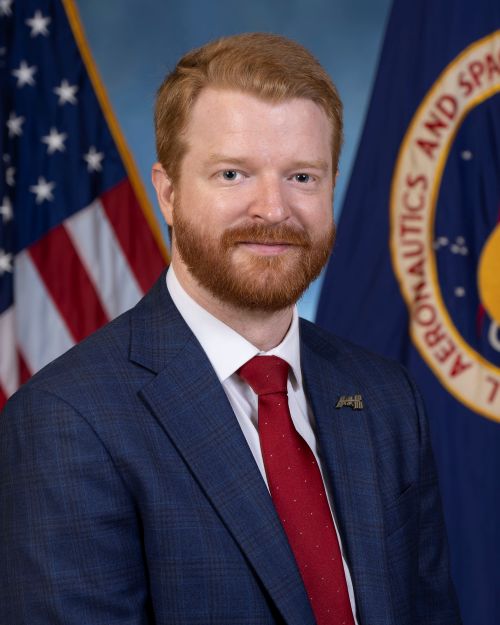 With Artemis II successfully completed, McCarty is already rocketing ahead on other
projects. He continues to support upcoming ISS crews while actively planning for Artemis
III, IV and V. NASA is preparing for lunar landings in 2028 to establish a long-term
presence on the moon.
For current and future Columbus State students looking to follow in his footsteps,
McCarty emphasizes that technical capability should be paired with proactive outreach.
“Internships and networking—that’s my advice, and it’s applicable to any field,” he
advised. “Get involved as early as you can, not just to get your foot in the door,
but to make sure you like it… And networking isn’t just having a big binder of business
cards or an extensive contacts list. Keep in touch with those folks, reach out every
so often and make sure they know you’re still interested.”
More information, photos and resources about the Artemis II mission are available
on NASA’s website.
Note: all images courtesy of NASA
Media contacts: Columbus State University: Michael Tullier, APR; NASA: Marshall Office of Communications