
SETI scanned 3I/Atlas for more than seven hours and detected no signs of extraterrestrial technologyThe comet is only the third confirmed interstellar object ever observed in the solar system, following ʻOumuamua and 2I/BorisovResearchers say the search demonstrates growing capabilities to detect potential technosignatures from objects passing through space
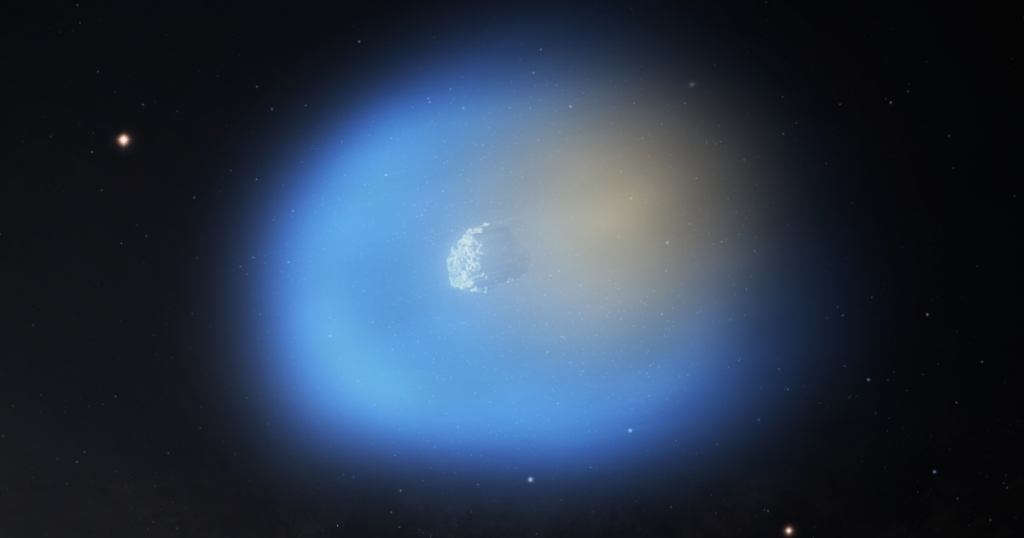
Scientists searching for signs of extraterrestrial intelligence have found no evidence that interstellar comet 3I/ATLAS is linked to alien technology, according to new research published in The Astronomical Journal.
The findings come after researchers at the SETI Institute conducted extensive radio observations of the object following its discovery. The study adds to growing efforts to search for “technosignatures”, evidence of technology created by intelligent civilizations beyond Earth, while also strengthening the scientific consensus that 3I/ATLAS is a natural interstellar comet.
Researchers Scan Millions of Radio Signals
The SETI Institute spent more than seven hours observing 3I/ATLAS in July, searching across a broad range of radio frequencies for signs of artificial transmissions.
The observations initially identified nearly 74 million narrow-band radio signals. After filtering out radio interference from Earth and eliminating signals inconsistent with the comet’s trajectory, researchers narrowed the list to just over 200 candidates.
According to the SETI Institute, every remaining signal was ultimately traced to human-made technology, including sources on Earth and satellites orbiting the planet.
“These results show how realistic it is to detect a signal with the technology we have today,” researcher Valeria Garcia Lopez said in a statement. “That is why it is important to keep searching for technosignatures, even from objects we might not expect to have signals.”
Third Known Interstellar Visitor
Astronomers discovered 3I/ATLAS as it entered the solar system from another star system, making it only the third confirmed interstellar object ever detected.
The comet follows the discoveries of ʻOumuamua in 2017 and 2I/Borisov in 2019. Scientists classified both earlier visitors as natural objects, despite occasional public speculation about their origins.
Because interstellar objects originate outside the solar system, they provide rare opportunities to study material formed around other stars and test methods used in the search for extraterrestrial intelligence.
NASA Observed the Comet Near Mars
Several NASA spacecraft tracked 3I/ATLAS as it passed near Mars in October. The comet came within approximately 19 million miles (30 million kilometers) of the planet.
Its closest approach to Earth occurred in December, when it remained about 167 million miles (269 million kilometers) away.
Researchers estimate the comet measures between 1,444 feet (440 meters) and 3.5 miles (5.6 kilometers) across. Some studies suggest it could be as old as 11 billion years, making it significantly older than the Sun.
The object is now roughly 1 billion miles (1.3 billion kilometers) from Earth and continues on a trajectory that will carry it back into interstellar space.
Study Highlights Technosignature Search Efforts
The researchers said the project demonstrates how existing technology can be used to examine interstellar visitors for possible signs of intelligent origin.
Lead author Sofia Sheikh and her colleagues noted that humanity has already created objects capable of traveling beyond the solar system. The team cited NASA’s Voyager spacecraft, which remain the most distant human-made objects from Earth.
“Voyager and similar probes will eventually become interstellar objects in other stellar systems. We thus know that no extrapolation is needed for the idea of interstellar technological objects, as we have a proof by existence,” the researchers wrote in the study.
While 3I/ATLAS appears to be a naturally occurring comet, scientists said the observations provided a valuable opportunity to test and refine methods that could one day help identify evidence of intelligent life beyond Earth.