
_updates.jpg)
Study reveals millions of planets may form near black holes
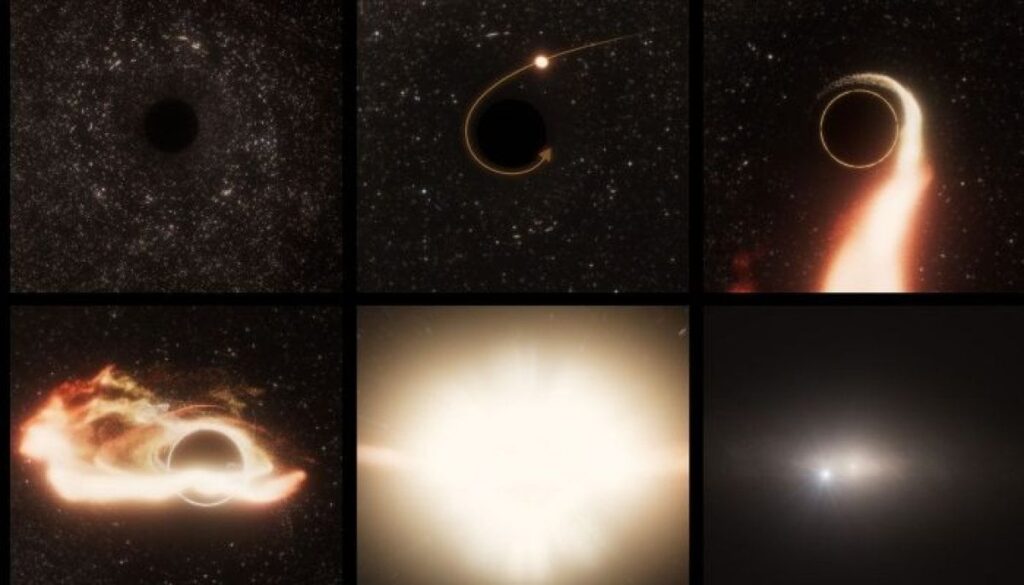
Scientists studying the brightest and most violent regions of galaxies have stumbled onto an unexpected discovery: supermassive black holes may be among the most prolific planet factories in the universe, potentially producing millions of worlds in the turbulent discs of gas and dust that surround them.
Active galactic nuclei (AGNs) are created when supermassive black holes get consumed by huge, swirling rings of gas and dust referred to as accretion discs.
The extreme gravitational friction in these discs produces heat that can illuminate more stars than exist in the entire galaxy, while plasma jets of incredible energy shoot out of the poles of the black hole at nearly the speed of light.
That’s just how extreme these discs are, and that is exactly why the discovery by the model caught the attention of scientists.
Researchers at the University of Colorado Boulder, working alongside Wladimir Lyra, an astronomy professor at New Mexico State University, built a computer model of a supermassive black hole and its accretion disc to test whether planet formation was possible at the outer edges of these structures.
The team found that a phenomenon called “streaming instability”, where large filaments of dust clump together, could produce millions of Jupiter-mass planets at distances of tens of parsecs from the black hole. ”
These are dust giants exceeding Jupiter’s mass. They will look like lava balls,” CU Boulder researcher Bhupendra Mishra told Space.com.
Since AGN discs have much higher levels of gas compared to the planetary discs found around young stars, there are many more conditions present for the formation of several million planets than only a few planets around one star.
Neither Mishra nor Lyra had expected such results. “We are surprised,” said Mishra. “This hasn’t been done before in the context of an AGN disc using the streaming instability theory.”
The researchers believe their study could contribute knowledge about the enigmatic outer parts of active galactic nuclei.