
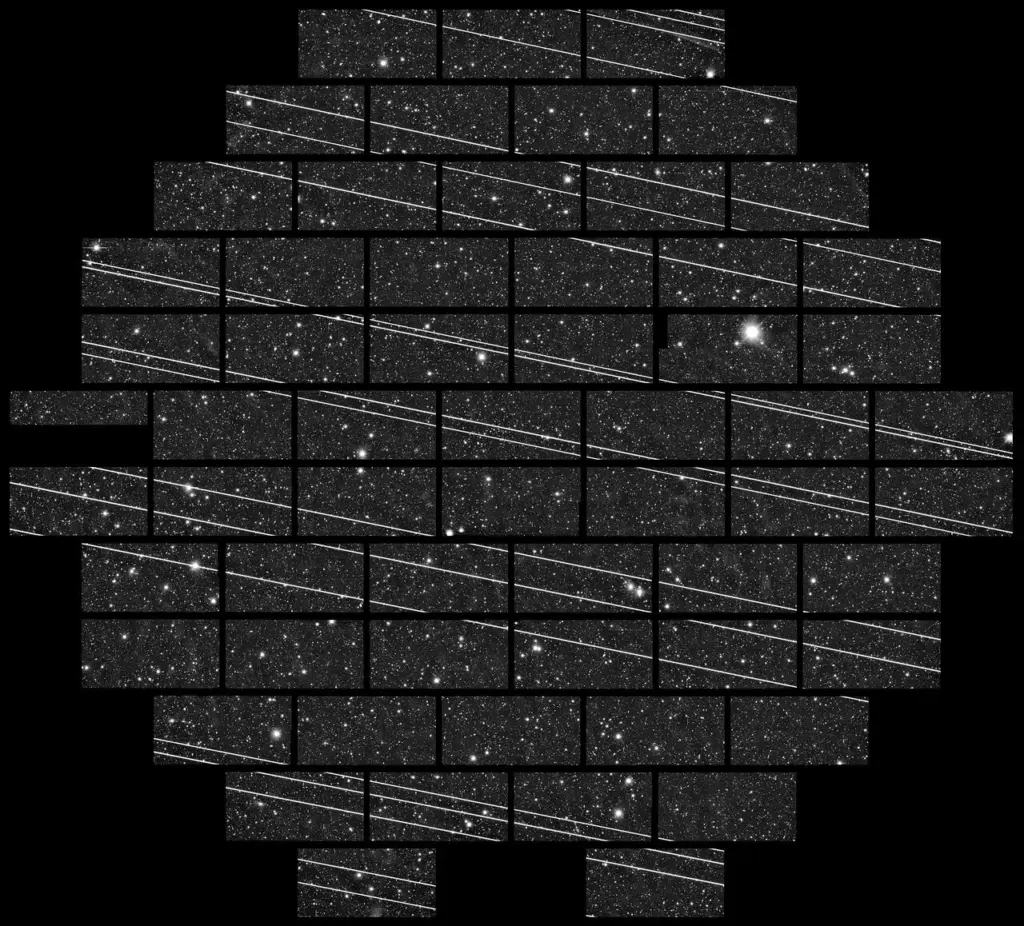
NASA’s space telescope operates in orbit at an altitude of 700 km, but even that doesn’t protect it from being obscured by commercial satellites. Nearly three-quarters of its images contain traces of these satellites. If their numbers in low Earth orbit increase to the levels planned by companies, there won’t be any usable images left at all.
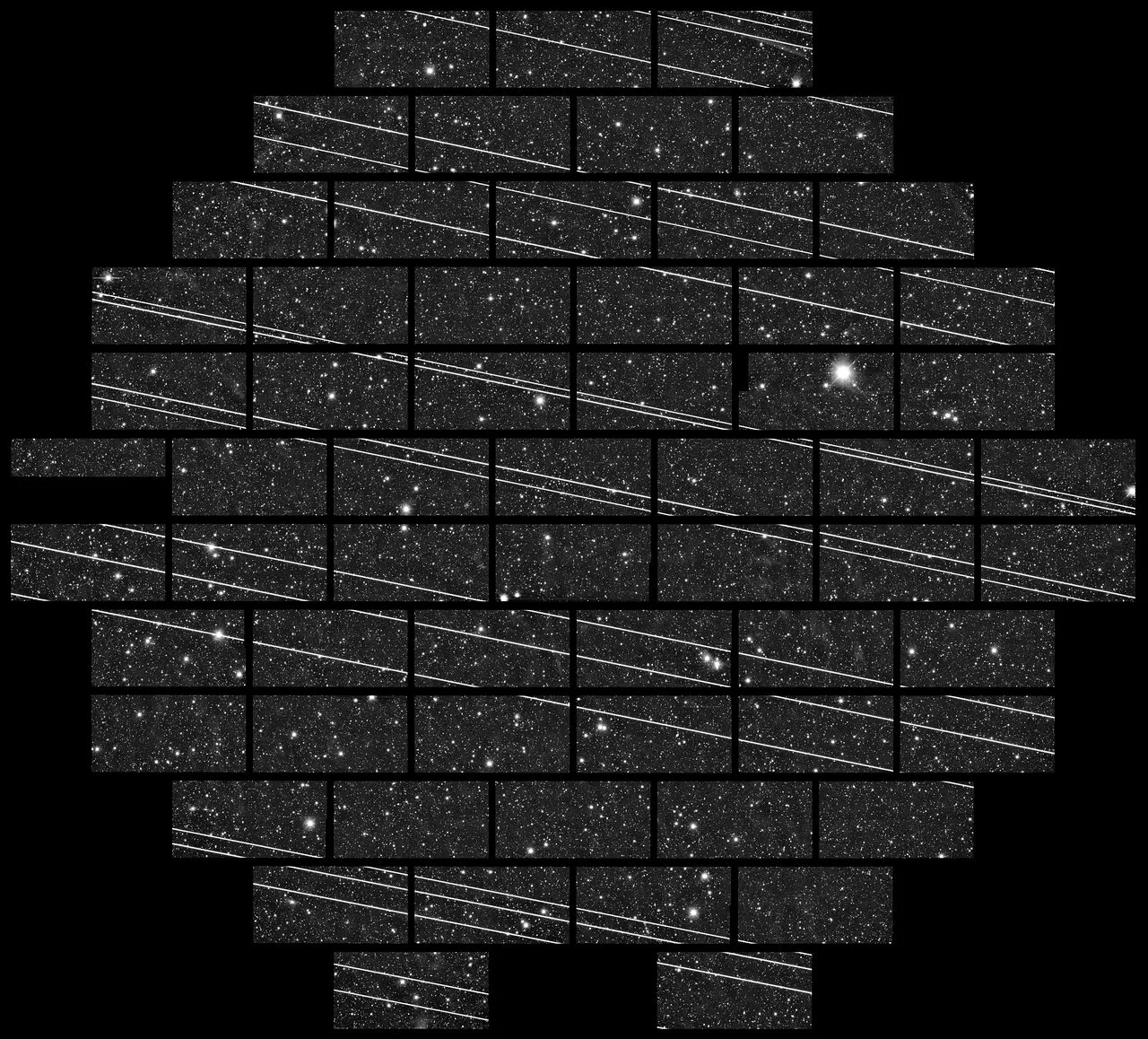 Traces of Starlink satellites in images from the Cerro Tololo Observatory. Credit: CTIO/NOIRLab/NSF/AURA/DECam DELVE Survey
Scale of the problem
Researchers at NASA’s Ames Research Center analyzed images collected by the SPHEREx telescope between May and September of last year. They found that 73.3% of the images contained at least one artificial satellite trail, with an average of 2.18 trails per image.
Satellite trails form a distinctive X-shaped pattern in the images. Their shape corresponds to the orbital paths of large groups of satellites. It is precisely because of SPHEREx’s wide field of view and long exposure times that the instrument is particularly susceptible to this type of light pollution.
Earth’s orbit is filled with satellites. Video: Cosmoknowledge/YouTube
Why is it difficult to fix?
The SPHEREx telescope is equipped with an automatic algorithm to protect against cosmic rays. If a sudden flash blinds a pixel, the system stops collecting data from it.
The problem is that modern commercial satellites are so bright that they trigger this protection mechanism just like cosmic rays do. As a result, rail-like stripes appear in the images. The brightest part of the trail blinds the pixels, while parallel lines with damaged areas remain on either side of it. All data on objects located beneath these stripes is irretrievably lost.
Not just SPHEREx
The problem isn’t limited to the new telescope. A separate team of researchers led by Sándor Kruk found that the proportion of Hubble Space Telescope images containing satellite trails rose from 2.8% in the early 2000s to 5.9% in 2021.
Satellite manufacturers are trying to reduce their optical brightness using dark coatings and special sunshades. However, newer systems—particularly those designed for direct communication with mobile devices and data centers equipped with artificial intelligence—are up to four times larger than existing satellites, so dark coatings are no longer effective in preventing glare.
Plans for orbit
Companies have already filed applications with the U.S. Federal Communications Commission to launch up to 2 million satellites into low Earth orbit. By comparison, there are currently about 20,000 satellites in orbit.
Models from a new study suggest that, in this scenario, 100% of SPHEREx images will contain a satellite trail, and the average number of trails per image will reach 189. The scientific community has been sounding the alarm for several years, but no international decision has been made yet.
According to www.universetoday.com