
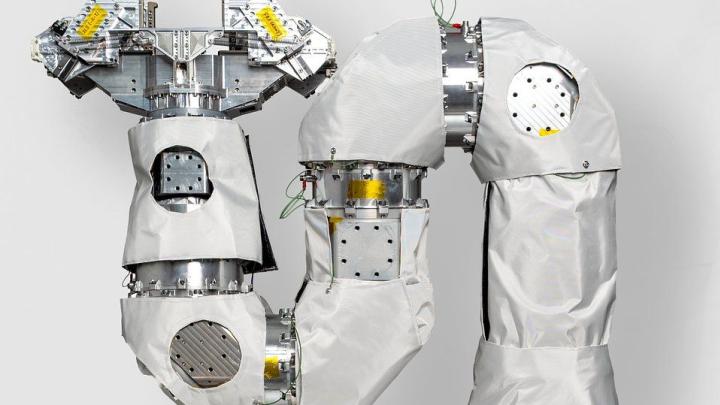
Polish space robotics company PIAP Space has joined a European Space Agency (ESA) project to develop an advanced protective “smart skin” for robotic arms intended for future missions to the Moon and Mars, as well as for operations in orbit.
The Smart Skin for Exploration Cobots project aims to create a next-generation protective system capable of shielding robotic arms from the extreme conditions of space. According to a PIAP Space press release sent to PAP, the company is contributing its expertise in space robotics and robotic arms previously developed for ESA, around which the new technology is being designed.
Space exploration is expected to increasingly rely on robots as a primary workforce. “However, this means that they must be better prepared for operation in the extreme environments of the Moon, Mars, and orbital space, where they must operate in conditions of abrasive dust, intense solar radiation, and temperatures ranging from -150°C to +120°C”, the release said.
To address those challenges, ESA has tasked a consortium led by the Danish Technological Institute (DTI) with developing the technology to a level that can be demonstrated in space-like conditions.
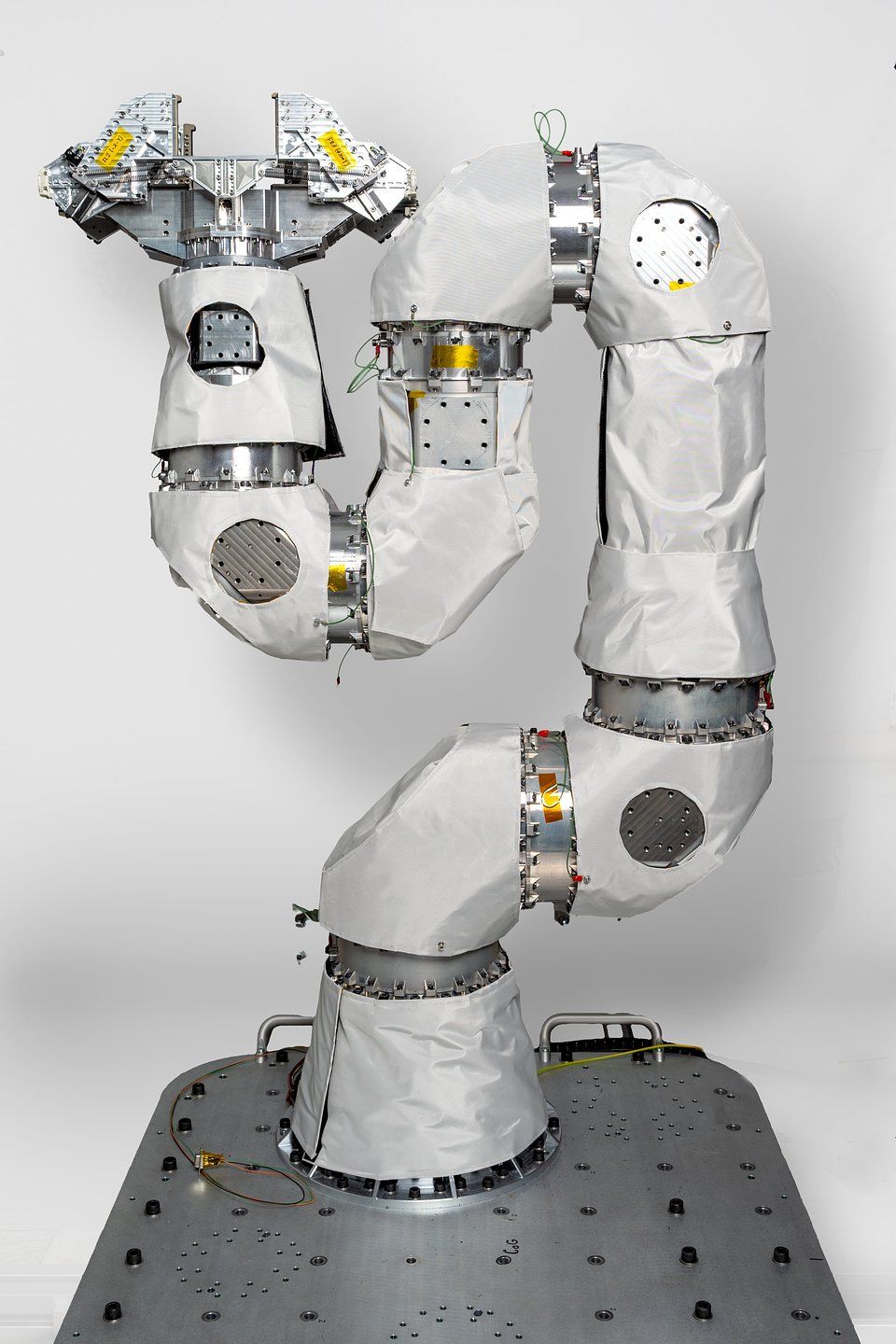
The TITAN robotic arm manufactured by PIAP Space. Photo from press release
According to the company, the smart skin is being designed to work with a variety of robotic arms for future lunar and Mars missions as well as orbital operations.
“Its foundation is a 3D-printed support structure that can be mounted on a robotic arm. It acts as a platform integrating four main components: a thermal and dust protection layer protecting against extreme temperature changes and abrasive dust penetration, flexible power and data cables, sensors capable of detecting and preventing collisions, and solutions supporting human-machine interaction”, the release said.
The technology is intended to protect robotic systems operating in some of the harshest environments encountered during space exploration, while also improving safety and interaction capabilities.
Although the project is focused on space applications, PIAP Space said some of the solutions under development could eventually be adapted for use in other industries operating under extreme conditions, including metal foundries.
The project has a budget of €1.65 million and will run for 24 months. It builds on a previously completed pilot phase involving European space companies and specialists from related fields.
PIAP Space is a subsidiary of the Łukasiewicz Research Network’s Industrial Institute for Automation and Measurements. In April, Poland’s Industrial Development Agency increased its stake in the company to about 96 percent through a PLN 12 million capital injection.
According to the Polish Space Agency’s database of space-sector entities, PIAP Space’s flagship products include the TITAN robotic arm and in-orbit servicing grippers, including the LARIS gripper. (PAP)
PAP – Science in Poland
akp/ bar/
tr. RL
The PAP Foundation allows free reprinting of articles from the Nauka w Polsce portal provided that we are notified once a month by e-mail about the fact of using the portal and that the source of the article is indicated. On the websites and Internet portals, please provide the following address: Source: www.scienceinpoland.pl, while in journals – the annotation: Source: Nauka w Polsce – www.scienceinpoland.pl. In case of social networking websites, please provide only the title and the lead of our agency dispatch with the link directing to the article text on our web page, as it is on our Facebook profile.