
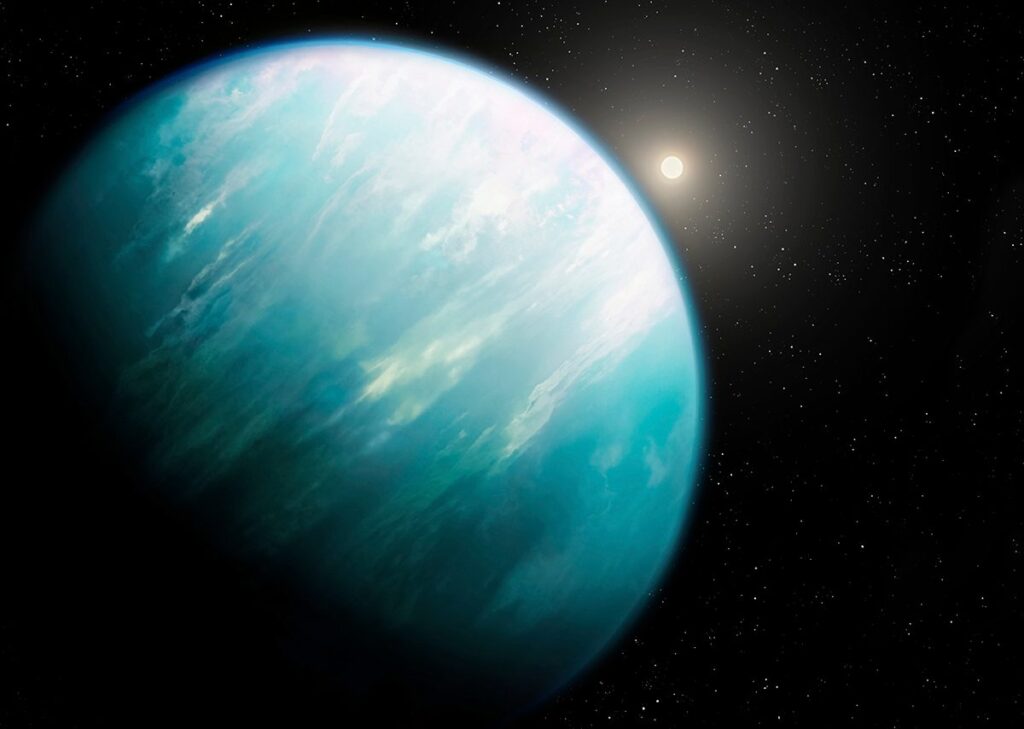
Holidaymakers have one major thing in common with scientists who are on the hunt for alien life: their plans are often thwarted by clouds.
The clouds on alien worlds are such a long-standing issue – obscuring atmospheric layers and muddying spectral data – that the question “What about clouds?” is in every exoplanet conference programme.
But hope is on the horizon, as a new study shows how clouds could become the unlikely friend of scientists investigating alien atmospheres.
 Credit: Yuichiro Chino / Getty Images
How we search for alien life
The search for life beyond Earth is a challenging game to get into.
With our existing technology there’s only one approach we can put into practice right now to do it, and this approach is the mother of all indirect methods.
Suppose you have a planet that’s teeming with life on its surface. On Earth, all living cells respire to produce energy, emitting carbon dioxide in the process.
We could therefore say that carbon dioxide is a ‘biosignature gas’ – a gas that could indicate the presence of biological activity.
Now that we’ve identified our potential biosignature gas, the next step is to look for it in the atmosphere of a suitable exoplanet.
We’ve already found over 6,000 exoplanets, but most are completely unsuitable for life as we know it.
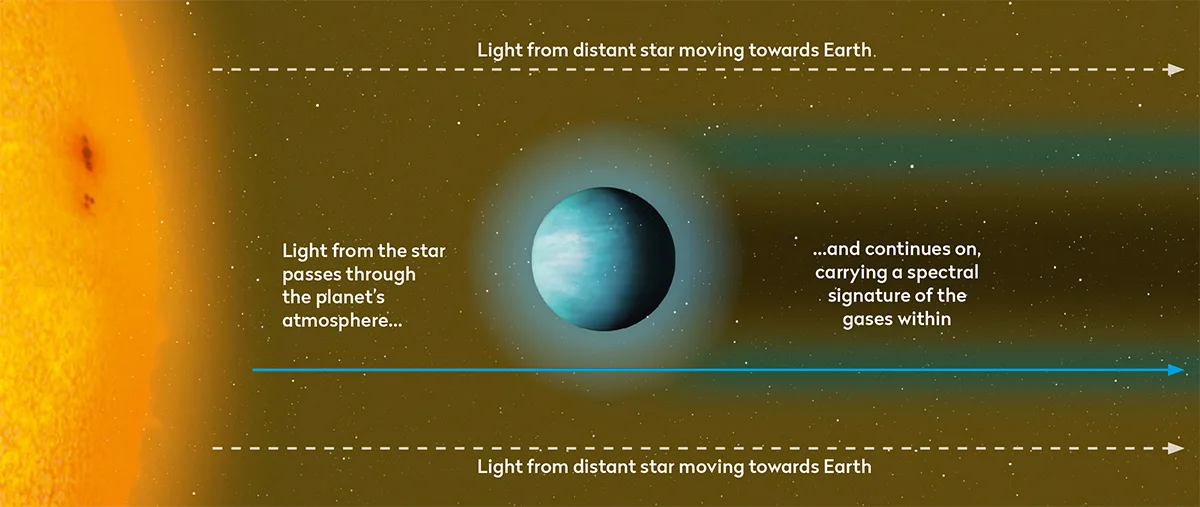 Astronomers can detect biosignatures to determine whether a planet may host life.
A quick search of the NASA Exoplanet Archive reveals that roughly 40 of the known exoplanets are in the right size and temperature range to have liquid water on their surface – a key ingredient for life.
Most of these are too far away, making their host stars too faint for the sort of observations we need to do.
After that process of elimination, we are down to 11 suitable exoplanets. That’s not a lot, but it’s enough.
For exoplanet scientists, next comes the glorious dance that observational astronomers love so dearly: applying for telescope time.
Our target instrument is the James Webb Space Telescope (JWST), the most oversubscribed telescope on or off the planet, and the only one currently capable of detecting the gas we seek on small exoplanets.
We need hundreds of hours of telescope time, repeatedly observing candidate planets as they pass in front of their stars.
During these events, called transits, JWST can capture the infrared light of the host star.
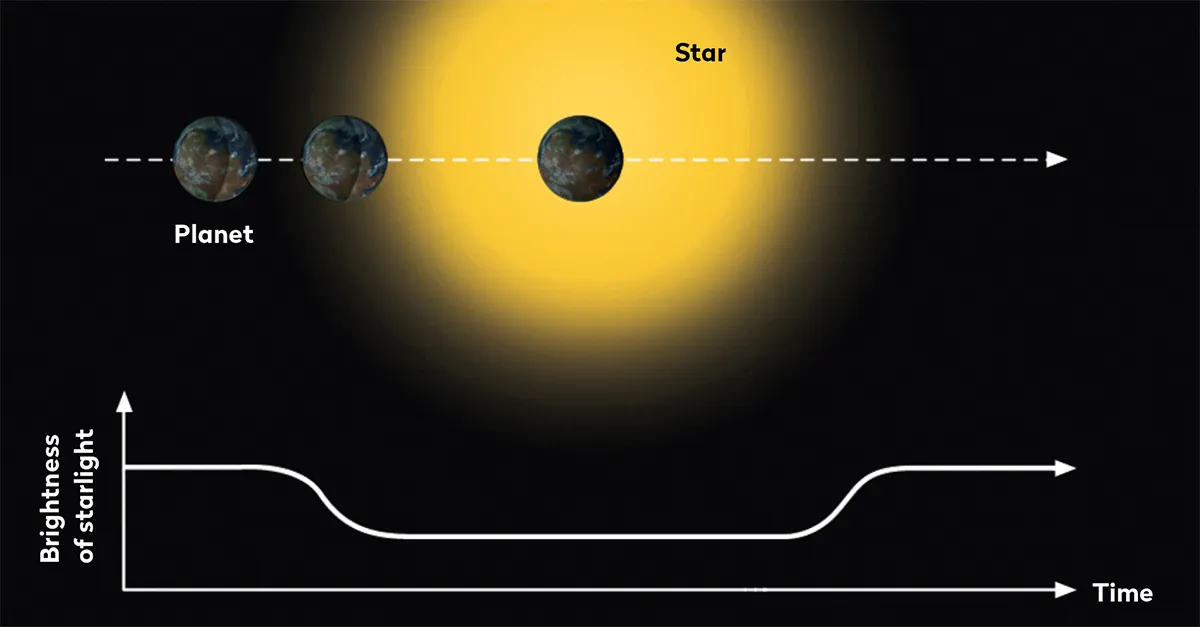 The transit method of detecting exoplanets sees astronomers measure dips in starlight as a planet passes in front of its host star.
Some of this light will have been absorbed by the planet, but the light will have also passed through the planet’s atmosphere (if it has one).
This bit is the key, as the gases present will have absorbed starlight in different wavelengths, leaving an imprint on the light which we can then decipher.
Dozens of transits are needed to build up enough signal, allowing it to rise above the noise in the data.
Let’s say we observe 500 hours’ worth of transits. We then obtain a spectrum of our planet and – the moment we’ve all been waiting for – we take a look.
One of two things might happen.
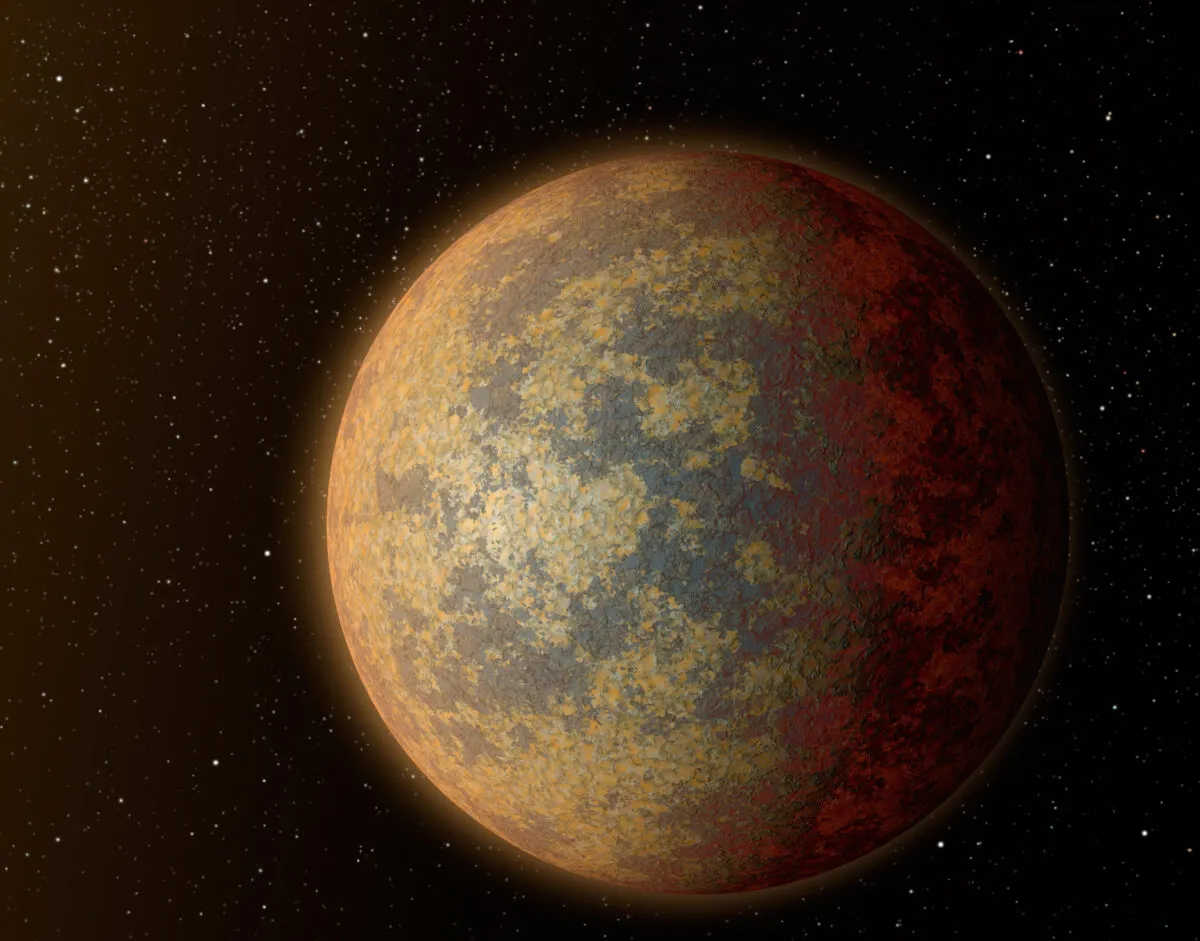 Ammonia in the atmosphere of a rocky exoplanet could be an important biosignature in the search for signs of life beyond the Solar System. Credits: NASA/JPL-Caltech
Clear and cloudy outcomes
The first one is good news: we see the signature of carbon dioxide in our data, clear as alien daylight.
Hurrah! Does it mean life, though? Well, no. All sorts of non-living things produce carbon dioxide – like volcanoes, for instance.
So yay for finding the gas, but as a biosignature it’s not great: it has too many false positives. So our choice of gas will need a rethink.
The second thing that could feasibly happen is that our spectrum is featureless – flat as a pancake.
This could mean that there is no atmosphere and therefore no detectable biosignatures. However,
the lack of features could also be caused by clouds.
Clouds can act like an opaque screen, muting spectral features and hiding an exciting atmosphere from view.
Our problem is that it’s really difficult to distinguish between a planet that appears to have no atmosphere and one in which the atmosphere is obscured by clouds.
GJ 1214 b is the classic example: for a decade it looked blank, its atmosphere totally masked by clouds, until JWST finally revealed what was going on.
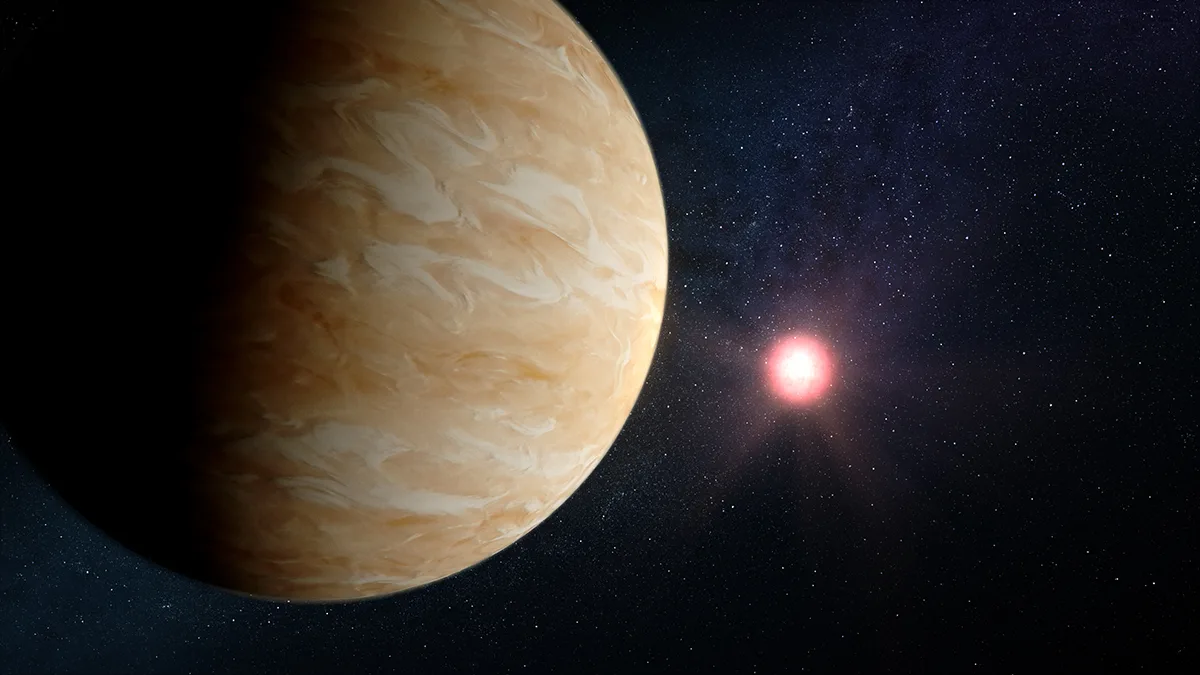 Artist’s impression of exoplanet GJ 1214 b and its star. Credit: NASA
There’s a secret option three as well, and it’s a real setback: even after hundreds of hours of careful observations, your data could still be dominated by noise.
It’s also possible that what we’re trying to do is not actually feasible… yet.
Uniquely and confidently identifying a specific gas present in the atmosphere of a small planet is no mean feat.
How can we be sure the wiggle in our spectrum is definitely caused by this one molecule? Do we know for sure what all the alternatives are? Can we definitively rule them out?
In most cases, the answer is no. In fact, in a paper published in Proceedings of the National Academy of Sciences, Professor Sara Seager – a giant and pioneer of exoplanetology – showed that it’s unlikely we will be able to detect a biosignature gas with no false positives in the JWST era.
So where do we go from here?
 Earth’s clouds are packed with microbial life, so should we be looking within alien clouds themselves?. Credit: YorVen / Getty Images
Why clouds could be the answer
Well, what about those alien clouds? Everything about the current approach relies heavily on life simply announcing itself chemically, imprinting evidence on its atmosphere for the Galaxy to see.
But a new approach, backed by laboratory evidence, would allow us to directly detect evidence of microbial life in the clouds of exoplanets – the very same clouds that we currently consider the number one hindrance in our searches.
We’ve known for decades that Earth’s clouds and atmosphere are filled with microbial life.
What hadn’t yet been considered was whether microbial life in the clouds of exoplanets could be an avenue in the search for extraterrestrial life.
But a thrilling paper led by Dr Lígia Coelho explores this very possibility.
One of the key challenges for the survival of microorganisms in Earth’s atmosphere is the exposure to harsh conditions: extreme cold, ultraviolet (UV) radiation and a lack of easily available water.
To paraphrase Elton John, it “ain’t the kind of place to raise your kids”.
But biology is smart and colourful, and it turns out that colour, specifically, allows these cells to survive in the harsh surroundings. It’s all down to biopigments.
Biopigments are molecules produced by living organisms that absorb and reflect specific wavelengths of light.
This gives them colour, but the colour is a by-product, not a function. The function in most cases is related either to protection or energy absorption.
On Earth, biopigments are practically universal and can be found in plants (think chlorophyll), fungi, bacteria and even animals.
Microorganisms are especially rich in biopigments, with many bacteria producing them even if they don’t photosynthesise.
This is what allows them to survive in extreme environments like clouds. And Coelho has demonstrated how these exact pigments can be directly detected in the spectra of exoplanets.
The team grew seven cultures of bacteria collected from our atmosphere at altitudes ranging from 21km to 29km (13–18 miles) above the surface.
All seven strains are known to produce carotenoids – the same biopigments present in the carrots we eat – which result in intense colours.
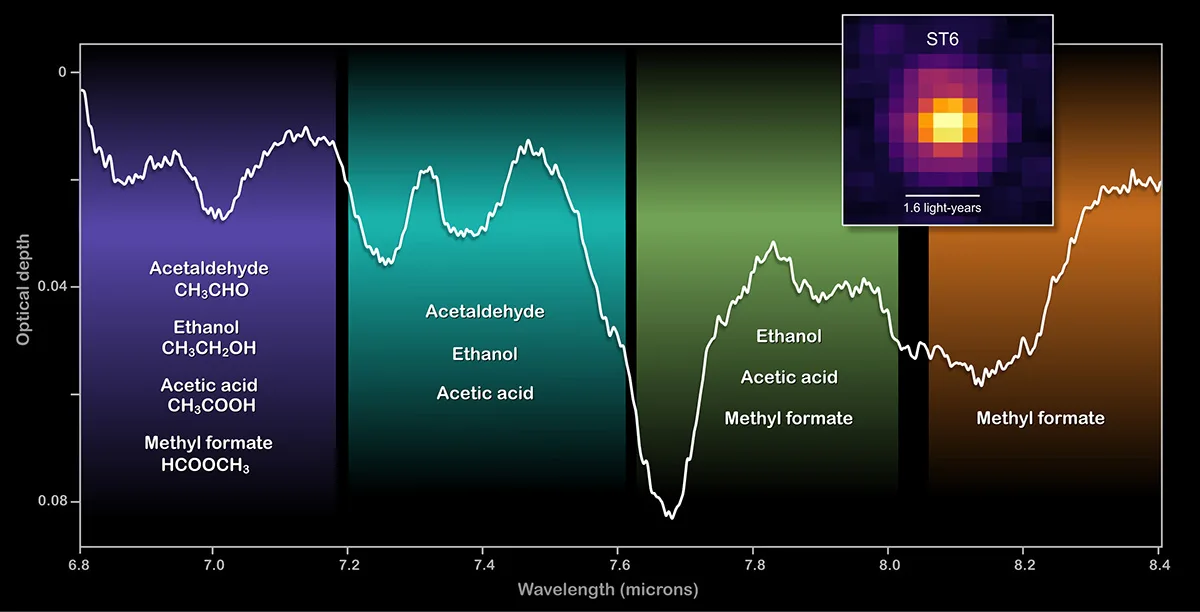 Infrared spectrum of protostar ST6 taken by Webb’s Mid-Infrared Instrument. Spectral signatures of large complex organic molecules were found. Credit: NASA’s Goddard Space Flight Center/M. Sewilo et al. (2025)
Each strain then had its reflectance spectrum measured to assess whether it could be detectable on an exoplanet.
This ‘reflectance spectroscopy’ is different from our current approach.
When we look at light that has passed through an exoplanet’s atmosphere (as we’re doing with the JWST), that’s transmission spectroscopy: the starlight is transmitted by the atmosphere and leaves an imprint.
With reflectance spectroscopy, we instead look at starlight reflected off the planet.
It could be off the surface – ice, oceans and vegetation – or even the clouds. What’s so powerful about this is that the clouds can then become what carries the signal, rather than what hides it from view.
Coelho and her team combined their laboratory-measured reflectance spectra from these biopigments with synthetic exoplanetary spectra, and revealed that an aerial biosphere would produce a detectable and identifiable signature.
This is huge and a clear next step in our search for life on other planets. But it’s not something we will be doing just yet.
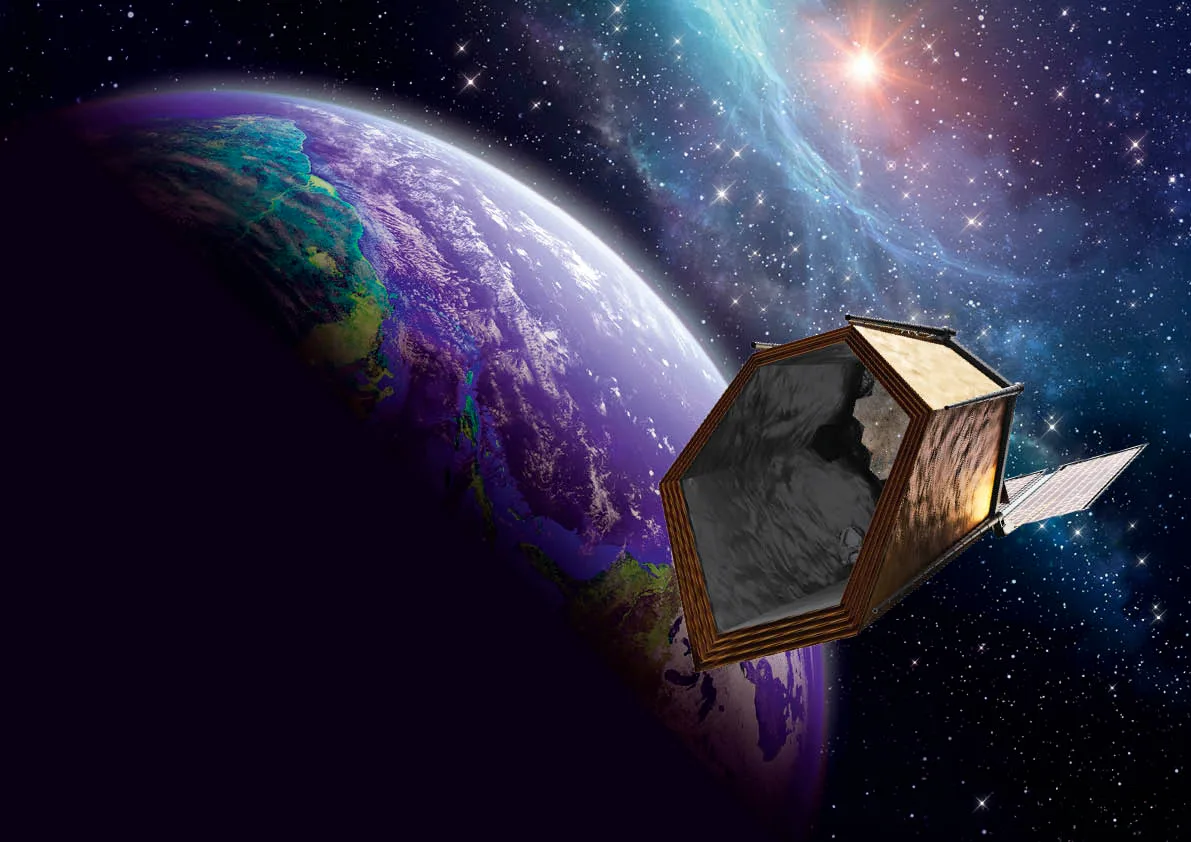 Artist’s impression of the Habitable Worlds Observatory. Credit: titoOnz/istock/getty, NASA’s Scientific Visualization Studio
When we’ll collect cloud data
To observe reflectance spectra, we need to isolate the light being reflected by the planet from the light emitted by the parent star.
We can’t yet do that for small exoplanets, but it’s in the works.
The Habitable Worlds Observatory (HWO), NASA’s next flagship space telescope mission, will be the first one ever with the specific goal of searching for signs of life elsewhere in the Galaxy.
Its exact design isn’t finalised, but it will include a coronagraph to block out starlight and allow small exoplanets to be directly imaged. Current estimates put HWO’s launch sometime in the 2040s.
The work Coelho and her team are doing is therefore critical for preparing the ground.
By building libraries of the reflectance spectra of different biopigments, the science community will know what to look for when HWO is eventually switched on.
Hopefully, other research teams will be inspired by this pioneering work and do the same.
A use closer to home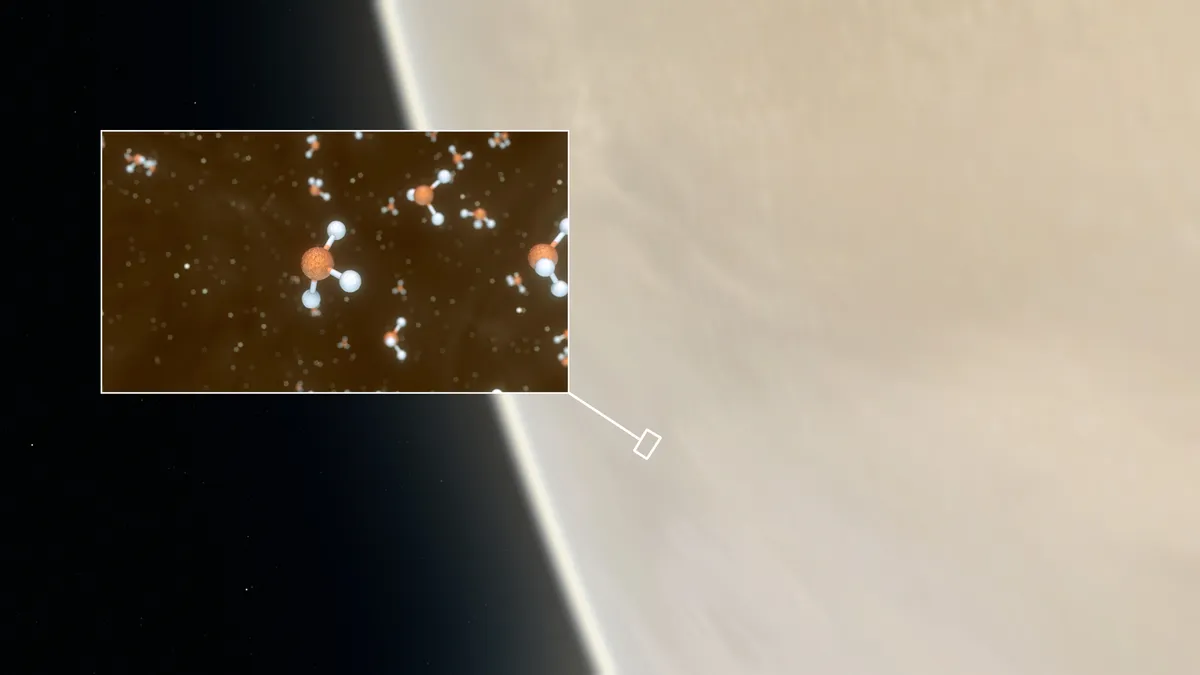 An artist’s impression of Venus, inset showing a representation of phosphine molecule. Credit: ESO / M. Kornmesser / L. Calçada & NASA / JPL / Caltech
In the meantime, another use for reflectance spectra comes to mind.
There’s a fairly cloudy planet right next door to us – could there be life there? I’m referring, of course, to Venus.
We certainly shouldn’t write off the possibility simply because the planet is, frankly, a hellhole.
In 2021, a study led by Professor Jane Greaves reported the detection of a gas called phosphine in the Venusian clouds.
It was controversial and led to some fascinating follow-up work, including revisiting data from the Soviet-era Vega missions that dropped balloons with mass spectrometers through Venus’s clouds.
The reason phosphine detection was a big claim is that it had been identified in 2020 as a biosignature gas with no false positives on rocky planets.
That means we don’t know of any way for phosphine to be produced on rocky planets other than through biology.
On Earth, you will find phosphine in penguin farts and meth labs (among other things) – so, very much indicative of life.
It’s still not conclusive whether there is phosphine in the Venusian clouds or not.
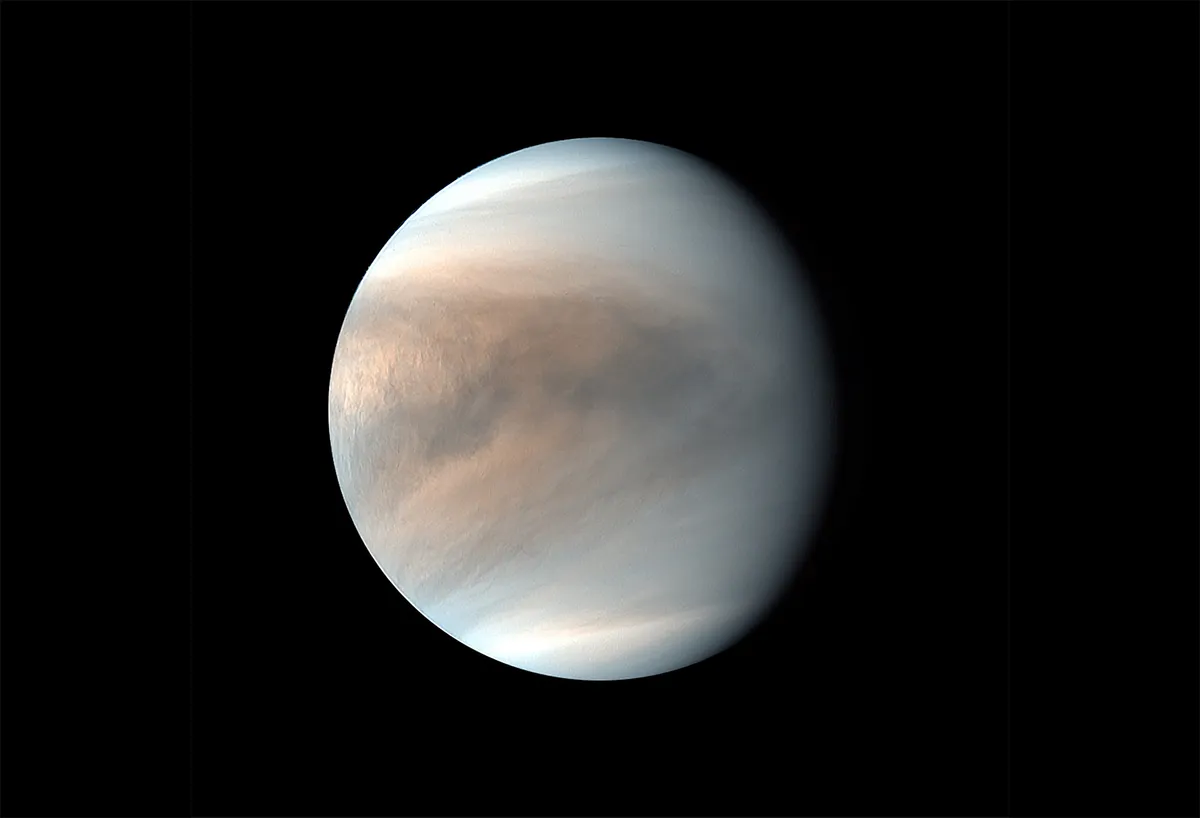 A view of Venus captured by the Japanese Akatsuki orbiter. © PLANET-C Project Team
We’re also not certain if there truly are no non-biological routes to produce it on rocky planets.
But it’s sparked renewed interest in Venus as a potential life-hosting planet, as it’s possible that those highly acidic clouds could have been colonised by microbial life.
In fact, another recent study showed that all the key ingredients for life can survive in concentrated sulphuric acid – so this really is not that far-fetched.
We really are in a new era of discovery. The field of exoplanets only recently turned 30, yet we’re devising such exciting and creative ways to hunt for life on alien worlds.
So much so that clouds are changing their status from an astronomer’s worst enemy to, at the very least, a tolerated ‘frenemy’. By the time the HWO launches, I expect they will be firmly our friends.
But wouldn’t it just be lovely to find out that the nearest extraterrestrial life was right next door all along? I for one will be keeping a close eye on the skies – as long as clouds don’t get in the way.