
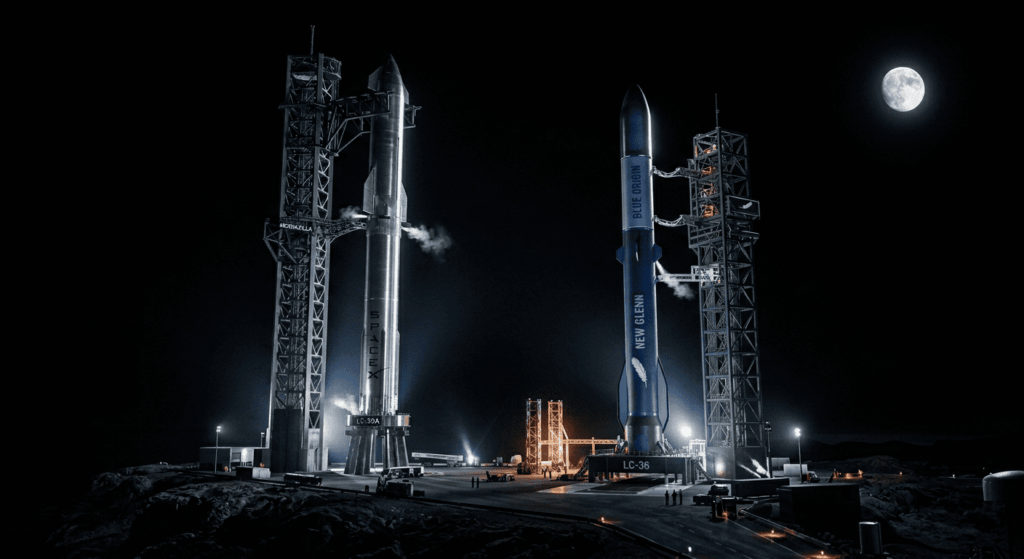
NASA has announced three unmanned missions to the Moon this year as the first step toward building a $20 billion lunar base. For the first of these, the agency selected Jeff Bezos’s Blue Origin rather than Elon Musk’s SpaceX.
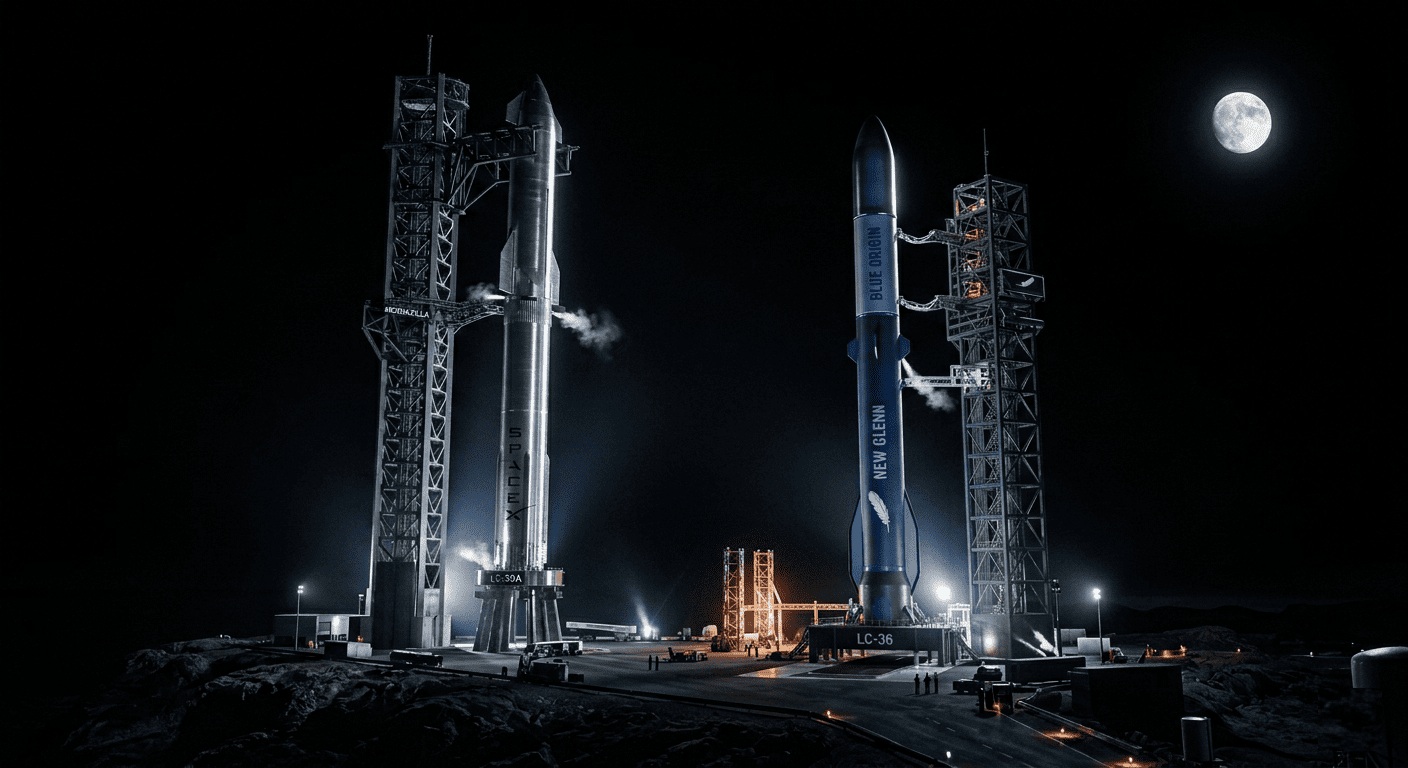 Artistic illustration of SpaceX and Blue Origin rockets on their launch pads.
What’s flying and where
Blue Origin has been awarded a $230.4 million contract for the first two missions to the lunar base. The Endurance cargo lander, equipped with a cryogenic engine, will deliver scientific instruments from NASA and private partners to the ridge between the Shackleton and De Gerlache craters near the Moon’s south pole.
The company will cover the remaining costs on its own. According to NASA Administrator Jared Isaacman, this will be “the first privately funded mission to land on the Moon in history.”
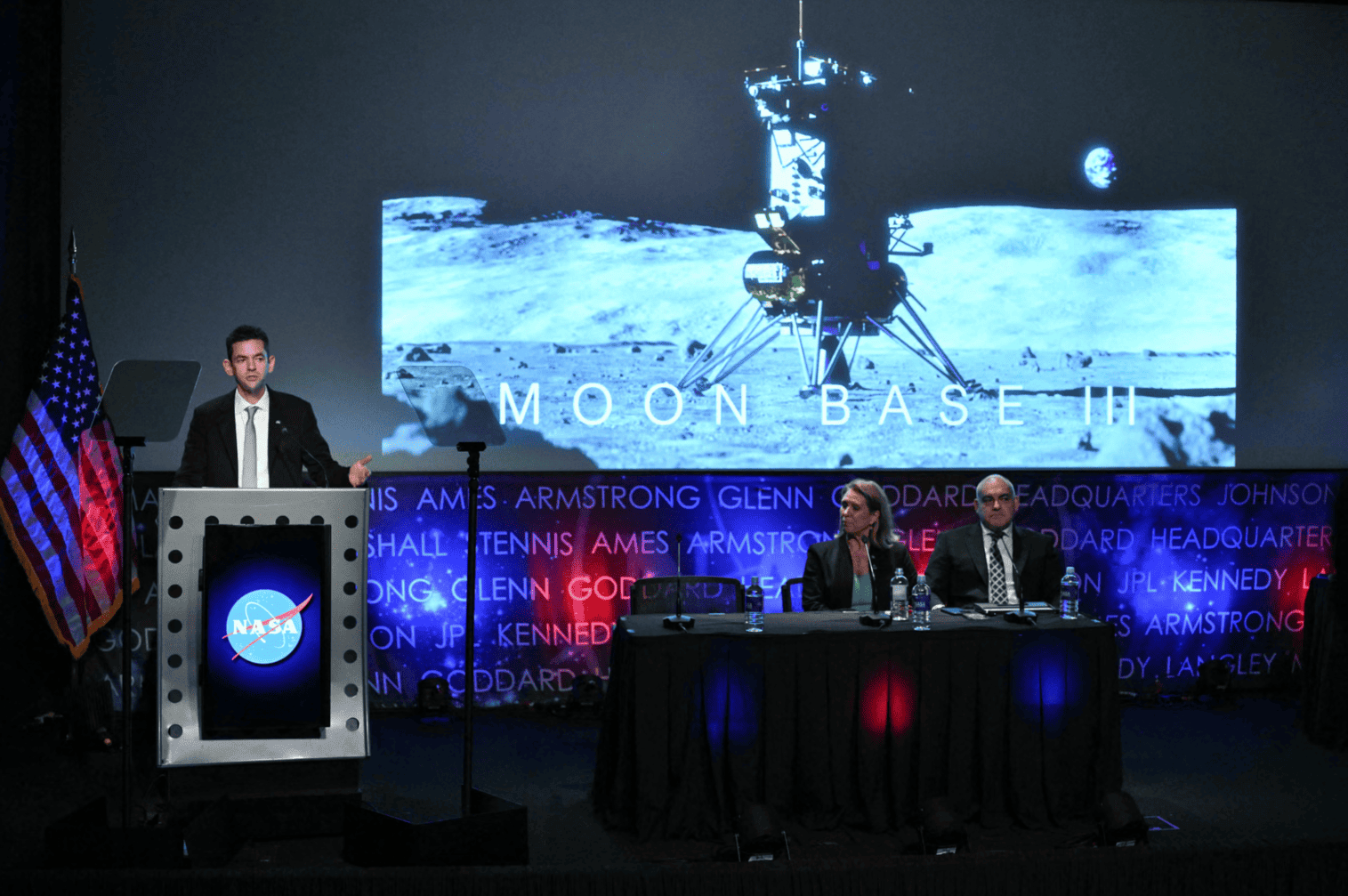 NASA Administrator Jared Isaacman at a press conference in Washington, D.C., where plans for a lunar base were unveiled. Source: AFP/Getty Images
Why three missions in a row?
All three missions in 2026 are intended to test systems and equipment before humans travel to the Moon. Jared Isaacman described the approach as iterative. First come cargo landers, rovers, and equipment testing, and only then a permanent presence.
According to the plan, a fully operational base is set to be established on the Moon between 2029 and 2032, with a permanent human presence following 2032.
Blue Origin and SpaceX in a single program
Both companies are competing for the right to supply crewed landing modules for future Artemis missions. Next year, during the third mission to low Earth orbit, NASA will compare SpaceX’s Starship Human Landing System (HLS) and Blue Origin’s Blue Moon landing module, after which it will select the winner for the crewed Artemis IV mission in 2028.
Blue Origin suffered a setback last month when the payload from the third flight of its New Glenn heavy-lift rocket failed to reach the intended orbit. However, the Federal Aviation Administration has already cleared the company to resume flights.
The Moon as a priority for Trump
The lunar base is part of Donald Trump’s national space policy, which calls for accelerating the Artemis program and building a permanently inhabited base. Other objectives include developing a nuclear space reactor and beating China to the next manned moon landing.
According to NASA, partnering with the private sector will significantly reduce the burden on taxpayers and give a boost to the development of the space economy.
According to theguardian.com