
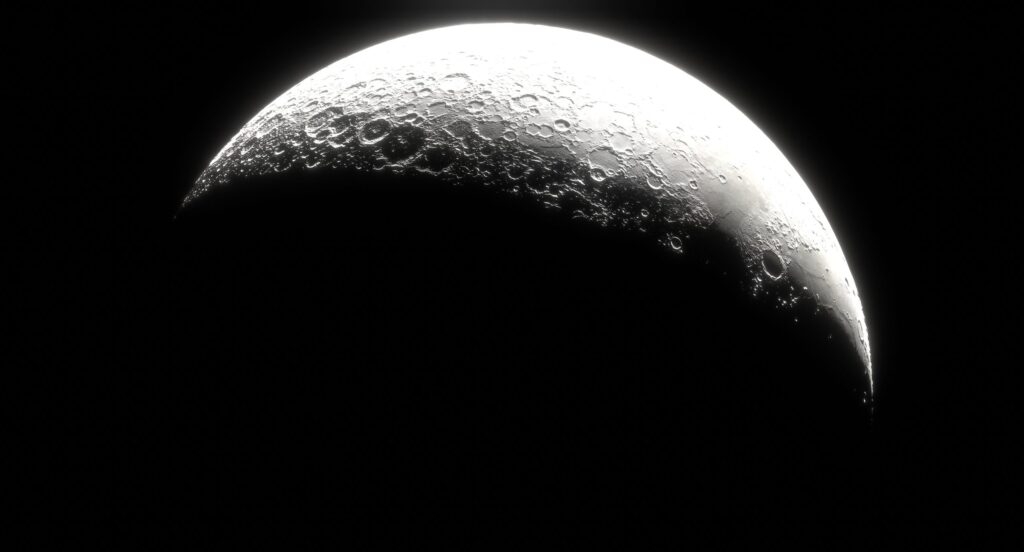
Space has always had a way of surprising humanity with its visual mysteries. On the night of May 23–24, giant Latin letters “X” and “V” appeared on the surface of our natural satellite. This is not a message from extraterrestrial civilizations, but an incredibly beautiful play of sunlight, known in science as the clair obscur.
How does an optical illusion occur?
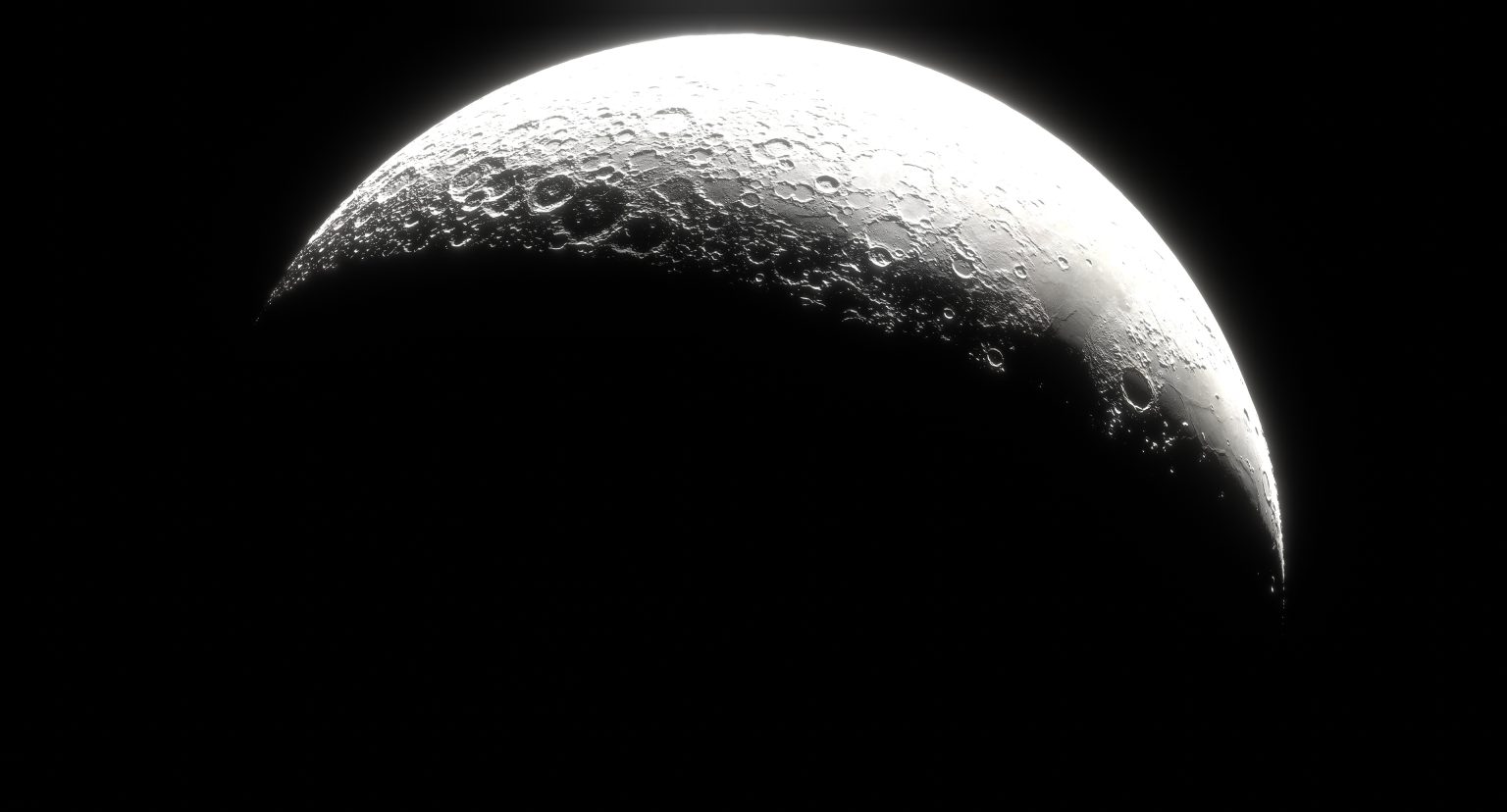 On the night of May 23–24, two Latin letters were visible along the terminator line, created by the interplay of light and shadow. Source: Space Engine
People on Earth are fortunate to be able to observe the Moon, which never looks exactly the same two nights in a row. As our moon rotates, the angle at which sunlight hits its surface is constantly changing. This causes the light to dynamically “run” across the landscape, altering the length and shape of the shadows cast by deep craters, fissures, and high mountain ranges.
Since the Moon has no atmosphere to scatter light, the boundary between light and darkness there is extremely sharp. This stark contrast creates ideal conditions for the formation of illusions. Thanks to the psychological phenomenon of pareidolia, our brain is naturally inclined to seek out familiar images and symbols in chaotic patterns. This is precisely how the light-and-shadow effect arises, when brightly lit peaks against a backdrop of dark, unlit valleys suddenly form distinct, recognizable shapes.
Search at the terminal
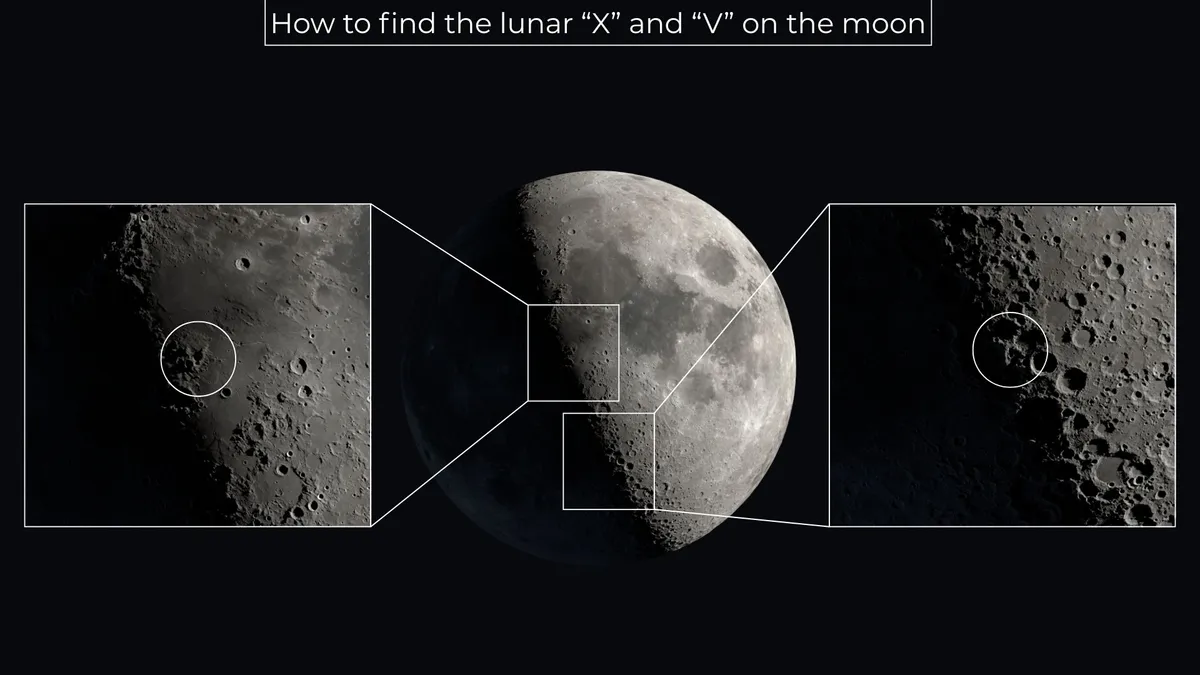 The locations of the letters X and V on the Moon’s surface
The phenomenon of letters appearing on the Moon is quite fleeting. The lunar “X” and “V” were most clearly visible over the weekend. Both letters reached their maximum visual prominence on May 23 and remained clearly visible until the early hours of May 24. They appeared near the terminator—the line separating the lunar day and night. It is along this boundary that the sun’s rays glide at a very low angle, illuminating only the highest points.
Lunar Letters
The letter “V” shone brightly near the terminator line, situated between the lunar seas Sinus Medii and Mare Vaporum, approximately 10° above the lunar equator. This shape, which perfectly resembles the Latin letter, appears where light is successfully reflected off the high rims of the Ucart crater, blending harmoniously with the glare from nearby terrain features and smaller impact sites.
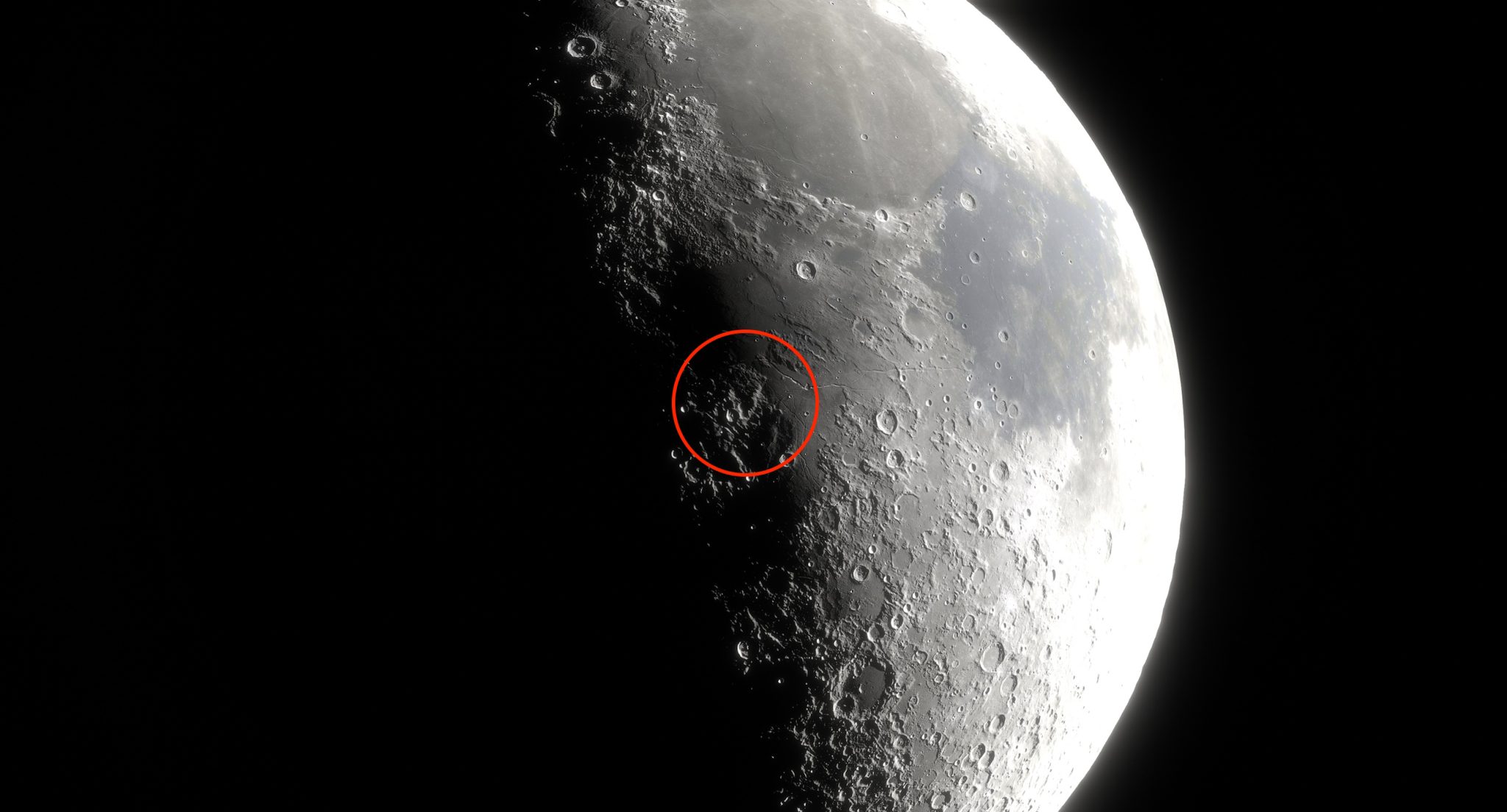 The location of the letter V on the Moon’s surface. Source: Space Engine
At a point located approximately 25° south of the equator, on the edge of the light, the famous lunar “X” flashed brightly against the deep darkness. This gigantic symbol is formed by a unique combination of circumstances, when sunlight illuminates only the jagged, rugged rims of three neighboring craters—Purbach, Blanchinus and La Caille.
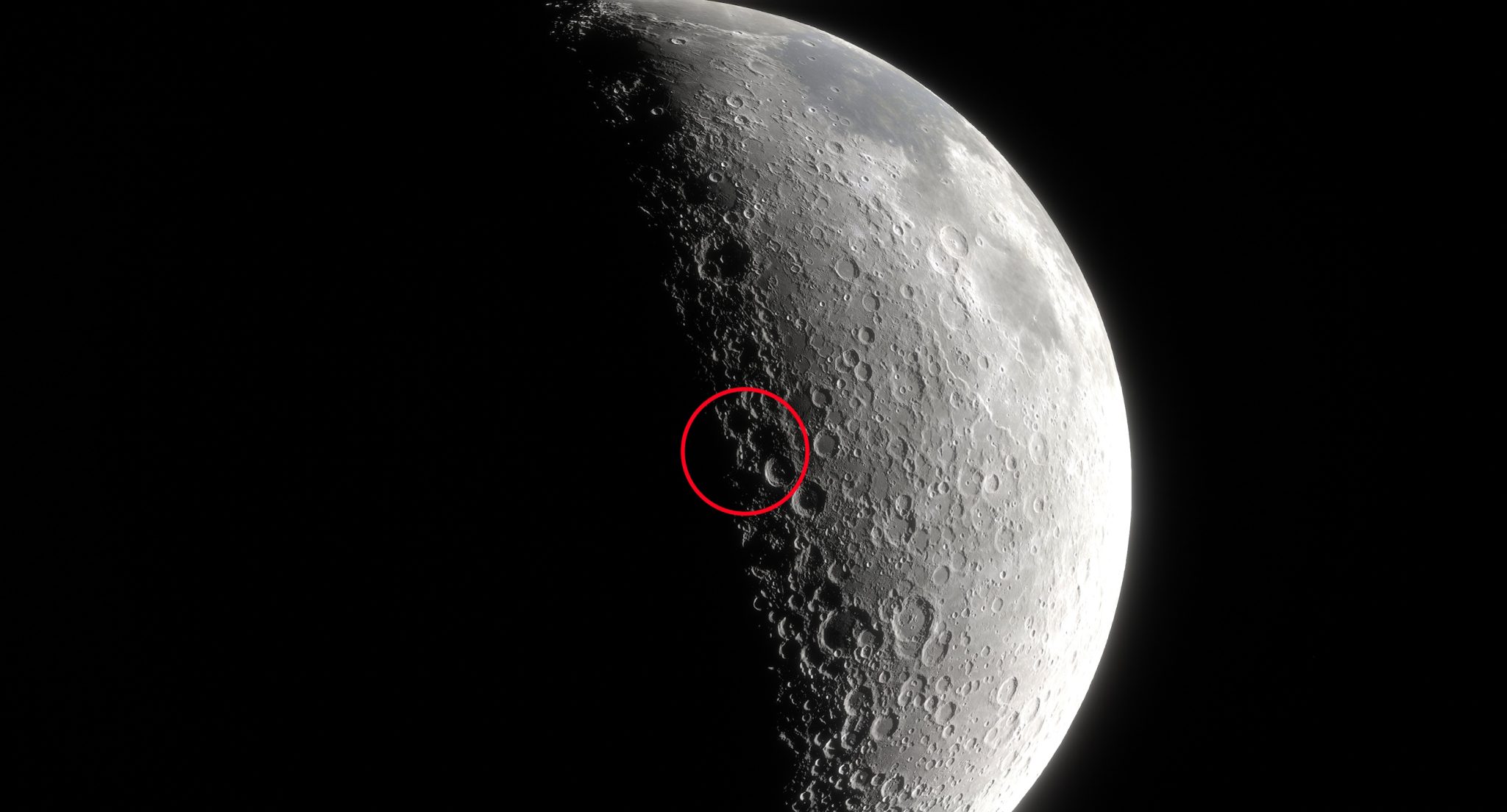 The location of the letter X on the Moon’s surface. Source: Space Engine
While their high outer walls are already catching the first rays of light, the deep bottoms of the craters are still shrouded in the black darkness of night. From a distance, it looks like a bright, distinct cross, mysteriously floating in the void.
Earlier, we explained how the Moon was formed and why it is so different from Earth.
According to Space