
Amman, May 19 (Petra) — The European Space Agency (ESA) and the
Chinese Academy of Sciences have announced the successful launch of
their joint spacecraft, “SMILE” (Solar Wind Magnetosphere Ionosphere
Link Explorer). The spacecraft was deployed from the Kourou Spaceport
in French Guiana aboard the European Vega-C rocket on a pioneering
scientific mission to study the impact of solar storms on Earth’s
magnetic shield.
In a statement published on its official website on Tuesday, ESA
noted that this milestone is the fruit of a first-of-its-kind
strategic cooperation involving a full-scale mission collaboration
between both parties.
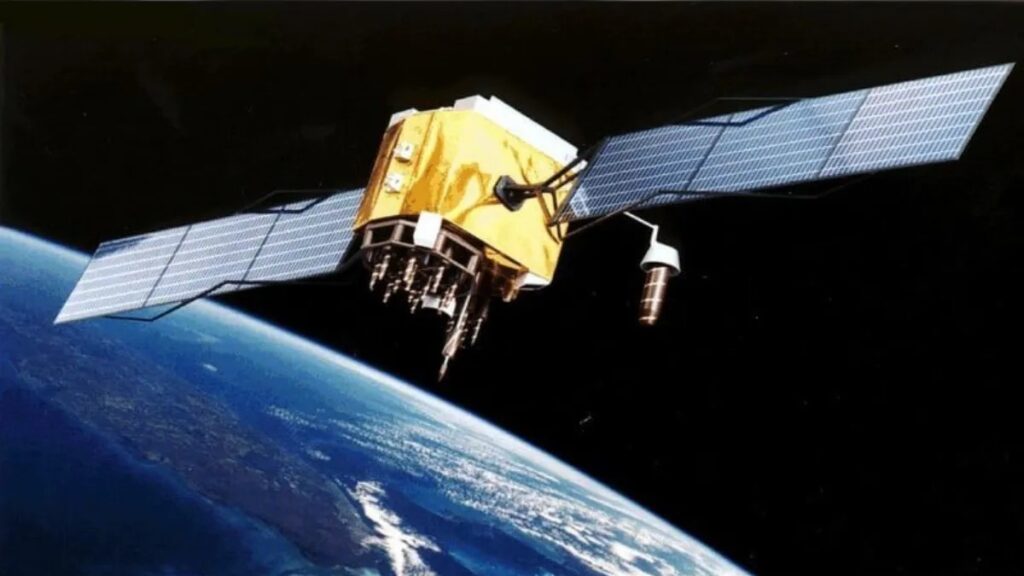
The unmanned SMILE spacecraft serves as an advanced scientific
platform that will execute the first comprehensive X-ray observations
of Earth’s magnetic field. It is equipped with X-ray and ultraviolet
cameras, as well as particle and magnetic-field detectors, allowing
it to continuously monitor the aurora borealis for up to 45 hours.
ESA indicated that the spacecraft will settle into a high-altitude
orbit reaching up to 121,000 kilometers above the North Pole to map
an integrated, dynamic picture of how Earth responds to solar streams
and radiation. This ambitious space mission is scheduled to last for
three years, providing scientific insights and solutions to enhance
satellite security and ensure astronaut safety against adverse space
weather.
//Petra// AF