
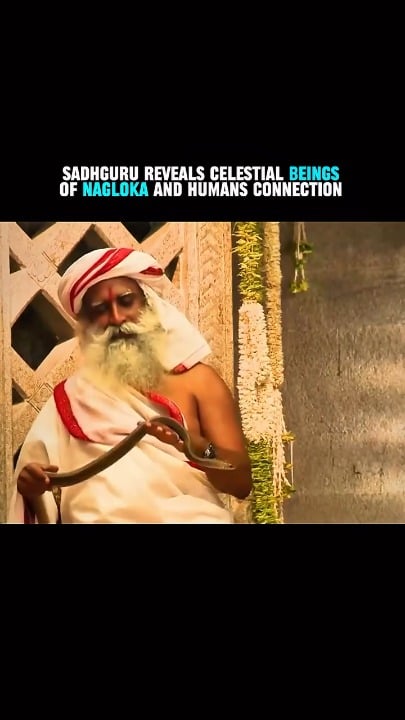
What if ancient myths about “Snake Gods” were actually describing a different dimension of consciousness?
by VirtualKnowledge9612
What if ancient myths about “Snake Gods” were actually describing a different dimension of consciousness?
by VirtualKnowledge9612
1 Comment
Honestly, the global obsession with serpent myths (from the Nagas in India to Quetzalcoatl in Mesoamerica) has always felt like it’s missing a piece of the puzzle. Mainstream history just writes it all off as primitive imagination or symbols.
In this clip, Sādh-guru flips that entirely. He’s basically saying the Nagas were a real, highly perceptive clan that shaped early culture and that “Nagaloka” is actually a tangible reality in a different dimension of perception we just don’t tap into anymore.
I love the idea that our ancestors were interacting with aspects of reality we completely ignore today. Does anyone else lean toward the idea that these old myths are actually holding onto a forgotten, multidimensional history?
Or is it just a poetic stretch?