
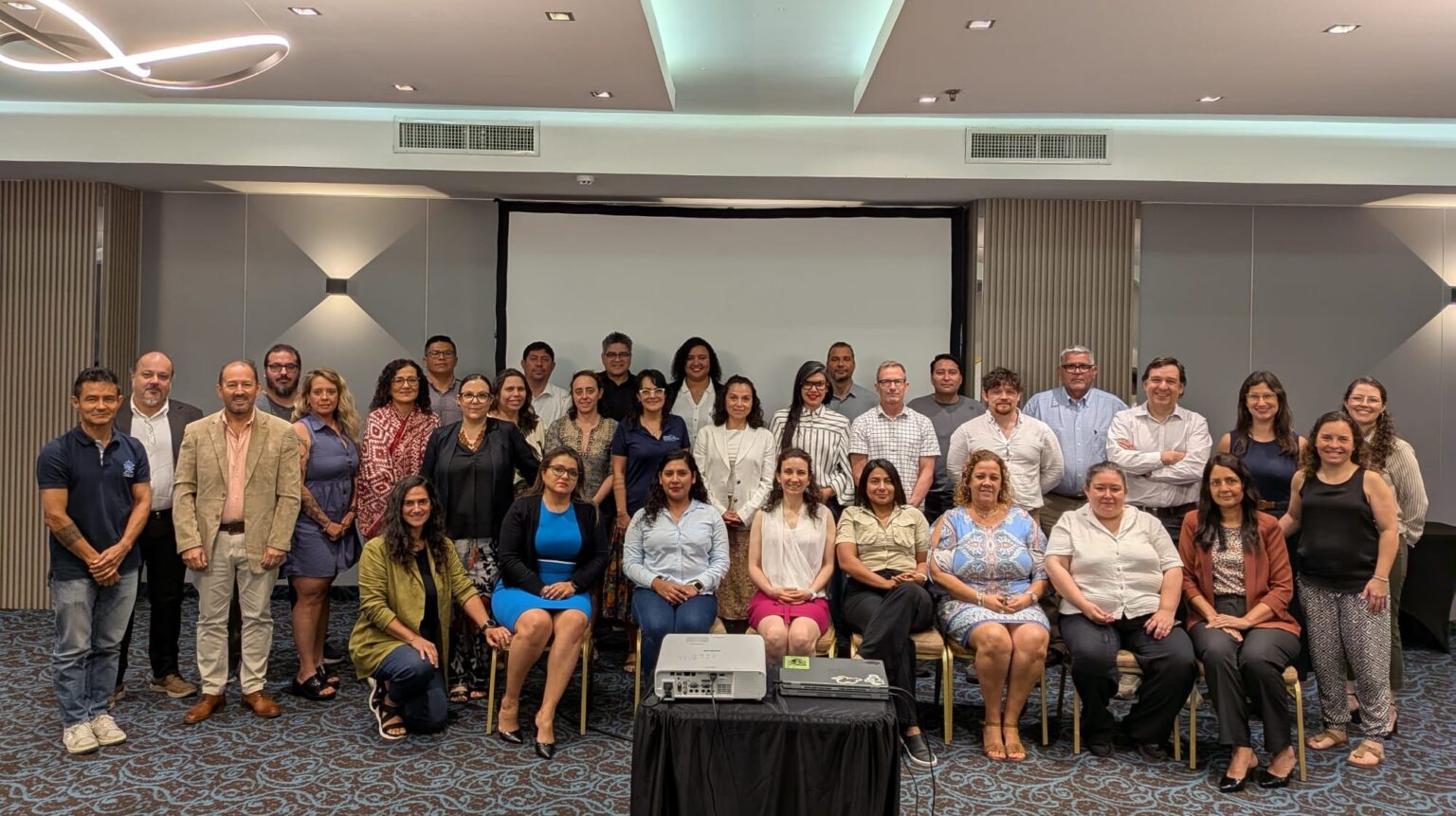
The workshop, held in Panama City, brought together technical representatives from 13 nations to exchange knowledge, strategies and practical approaches for preventing the introduction of invasive alien species (IAS) and managing their impact on biodiversity, ecosystems, livelihoods and local economies.
Co-organised by IUCN and its Invasive Species Specialist Group (ISSG) of the Species Survival Commission, alongside the Secretariat of the Convention on Biological Diversity (CBD), the workshop combined expert presentations and facilitated sessions with a range of practical exercises, creating an interactive platform for participants to share real-world case studies and critically reflect on their national experiences with IAS.
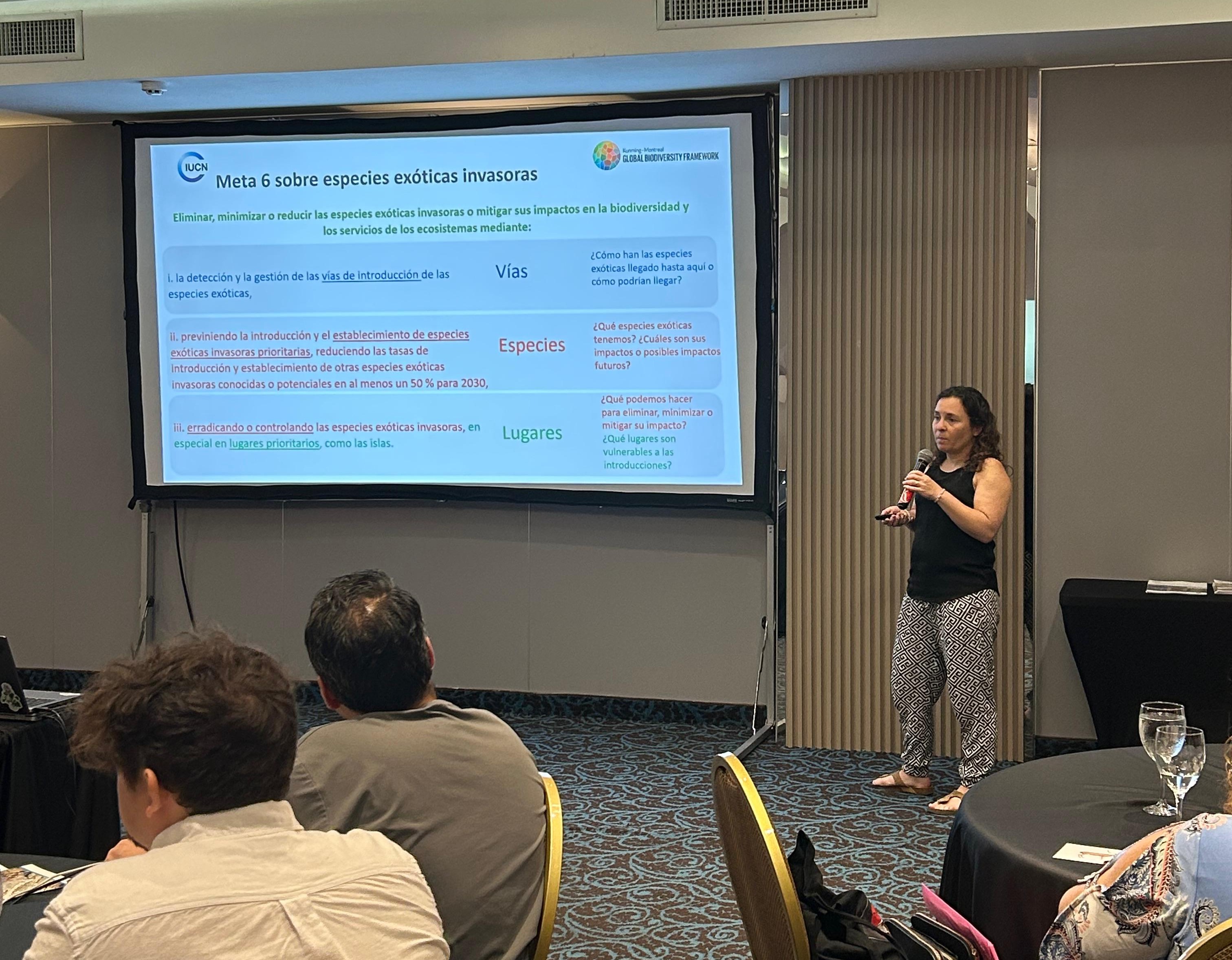
@Emilia Trueba / UICN SUR
“Invasive alien species cannot be tackled by a single institution or discipline. Their impacts are far reaching and require intersectoral, transnational and regional cooperation for an effective response,” said Ana Nunes, Senior Programme Officer for Invasive Species at IUCN.
Over three days (5, 6 and 7 May), experts highlighted critical needs that persist across the region: the need for stronger implementation of public policies, more robust biosecurity systems, functional early warning systems and the establishment of effective regional coordination mechanisms.
In this regard, science-based regional coordination remains the most powerful tool available. The challenges shared by the majority of participating countries underscore the urgency of building collective responses that transcend national borders and harness the full potential of multilateral cooperation.
“Invasive species are a problem across different parts of Latin America. Although their management remains difficult due to a lack of resources, policies and on-the-ground capacities, countries are making progress. When policymakers and decision-makers understand that the impact also affects human health and the economy, solutions emerge with the support of entire communities,” emphasised Aníbal Pauchard, Co-Chair of the IUCN SSC Invasive Species Specialist Group (ISSG).
“The technical expertise of the participants has contributed enormously to the exchange of knowledge and experiences amongst countries, greatly enriching the discussions — particularly around how each country has developed its own strategies for managing invasive alien species,” noted Marianela Araya, Programme Officer for the Convention on Biological Diversity (CBD).
Among the key outcomes of the workshop, there is the need for:
A stronger understanding of the multidisciplinary and intersectoral nature required to address IAS, given their simultaneous impacts on biodiversity, ecosystems, livelihoods and regional economies.
Recognition of regional collaboration as a key opportunity to strengthen prevention, early detection, rapid response and coordinated management of IAS across Latin America and the Caribbean.
Strengthened national technical capacities, enabling representatives to apply the knowledge and tools presented at the workshop within their own national contexts to advance implementation of GBF Target 6.
The workshop featured valuable contributions from expert speakers and facilitators whose knowledge enriched the discussions and strengthened participants’ technical capacities. This exchange reaffirmed that regional cooperation is not only possible, but essential: the Spanish-speaking countries of Latin America and the Caribbean share common challenges and have the capacity to build joint solutions that drive the implementation of the Kunming-Montreal Global Biodiversity Framework.