
Space missions still rely on computer chips that were designed years ago. They are dependable and can survive radiation, freezing cold, and violent launches.
But the computer chips are also slow by modern standards. That creates a serious problem as spacecraft travel farther from Earth and collect larger amounts of data than ever before.
Smarter spacecraft are coming

NASA now wants spacecraft to make decisions without waiting for humans back on Earth.
That means future missions to the Moon, Mars, and deep space will need computers that can react quickly, solve problems in real time, and process huge streams of information on their own. A new project may finally make that possible.
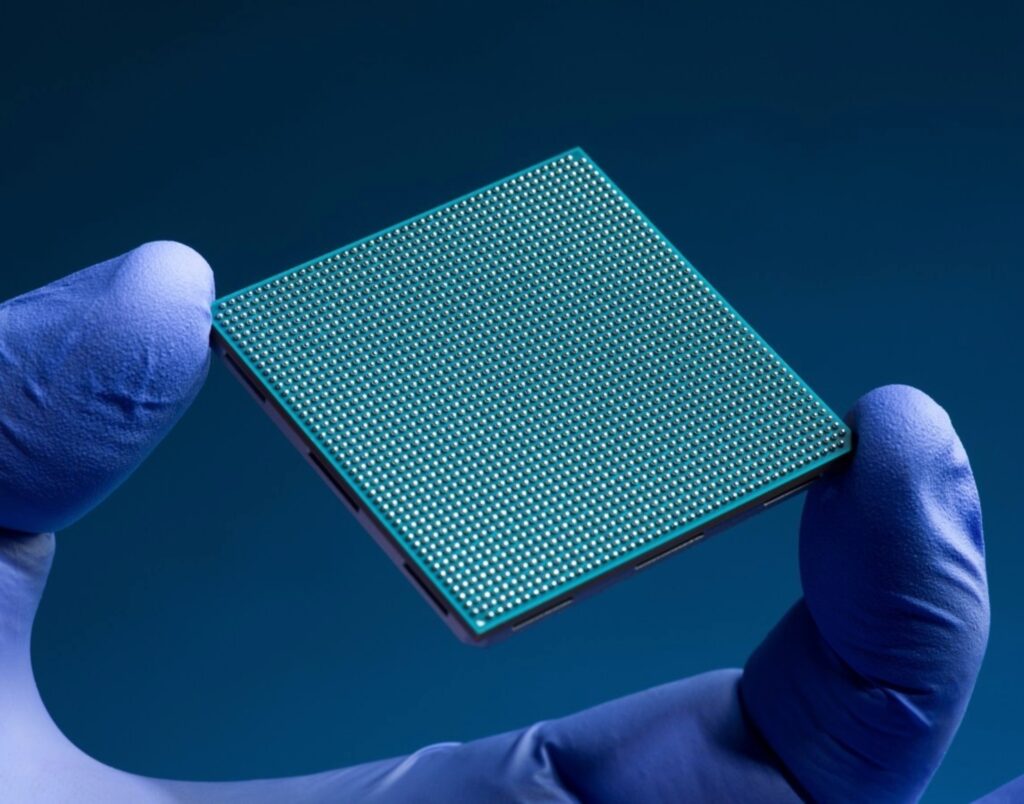
The effort centers on a powerful processor being tested for use in space. Unlike ordinary computer chips, this one is built to survive years in dangerous conditions where repairs are impossible.
Early test results suggest that the processor could dramatically change how spacecraft operate.
The work comes from NASA’s High Performance Spaceflight Computing project.
The team is developing a radiation-hardened processor through a partnership with Microchip Technology Inc. and the NASA’s Jet Propulsion Laboratory in California.
Built for harsh space conditions
Space is brutal on electronics. High-energy particles from the Sun and deep space can interfere with computer systems and trigger errors.
Sometimes spacecraft are forced into what engineers call “safe mode,” where nonessential systems shut down until operators can fix the issue from Earth.
Temperature swings create another challenge. Hardware may face intense heat one moment and bitter cold the next.
During planetary landings, computers also need to process massive amounts of sensor data almost instantly while navigating dangerous terrain.
That is why NASA has spent months pushing the new processor to its limits.
Early signs of success
“We are putting these new chips through the wringer by carrying out radiation, thermal, and shock tests while also evaluating their performance through a rigorous functional test campaign,” said Jim Butler, High Performance Space Computing project manager at JPL.
The testing began in February and will continue for several months. So far, the processor appears to be performing far beyond expectations.
NASA says early signs show the chip operating at 500 times the performance of the radiation-hardened processors currently used in spacecraft.
The original goal was already ambitious: provide up to 100 times the computing power of existing spaceflight systems.
Why spacecraft need faster computers
Modern spacecraft collect huge amounts of scientific information. Mars rovers scan rocks and soil. Orbiters study weather systems on distant planets. Deep space probes gather measurements from places billions of miles away.
Much of that information must either wait to be processed or be sent back to Earth for analysis. That takes time.
Signals from Mars can take anywhere from about 5 to 20 minutes to reach Earth, depending on planetary positions. For missions farther out, delays grow even longer.
Faster onboard computers could change that completely.
A spacecraft that thinks for itself
The new processor is designed to help spacecraft analyze data immediately instead of waiting for instructions from mission control.
That means a rover could identify important rock samples by itself or a spacecraft could react to hazards without human input.
The chip may also help future missions use artificial intelligence in ways current space computers cannot handle well.
AI systems require large amounts of computing power, something spacecraft have traditionally lacked because of radiation concerns.
“To simulate real-world performance, we are using high-fidelity landing scenarios from real NASA missions that would typically require power-intensive hardware to process huge volumes of landing-sensor data,” said Butler.
“This is an exciting time for us to be working on hardware that will enable NASA’s next giant leaps.”
A triumph of technical achievement
The processor itself is surprisingly compact. It is known as a system-on-a-chip, or SoC. That means many major computer components are packed into a single unit, including processors, networking systems, memory, and data interfaces.
Most people already use SoCs every day inside smartphones and tablets. The difference is durability.
Consumer electronics are never expected to survive years of radiation exposure millions or billions of miles from Earth. NASA’s chip is being designed for exactly that.
“Building on the legacy of previous space processors, this new multicore system is fault-tolerant, flexible, and extremely high-performing,” said Eugene Schwanbeck, program element manager in NASA’s Game Changing Development program.
“NASA’s commitment to advancing spaceflight computing is a triumph of technical achievement and collaboration.”
The team even marked the beginning of testing with a simple but symbolic message. Engineers sent an email with the subject line “Hello Universe,” a nod to the classic “Hello World” test used in early computer programming.
Applications beyond spacecraft
NASA expects the processor to eventually support Earth-orbiting satellites, robotic rovers, crewed habitats, and deep space exploration missions. The technology may also find uses much closer to home.
Microchip plans to adapt parts of the system for industries on Earth, including aviation and automotive manufacturing.
Faster and more reliable computing systems could help aircraft and vehicles process information more efficiently in demanding environments.
The project reflects a larger shift happening across space exploration. Spacecraft are becoming less dependent on constant human guidance and more capable of operating independently.
That matters because the farther humans travel into space, the harder it becomes to control every move from Earth. At some point, spacecraft will need to think for themselves.
NASA’s new processor may be one of the first real steps toward making that happen.
Image Credit: NASA/JPL-Caltech
—–
Like what you read? Subscribe to our newsletter for engaging articles, exclusive content, and the latest updates.
Check us out on EarthSnap, a free app brought to you by Eric Ralls and Earth.com.
—–