
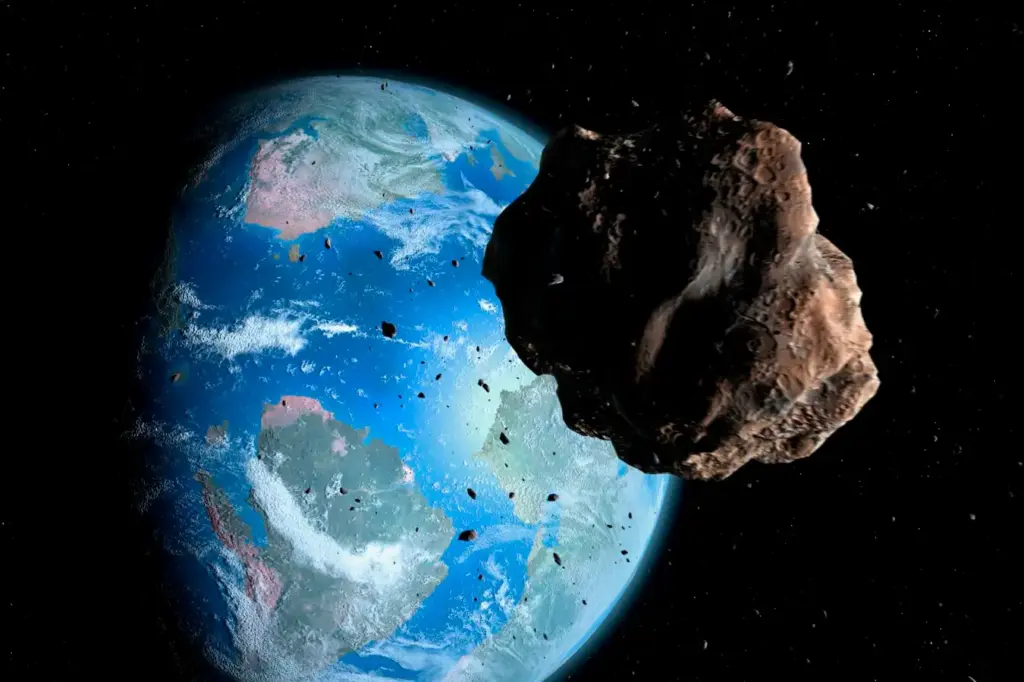
An asteroid the size of a basketball court will fly past Earth on May 18. It will come within nearly four times the distance between Earth and the Moon, but scientists assure us that there is no risk of a collision.
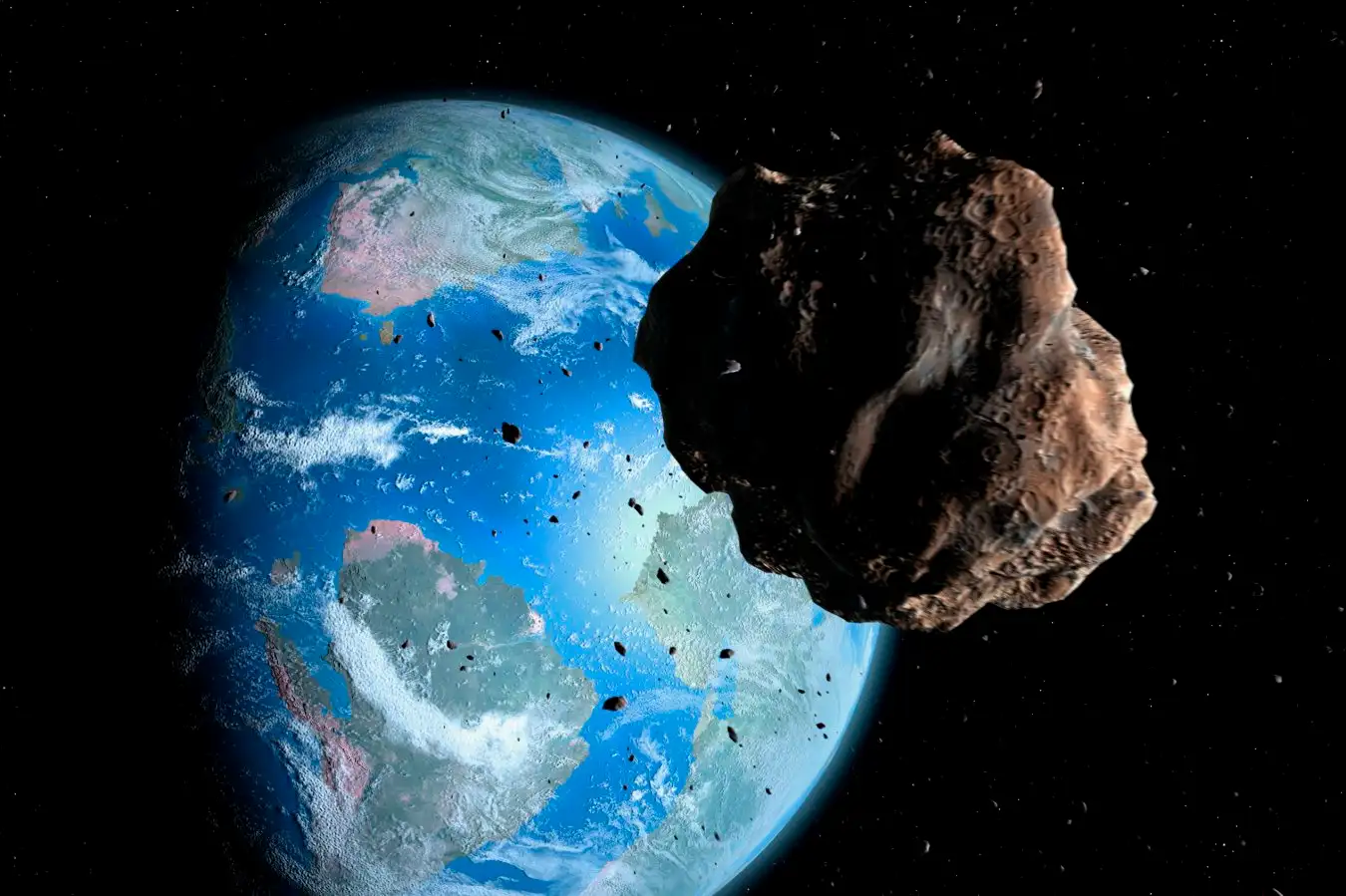 Illustration of asteroid 2026 JH2. Credit: MARK GARLICK/SCIENCE PHOTO LIBRARY/Getty Images
Size and distance
Asteroid 2026 JH2 was first spotted on May 10, 2026, by the Mount Lemmon Survey in Arizona. This observation program specializes in searching for near-Earth objects. Such objects often go unnoticed until the very moment they approach Earth, as they are small and faint against the backdrop of the dark cosmos.
According to estimates by NASA’s Jet Propulsion Laboratory (JPL), the asteroid’s diameter ranges from 16 to 35 meters. By comparison, the Chelyabinsk meteorite, which entered the atmosphere over Russia in 2013, was about 20 meters in diameter.
The asteroid will pass closest to Earth on May 18 at 9:23 p.m. UTC, at a distance of 90,000 kilometers—almost four times closer than the average distance to the Moon, which is 385,000 kilometers.
Nothing to worry about
“In astronomical terms, it’s as close as you can get without hitting,” says Mark Norris of the University of Central Lancashire. However, there is no risk: modern instruments allow us to track asteroid trajectories with high precision years in advance.
In addition, NASA notes that objects smaller than 25 meters are most likely to burn up in the atmosphere without causing significant damage on the ground.
How to observe
After sunset, it will be visible near the constellations Ursa Major and Leo. It cannot be seen with the naked eye—the asteroid is too faint for human vision. But at the moment of closest approach, it will be visible through a small amateur telescope.
Those without a telescope will be able to watch the flyby online thanks to The Virtual Telescope Project, which will be streaming the event live.
According to skyatnightmagazine.com