
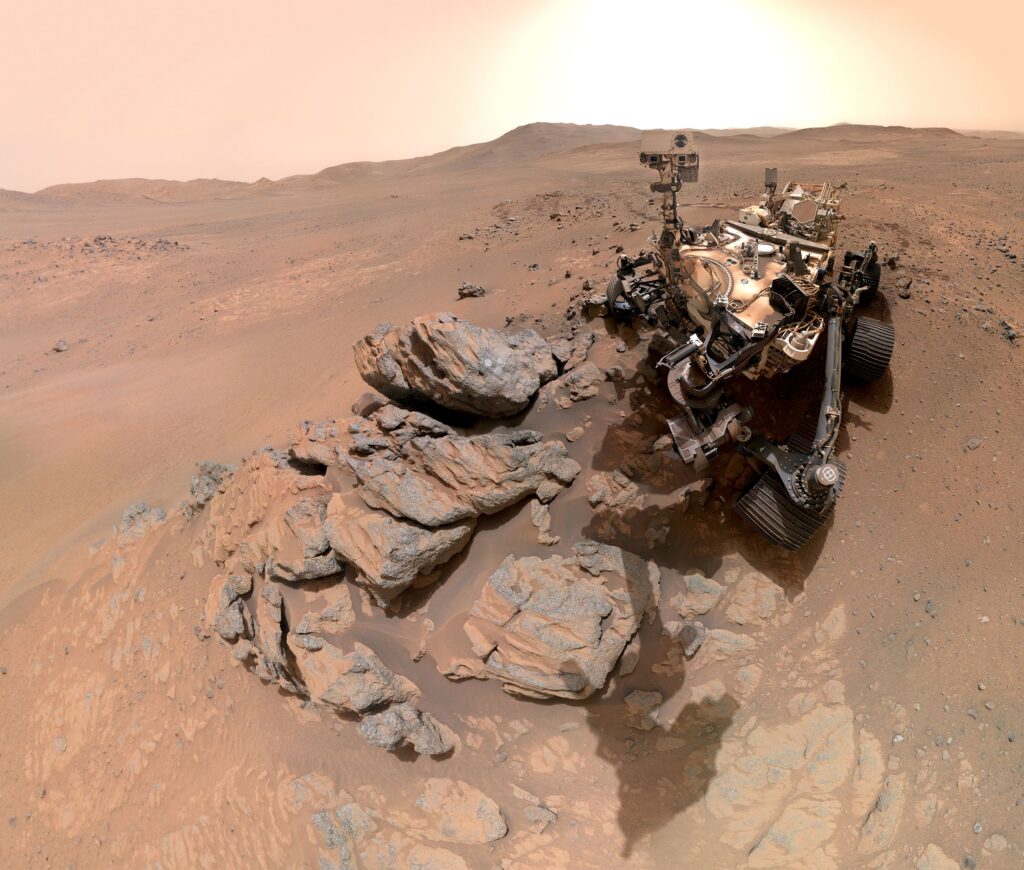
NASA’s Perseverance rover continues its productive journey across the Red Planet, marking another milestone: five years of active operation. To prove how “lively” it is, the rover sent back a new selfie. This is the rover’s sixth self-portrait after landing in Jezero Crater in February 2021. The six-wheeled rover is currently in the midst of its fifth scientific mission, known as North Rim.
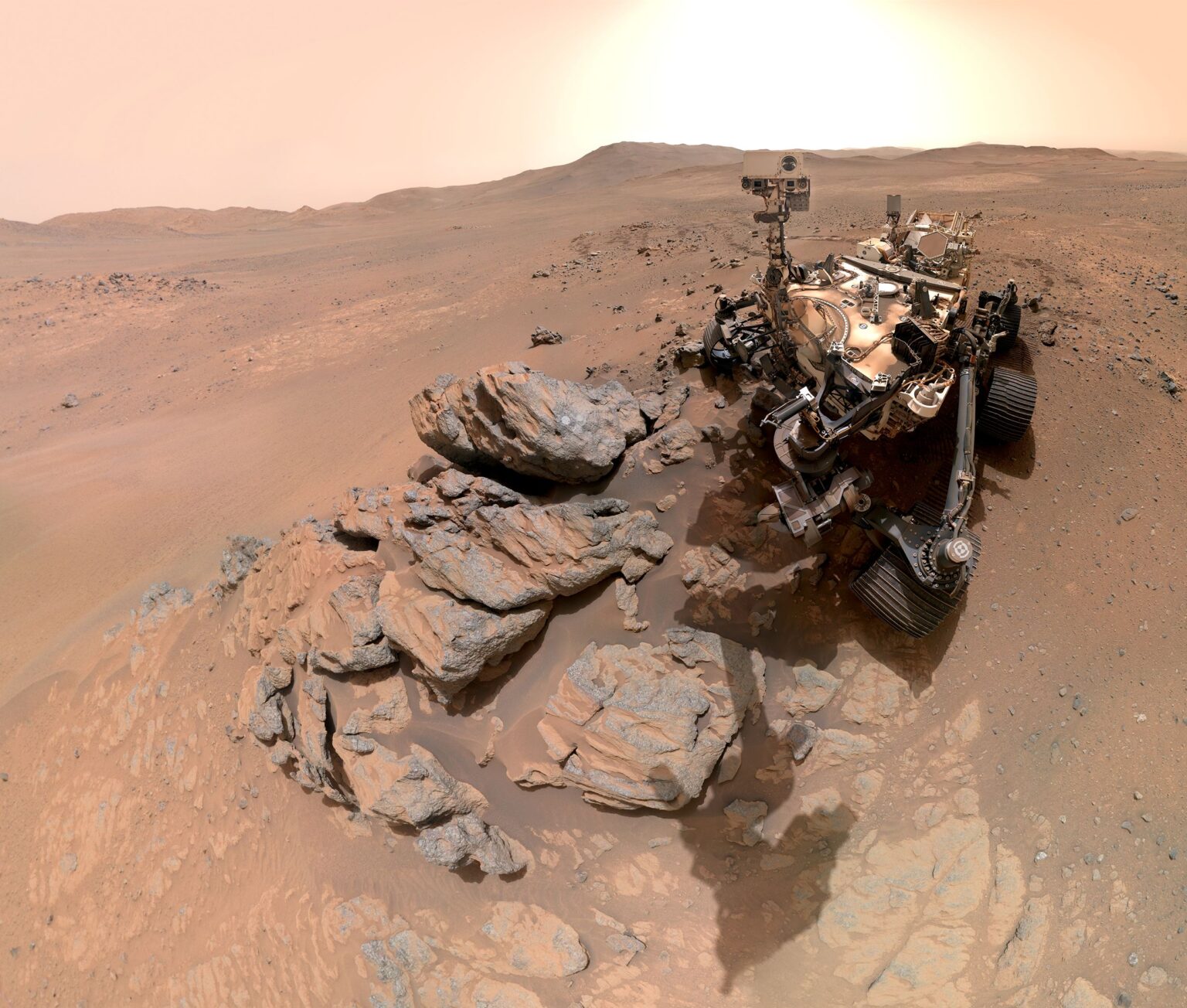 NASA’s Perseverance rover took a selfie against the backdrop of the stunning ancient Martian landscape at a location the science team calls Lac de Charmes. Source: NASA
The last photo was taken near the Lac de Charmes region. At the time the photo was taken, the rover was in an area dubbed the “Wild West” by scientists. This is the westernmost point the mission has reached during its entire time on the planet. To capture this image, the WATSON camera, mounted at the end of a robotic arm, took 61 individual shots. The process took about an hour and required 62 extremely precise movements of the mechanism to ensure perfect clarity.
Treasures of the ancient rock
Before the photo session, Perseverance conducted important geological work on the Arethusa outcrop. Using a special drill bit, the rover ground down a section of rock to analyze its chemical composition. Researchers have discovered that Arethusa consists primarily of igneous minerals that formed deep underground from molten material millions of years ago. These rocks turned out to be significantly older than the Jezero Crater, making them invaluable for understanding the planet’s early evolution.
Sky-scraping cliffs and cosmic disasters
In addition to studying fine details, the rover captured a panoramic view of the Arbot region using its Mastcam-Z camera. In these images, scientists identified massive boulders the size of skyscrapers. They were ejected onto the surface during a massive meteorite impact approximately 3.9 billion years ago. Studying these ancient structures will allow scientists to determine whether a global magma ocean once existed on Mars and what conditions may have facilitated the potential emergence of life during the planet’s early stages of development.
We previously reported on how artificial intelligence took over control of the Perseverance rover.
According to Popular Science
Brings 15 years of experience in science journalism. Holds a technical degree from the National Technical University of Ukraine “Igor Sikorsky Kyiv Polytechnic Institute” in “Automation and Control in Technical Systems.” His strong technical background and skill in simplifying complex material helped him work as an author and editor in the tech sections of major Ukrainian media outlets.
At Universe Space Tech, Ivan covers astronomy, science, technology, and discoveries in space research. His materials serve as a bridge between complex science and readers seeking to understand the universe in simple terms. Fascinated by space since childhood — especially black holes, dark matter, and quasars — he sees space not only as science but as a source of inspiration, philosophy, and humanity’s quest to understand their place in the cosmos.