
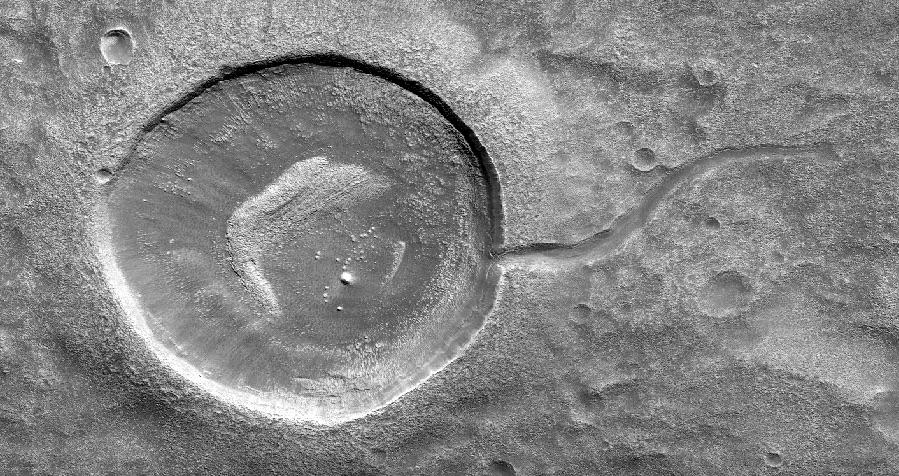
Mars’ “tadpole craters” are unusual impact craters with long trailing tails of debris, making them resemble tadpoles when viewed from orbit. They’re found mainly in icy regions of Mars and are thought to form when meteoroids strike ground rich in subsurface ice.
The leading idea is that the impact melts or vaporizes buried ice, creating a muddy, fluidized flow rather than the normal circular spray of dry rock debris. Strong winds or sloping terrain may then stretch the ejecta into a tail shape. Some tails extend for miles across the surface.
These craters are scientifically interesting because they suggest significant buried water ice exists beneath the Martian surface.
by Klugerman
2 Comments
Bro is ***NOT*** gonna find the egg all the way out there
yeah tadpole
