
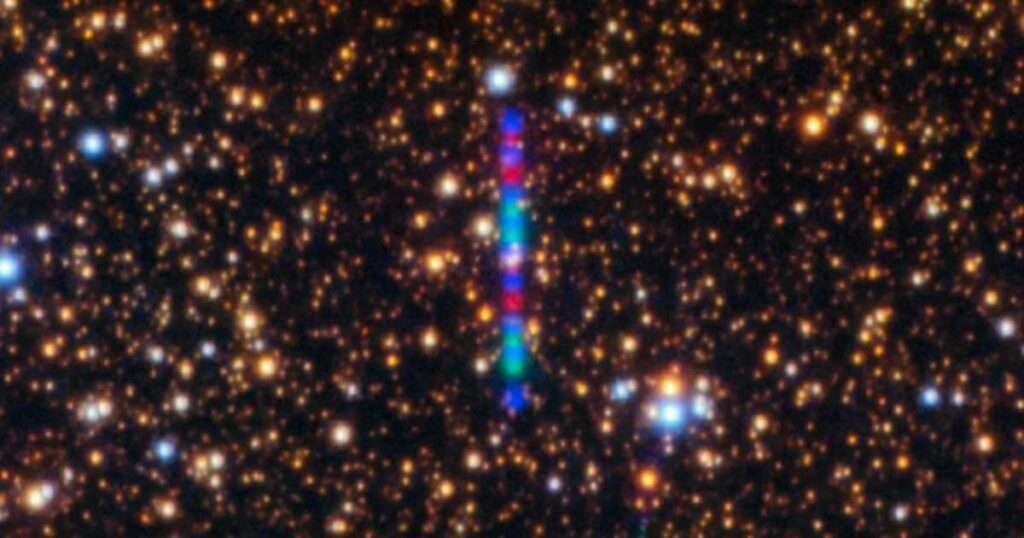
3I/ATLAS is now exiting our solar system at more than 137,000 miles per hour.
The comet, known as 3I/ATLAS, is only the third confirmed object ever observed to enter the solar system from outer space. After a brief stay in our cosmic backyard, it is now speeding away into the darkness at more than 137,000 miles per hour. Now, a team from the University of Michigan has discovered that the comet contains unusually high levels of deuterium—a heavier form of hydrogen—locked within its water ice. They report their findings in a paper published in the journal Nature Astronomy. The results suggest that the comet originated in an environment far colder than the cloud of gas and dust that gave birth to our own Sun and planets billions of years ago.
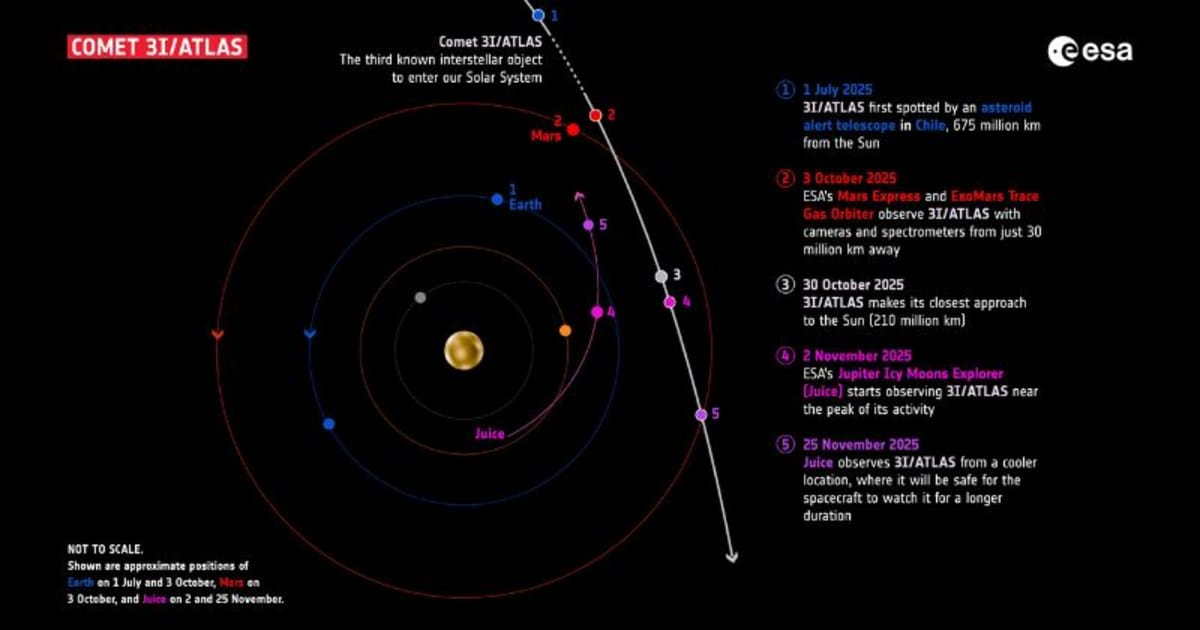
Trajectory of interstellar comet 3I/ATLAS through the inner Solar System, with key observation points by Earth, Mars, and ESA’s Juice spacecraft. (Image Source: ESA)
To uncover the comet’s secrets, scientists turned to the Atacama Large Millimeter/submillimeter Array, or ALMA, a network of giant radio telescopes perched in Chile’s Atacama Desert. Comets are made largely of ice, rock and dust. They are known to preserve the chemical fingerprints of the environments in which they formed. Water, in particular, acts as a valuable cosmic record. By studying the ratio of deuterium to ordinary hydrogen in cometary water, astronomers can estimate the temperatures and conditions that existed when the ice first condensed.
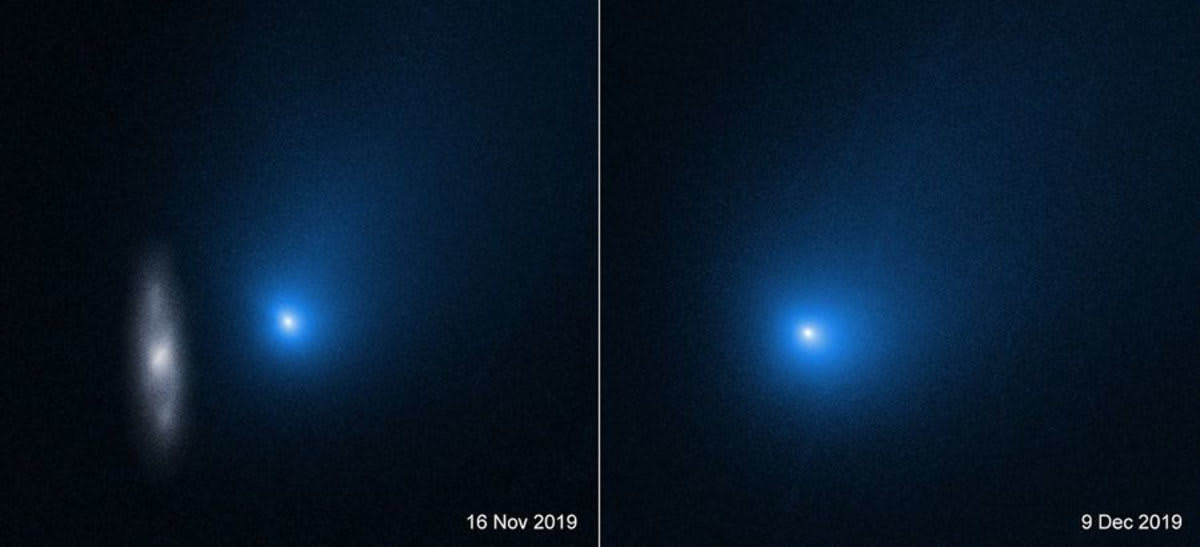
These two images, taken by NASA’s Hubble Space Telescope, capture comet 2I/Borisov streaking through our solar system and on its way back to interstellar space (Image Source: NASA, ESA | D. Jewitt)
For 3I/ATLAS, the ratio of deuterium to hydrogen was strikingly high. This shows that the comet was born in an extremely cold environment around a lonely star drifting far from crowded star systems. This exposed the comet to less heating, allowing its unique icy chemistry to develop. Scientists believe such comets provide rare opportunities to compare the building blocks of distant planetary systems with our own. If the chemistry of 3I/ATLAS differs so dramatically from solar system comets, then planets forming elsewhere in the universe may also emerge under radically different conditions.
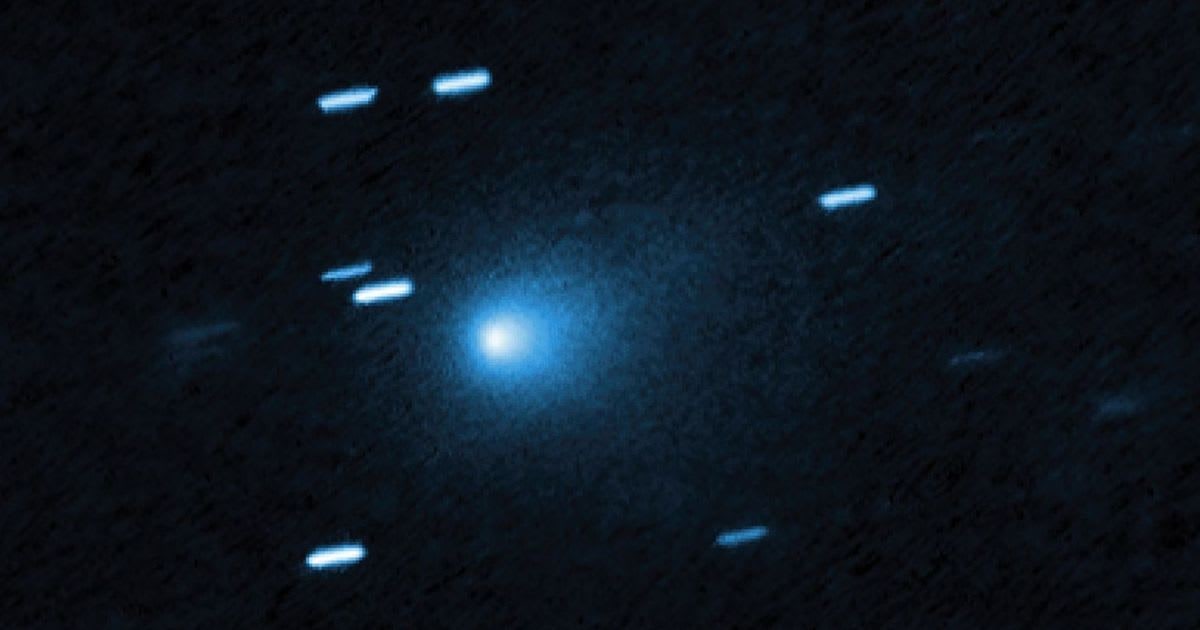
A black space background with white streaks and a single fuzzy white dot. The streaks are stars and the dot is comet 3I/ATLAS (Image Source: ESA/TGO/CaSSIS)
The object joins a tiny club of interstellar travelers. The first was ʻOumuamua, detected in 2017 by a telescope in Hawaii. Two years later came 2I/Borisov, discovered by Crimean amateur astronomer Gennady Borisov. After its discovery last summer, NASA and the European Space Agency directed powerful space telescopes toward the object as it swept past Mars and reached its closest position to Earth. Observations by the Hubble Space Telescope suggest the comet’s nucleus measures somewhere between 440 meters and 5.6 kilometers across. Although small by cosmic standards, it is immense enough to preserve pristine material older than the Sun itself.
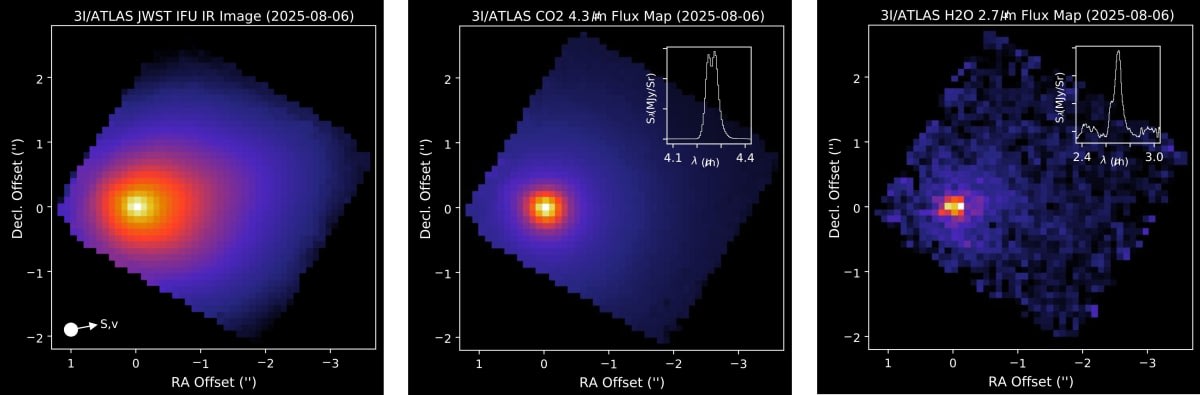
NASA’s Webb Space Telescope’s image of Comet 3I/ATLAS. (Image Source: NASA | James Webb Space Telescope.)
“While our sun may have been surrounded by other newborn stars as it was forming, this comet’s home star could have been more of a loner, leading to less heating and colder conditions,” noted Teresa Paneque-Carreno at the University of Michigan in a report by Phys.org. The findings show that the composition and history of solids in other solar systems can be different from our own. “Linking all these puzzle pieces together may give an idea to how the planet-forming conditions were at these early times,” said Paneque-Carreno.
More on Starlust
Interstellar comet 3I/ATLAS is full of alcohol, ALMA observations suggest
UFO files released by US Department of War reveal strange sights Apollo astronauts saw