
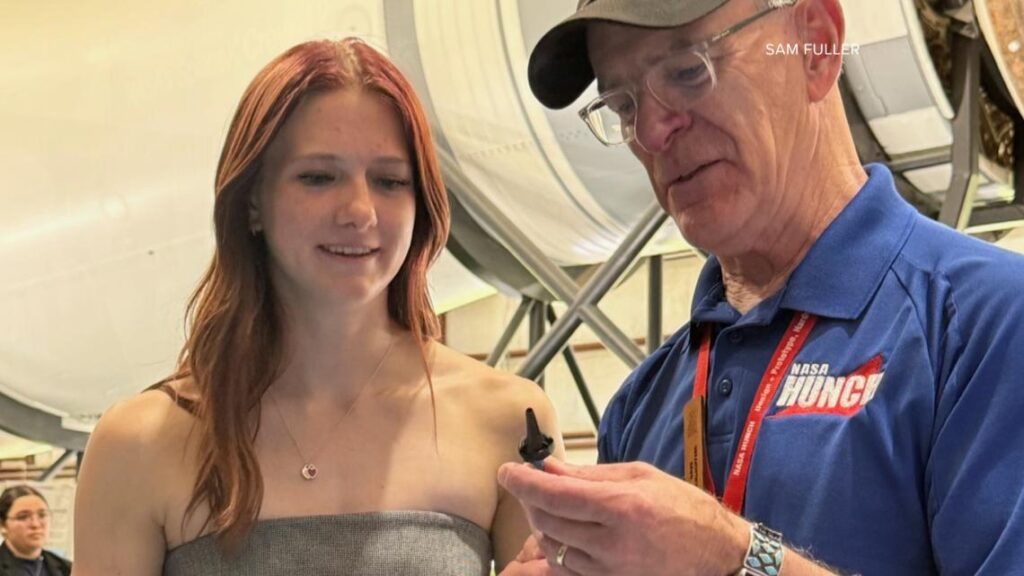
Sam Fuller, a Cherokee Trail High School senior, became one of just five nationwide to present at NASA’s 2026 Biomedical Review.
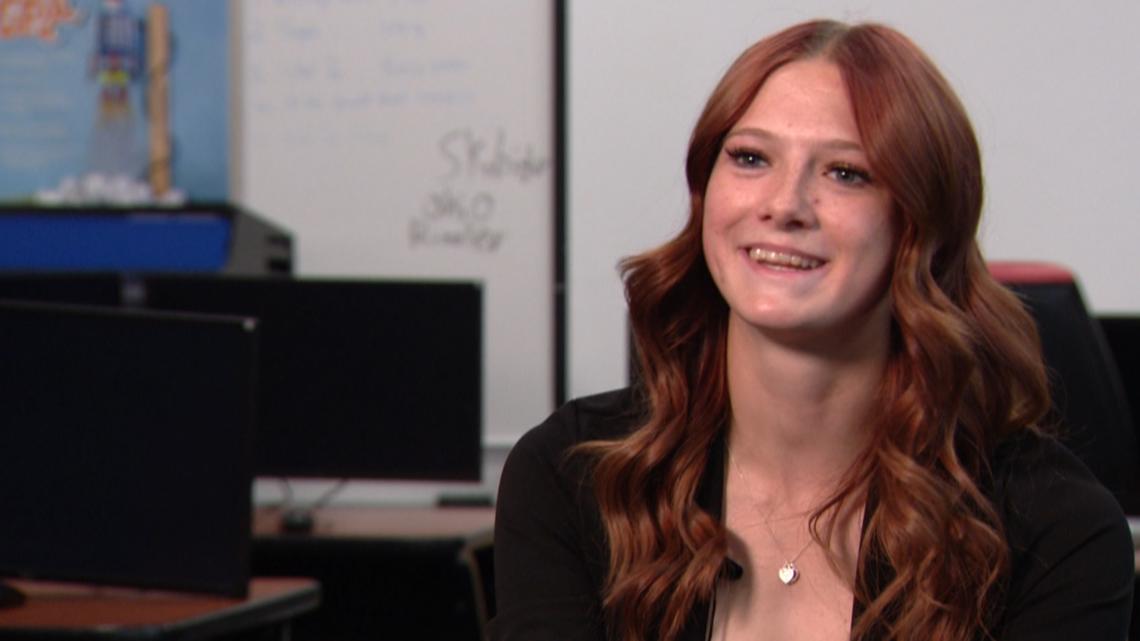
AURORA, Colo. — A Cherokee Trail High School senior became one of only five students nationwide selected to present at the 2026 NASA HUNCH Biomedical Final Design Review at Rocket Park in Houston, and she did it entirely on her own.
Sam Fuller, an 18-year-old aerospace-minded senior, traveled to Johnson Space Center after her design for a medical diagnostic tool adapter was chosen by NASA officials as one of five finalists from across the country. Her prototype, an attachment that allows a fiber optic camera to function as an otoscope aboard the International Space Station, impressed NASA engineers and research leaders so much that they asked to keep her prototype and design files for potential future use.

This story continues below.
Cherokee Trail senior’s space medical design earns national NASA honor
Wings Over the Rockies launches inaugural Space Race 5K
“It was honestly an amazing experience,” Fuller said. “I was really excited when I first found out I got to go, just because it’s something where it’s not guaranteed, and a majority of people don’t get to go.”
NASA HUNCH, which stands for High Schools United with NASA to Create Hardware, is a nationally recognized, project-based workforce development program with a 24-year legacy. The program partners high schools with NASA centers, tasking students with designing and fabricating real-world products for the International Space Station and future missions, including hardware, soft goods, culinary items and biomedical devices. According to the program’s website, NASA HUNCH has flown more than 4,123 items to the ISS and has engaged more than 3,827 students across 34 states.
Fuller’s specific challenge was to develop an otoscope adapter for a medical device known as the Tempus Pro.
“My specific problem, I was prompted with the issue to create an otoscope adapter for a medical device known as The Tempest Pro for its fiber optic camera,” Fuller said. “My goal was just to create an adapter that would allow a flexible camera cable.”
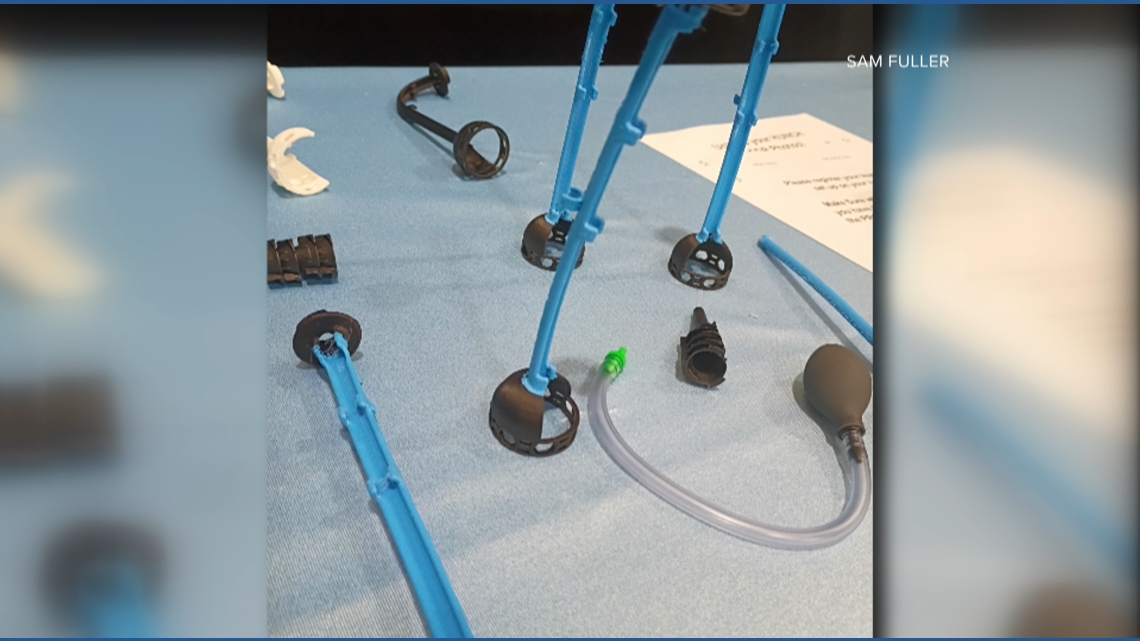
An otoscope is an instrument physicians use to examine a patient’s ears, nose and throat. Fuller’s adapter enables the Tempus Pro’s fiber optic camera, a slender, flexible cord tipped with a miniature camera and light, to serve that same diagnostic function for astronauts in space. Her prototype is constructed with PLA, a rigid 3D-printing plastic, and TPU, a flexible 3D-printing material, allowing the device to be maneuvered in multiple orientations during medical exams.
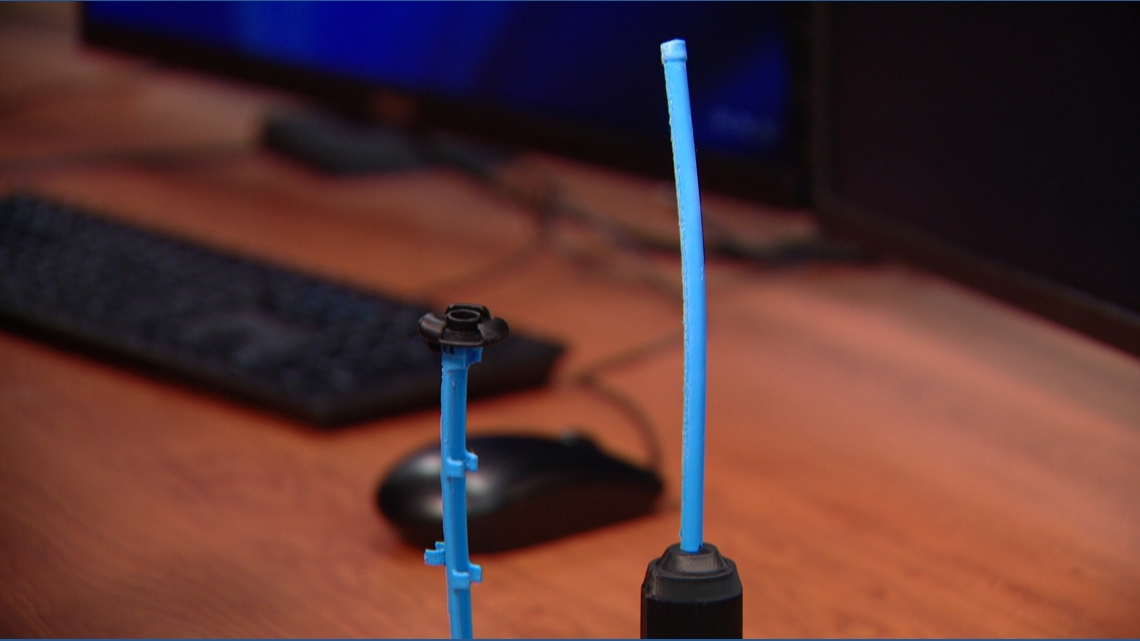
“It’s made out of a combination of PLA and TPU,” Fuller explained during her presentation. “PLA is going to be this rigid black material you see on the base and on the head of the design. And then TPU is going to be the flexible blue material you see in the middle. It just allows for more usability and for it to be maneuvered in as many ways as needed.”
Fuller also designed an insufflator attachment as part of the project, a component that allows air to be blown into the ear canal to clear debris before examination.
What makes her achievement particularly notable is that Fuller completed the entire project alone. While other finalist teams had multiple members, outside funding, and in some cases corporate sponsorships, Fuller had only the materials available through her class fee.
“I made it there all on my own, like, by myself from the beginning, and with no outside funding,” she said. “And just the little fee I pay for the class and what materials I get to use based on that, it was really cool just knowing that I made it happen.”
Her teacher also took note.
“I have never had anyone be successful in NASA hunch by themselves,” Fuller recalled her teacher, Mr. Noble, telling her, “and now I’m the first person to do that.”
Fuller also described the competitive nature of the final selection.
“Being a finalist for NASA HUNCH means you are the winner,” she said. “They don’t pick another design that’s better than the other four out of those five designs. So, I won NASA HUNCH.”
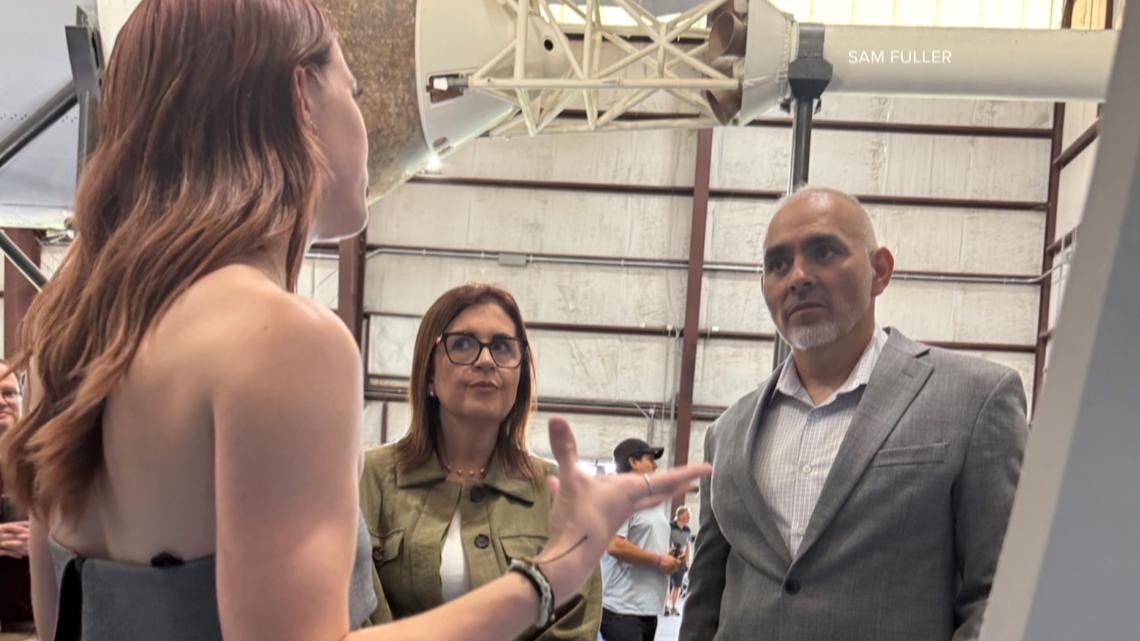
During her time in Houston, Fuller presented her work to NASA engineers, flight surgeons, Human Research Program leaders, and an astronaut candidate. She was also interviewed by NASA media and signed a flight locker slated to eventually travel to space. As of her return, she said she is waiting to hear whether her design will be among those considered for a future ISS mission. NASA HUNCH has sent approximately 1,200 high schoolers’ designs up to the ISS to date.
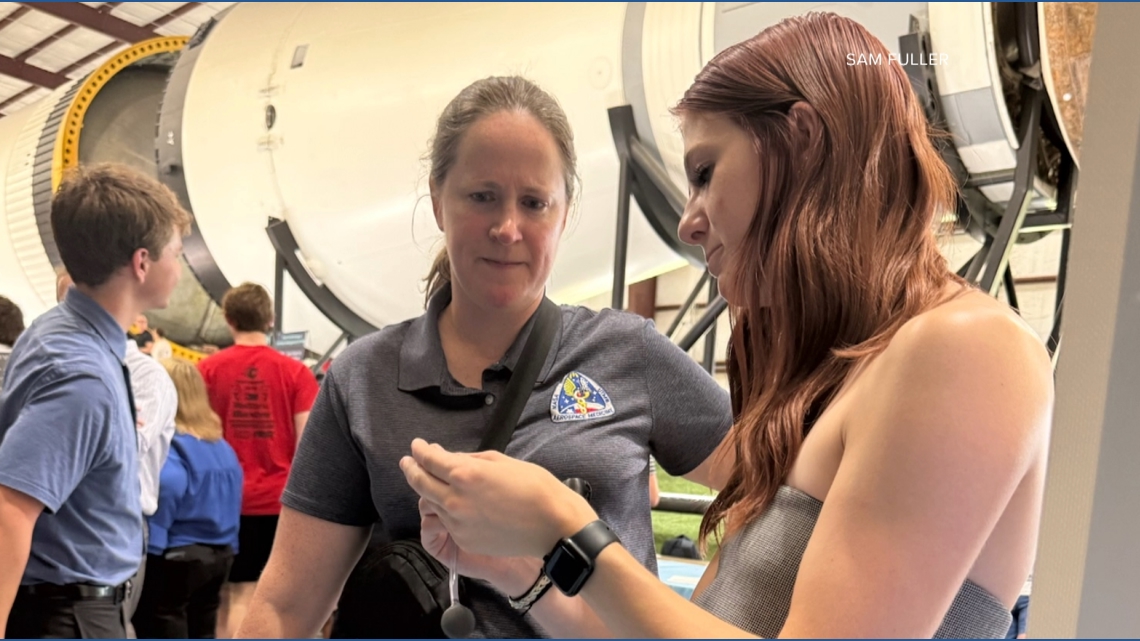
“Hopefully, we don’t know,” Fuller said of her design’s chances of reaching the station. “I will get an email, and I’ll be told, if so, but I’m not sure yet. I will say that the director of the biomed projects for HUNCH really enjoyed my design. So that’s always good.”
Fuller credited two years of iteration and repeated failure as central to her success.
“The biggest thing I learned is probably that you do have to fail to succeed in the end,” she said. “If I took a look at where I was last year, when I first started working on this project, when I was working in a group, there was no shot at me making it to the FDR last year.”
Her interest in aerospace runs deep. Her mother worked for United Launch Alliance, and her grandfather is an engineer who worked on the Space Shuttle program. Fuller said those early experiences shaped her path.
Fuller is committed to attending Embry-Riddle Aeronautical University in Daytona Beach, Florida, where she plans to study aerospace engineering with a minor in project management. She said her long-term goal is to work on rockets and contribute to humanity’s push toward Mars.
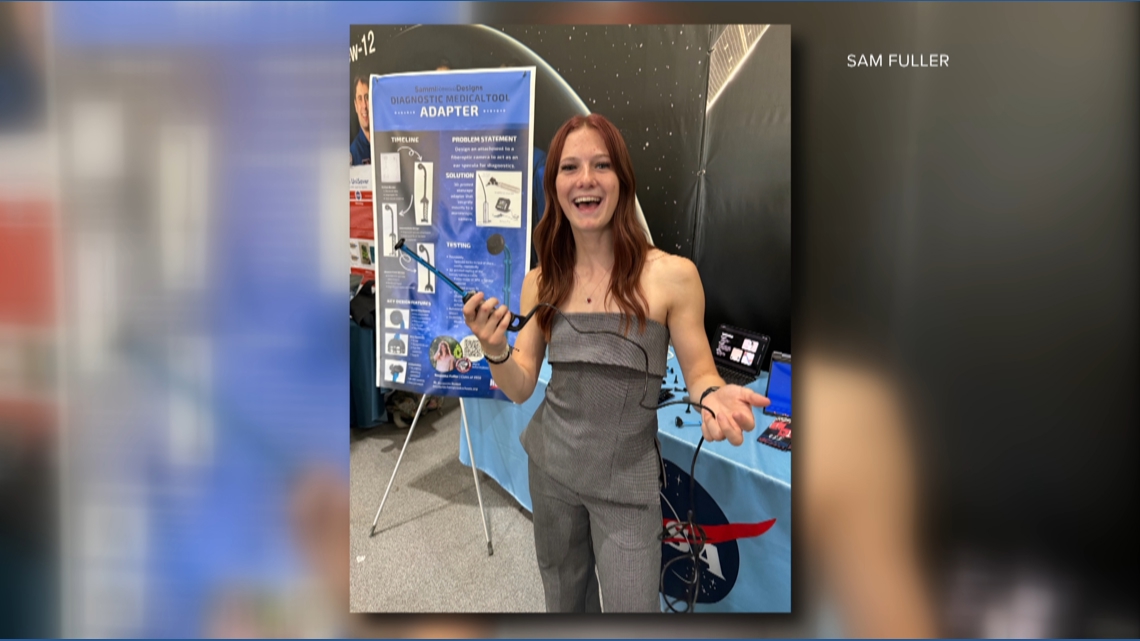
She also said she hopes her accomplishment resonates with other young women considering engineering careers.
“I have some younger friends who are in engineering classes here, and they’re like, ‘Yeah, you’ve really inspired me to kind of stick with it,’” Fuller said. “At the end of the day, it doesn’t matter how much you are given, as long as you work hard, because anyone, if you set your mind to it, can get there.”